



Cinémathèque française: why are its cinemas temporarily closed in Paris?
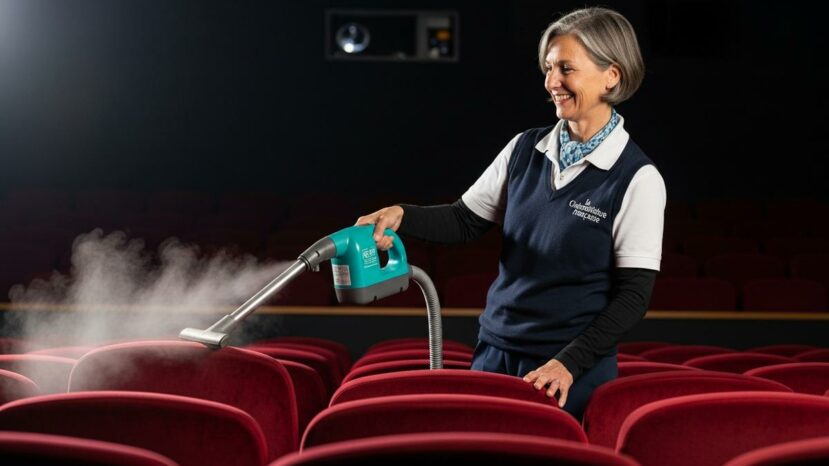
Suspicion of insects and reinforced protocol: the Cinémathèque française takes action. To protect its audiences, some cinemas are temporarily closed for sanitary operations. In this way, the institution is applying a clear and transparent plan.
Temporary closure: what happens?
The message is simple: priority to audience safety. In this context, these cinemas are closed to the public for the duration of the treatment. What’s more, the technical team is coordinating every step of the process with the utmost precision. In short, temporary closure is accompanied by precise monitoring.
The protocol is based on heat, with no residual product. Teams apply dry steam at 180°C to seats and carpets. This process sanitizes the cinema while preserving the materials. The aim is to return the cinema to service safely and methodically.
Checks follow each passage.
“Public health safety comes before programming.
Methods and controls in the field
Specialists agree on one point. Targeted heat quickly kills pests. In movie theaters, the method limits the risk of dissemination. This approach also limits the use of chemicals indoors.
Audiences are looking for concrete reference points. That’s why the box office provides information on postponements and exchanges. What’s more, your cinema tickets will be rescheduled as soon as possible. As a result, your future experience will remain smooth and clear.
- Consult the official announcements before you travel.
- Keep your proof of purchase for any possible exchange.
- Note the revised timetable communicated by the institution.
- Report any inconvenience to reception staff.
- Adopt simple preventive measures after the session.
Paris context and best management practices
Paris has already experienced similar alerts in recent months. Trained teams now intervene with documented protocols. In other Paris cinemas, these benchmarks have enabled a calm recovery. This feedback is now feeding into decisions in the field.
The principle remains clear. However, each site adapts the pace to its own building. From now on, the protocols applied to cinemas set a threshold for action and control. In this way, each closure aims for a lasting result, not a mere respite.
This phase requires a little patience. However, there’s no need for cinema attendance to plummet out of fear. In short, these measures are designed to avoid any incidents. So everyone can continue to go out, with clear reference points.
Impact on programming and sessions
The schedule may change slightly. For example, some screenings may be shifted, with schedule adjustments. Sometimes, sessions can be moved between in-house cinemas. The aim is to safeguard the works scheduled and their diversity.
To find your way around, follow the institution’s public announcements. Then, program updates simplify your choices. Finally, each message reminds you of the instructions you need to follow to ensure your comfort. What’s more, front-of-house staff are on hand to answer any last-minute questions you may have.
Practical tips for spectators
Serenity is also achieved through simple gestures. Arrive a little early to settle in calmly. Keep your belongings close to you. Keep your bag closed and on your lap, if possible.
Before you sit down, take a look at your chair. However, there’s no need for a lengthy or anxiety-provoking inspection. A quick visual check will suffice in most cases. Report any discomfort to the staff, who will quickly take over.
When you get home, air out your bag and coats. Also, wash fragile textiles at 60°C whenever possible. After a trip to the cinema, these reflexes limit involuntary transfers. Then, simply keep an eye on your belongings for 48 hours.




No comments
Post a comment
Always participate in accordance with the law and with respect for others.