



Precious materials in the world of jewelry
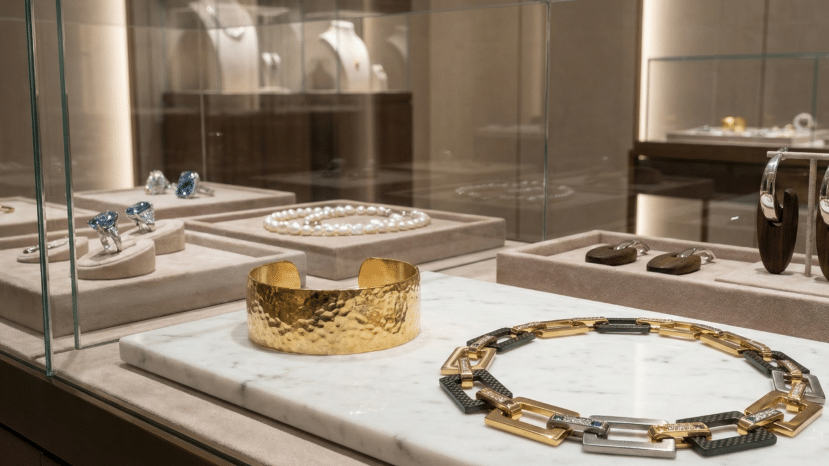
A gold bracelet set on white marble. A
Precious metals, a must
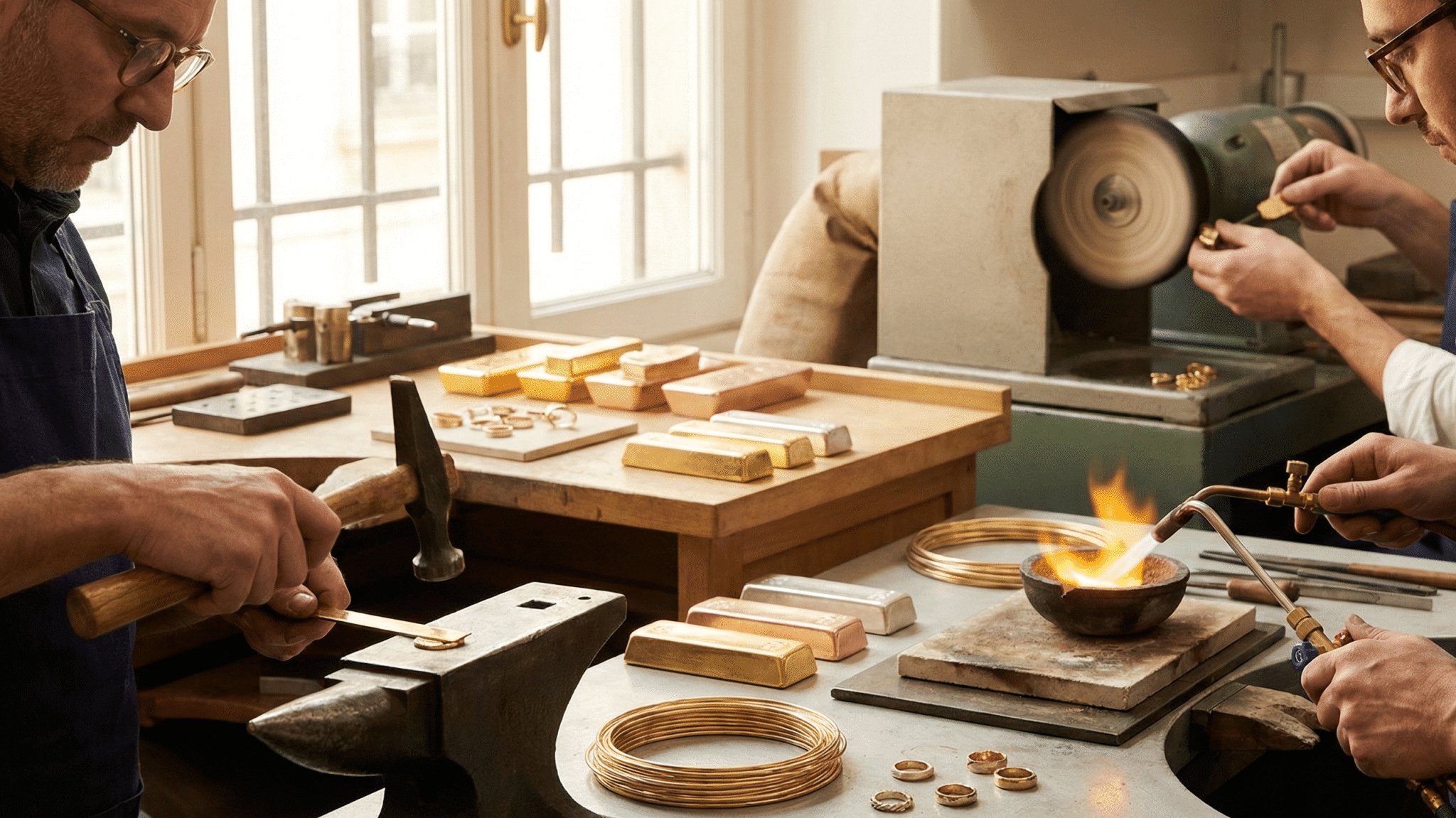
The story begins with simple gestures: melting, hammering, polishing. In every luxury jewelry workshop,gold is the undisputed leader. Yellow, pink, white: gold is available to illuminate every creation. Over 2,000 tonnes of gold are used every year for jewelry alone, confirming its central status in the industry.
Platinum is in a different league. More dense and rare, this
The growing influence of money
Silver is also making a comeback after several decades dominated by its golden lustre. Accessible and flexible, it appeals to young designers eager forinnovation and new shapes, while retaining the luminous touch typical of precious metals. Some collections combine silver with alternative materials, giving structure and character to bold ideas. Although still inferior to gold, the volume of silver produced has risen sharply over the last five years.
In the world of contemporary jewelry, silver is becoming an infinite field of experimentation. Fine engravings, contrasts with modern gems or associations with colored gemstones: polished silver multiplies effects and asserts its place in current trends. In this respect, it’s interesting to discover the wealth offered by a luxury jeweller specializing in the diversity of its precious materials.
The advent of hybrid materials
A whole generation of designers has been inspired to break with classic codes. For example, the combination of
Some craftsmen are now integrating high-tech ceramics or worked glass into the heart of metal frames. Each innovation broadens horizons, revealing a modern savoir-faire capable of surprising as well as seducing lovers of innovative jewelry.
The importance and value of precious stones
Behind every sparkling display case, precious stones captivate the eye. Rubies, emeralds, sapphires, diamonds: the palette rivals in depth and mystery. Each imposes its own requirements on selection and cutting, determining the final value of the piece.
Exceptional stones sometimes reach all-time records. In 2023, a 15-carat intense blue diamond sold for almost 58 million euros. On the gemstone market, controlled production volumes – particularly for Burmese rubies – reinforce the rarity and value of assembled jewels.
The rise of alternative pearls and gems
For the past few seasons, a gentle wave has been shaking things up. Pearls breathe poetry and freshness into multigenerational jewelry sets, multiplying unexpected combinations withgold or platinum. Their meticulous harvesting guarantees each time unique shapes that seduce both Japan and Europe.
Alongside the classics, topazes, spinels and tourmalines sometimes replace traditional gemstones. This shift can be explained by the gradual exhaustion of major
The impact of size and setting
The secret of an unforgettable piece often lies in the hushed workshop of a lapidary. Here, each facet transforms a rough stone into a jewel ready to change hands for considerable sums of money. A single millimeter too small, and the price can plummet instantly.
Setting techniques are constantly evolving. Microcavés, invisible claws, mobile bezels: these innovations give the stone a new mobility. Discerning collectors appreciate this floating effect, which sublimates the stone and frees the craftsmen’s creativity.
Innovation through alternative materials
Alongside tradition, creative inspiration is embodied in the search for alternative materials. While haute joaillerie continues to focus on precious metals, it no longer hesitates to take up the challenge of novelty. Resin, aluminum, fossilized wood: these surprises now punctuate the catwalks, without ever eclipsing gold or diamonds.
A few figures confirm this discreet evolution: almost 18% of the pieces presented by major designers in 2022 incorporated at least one material resulting from recent research. Despite this still modest share, the list grows longer every year, with new promises of sustainability and innovation.
- Carbon fibers integrated into graphic rings
- Platinum-fused colored ceramics
- Recycled materials enhanced by hand finishing
- Ultra-light alloys for voluminous earrings
- Mineral nuggets extracted from deep waters
In this context, the question of environmental respect becomes central. Some houses are investing heavily in sourcing control, ensuring traceability and a low carbon footprint right through to final delivery. Others are focusing on the intelligent recycling of gold scrap or the revalorization of old precious stones from antique jewelry.
Innovation in fine jewelry
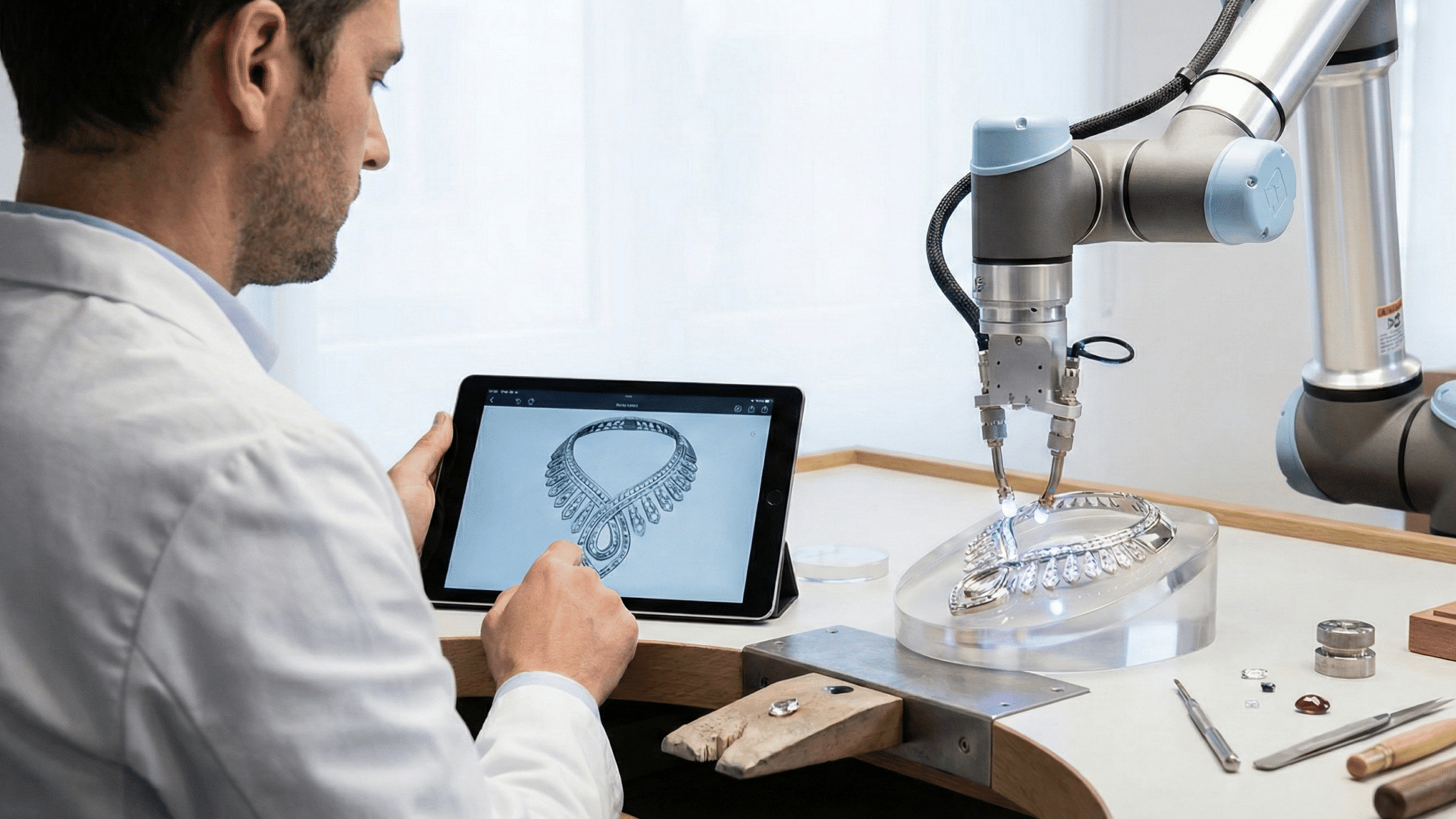
Over the years, major exhibitions have overturned traditional codes. A futuristic cuff inspired by industrial design no longer shocks anyone. What’s essential is the ongoing dialogue between timeless beauty and hi-tech performance.
In the boutique, customers discover hybrid jewels combining certified gold, original gemstones and unexpected alternative materials. The figures speak for themselves: some limited editions sell out within two weeks of their worldwide launch, proof of the continuing appetite forinnovation in luxury jewelry.
Designers draw on the full range of materials, harmonizing gold, platinum, natural or synthetic diamonds, translucent stones, lustrous pearls and touches of alternative. Behind the showcases, engineers and craftsmen invent miniaturized articulated systems or test revolutionary surface treatments, constantly pushing back the boundaries of the possible.
Future trends in precious materials for the jewelry industry
The pace is not slowing down. In Paris and Antwerp, laboratories are already dreaming up
A new generation of customers values uniqueness, responsible origin and technical performance. Precious materials remain indispensable, while alternative materials are gaining ground as the sector progresses. Twenty years ago, who would have thought that a collection made entirely from recycled alloys would cause a sensation at a major European fair? Today, the trend has taken off and has no intention of stopping there.


No comments
Post a comment
Always participate in accordance with the law and with respect for others.