



Mid-Century: the style of the 50s and 60s is back with a vengeance in our interiors in 2025
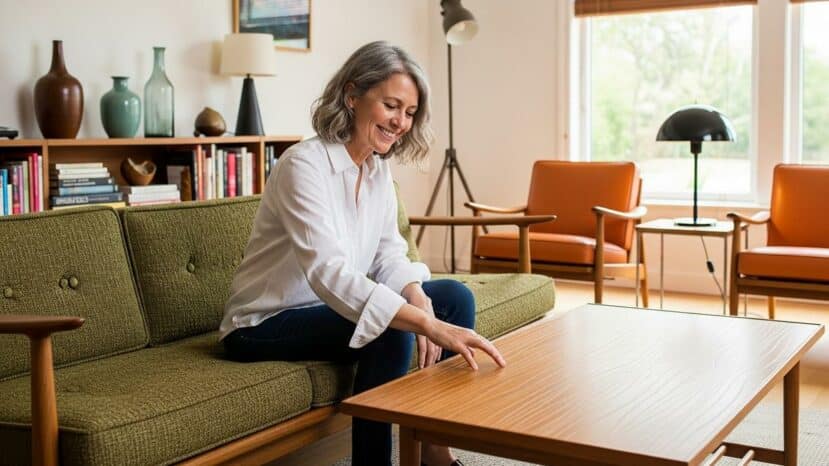
Mid-Century style is making a comeback in our interiors, but for good reason. With the warmth of wood and clear lines, it reassures without boring. In this way, this trend adapts to today’s uses without losing its soul.
The return of warm modernism
Born between the post-war years and the 60s, this movement reconciles reason and pleasure. Mid-Century focuses on function, light and comfort. Teak, walnut, steel and glass create sober volumes. Rooms remain clear and easy to live in.
The reference period is often 1945-1969. The Mid-Century language matches our needs: clever storage, sturdy furniture, sincere materials. What’s more, reliable reissues and traced vintage pieces are reassuring. As a result, the style appeals to enthusiasts and architects alike.
To adopt it, choose an anchor piece, then a short palette. Opt for warm woods, discreet metal and textured textiles. Plan for traffic flow and the right table height. In short, check the condition, provenance and maintenance of materials.
“True modernism makes everyday life simple, not austere.”
Concrete references: materials, colors, volumes
The vocabulary is clear: walnut, teak, ash, painted steel, thick glass. Mid-Century likes slim tops on legible legs. This makes space seem larger, even in a small living room. The result is greater visual comfort and fluidity.
For color, think olive green, ochre, cream and plum. A touch of black adds structure without weighing it down. Light should be warm and well-directed. In this way, Mid-Century remains soft, but precise on function.
- Define a flagship piece and build around it.
- Limit the palette to 3 strong shades.
- Mixing warm wood and fine metal.
- Lighting on several levels.
- Choose textured, durable fabrics.
The living room, the heart of fluid living
The living room is home to the centerpieces and shared time. Mid-Century offers clean lines and deep seating. So you can move seamlessly from work to rest. What’s more, the materials patinate well over the years.
For Minotti, Rodolf Dordoni has designed the “Roger” sofa in “Elle 0350” fabric. Its modular depth is perfect for families and guests.
At Cassina, Gerrit Rietveld’s “Utrecht” pair of armchairs provides sculpted seating. On the other hand, graphic topstitching gives rhythm to the living room without weighing it down.
Vladimir Kagan’s “Sculpted coffee table 412” stretches an organic curve. As a result, it dialogues well with more angular seating.
QuintaLisque’s green tiles accentuate the fireplace with a handcrafted brilliance. As a result, the flame gains a colorful, easy-to-clean setting.
Mervyn Gers’ ceramic bowl punctuates a console with its nuanced glaze. It can also be used as a storage space without losing its sculptural effect.
Cooking and eating: comfort and convenience
The kitchen demands precision, while the dining room invites durability. Mid-Century reconciles these needs with legible shapes. Ergonomics guide height, seating and lighting. And warm finishes reassure at the table.
BassamFellows’ “Tractor” tall stool, in walnut, offers a hollowed-out seat. What’s more, its stable base supports busy breakfasts.
The More long walnut table features a generous, warm top. It accommodates 6 to 10 guests without sacrificing comfort.
Eero Saarinen’s “Conference” chairs for Knoll wrap the back in supple leather. As a result, you stay at the table longer, in an active posture.
The More bench seat, upholstered in “Tsumago” fabric, extends the perspective of the dining room. It also creates a continuous line for family meals.
Fleux mugs add a touch of color that’s easy to match. From now on, morning coffee becomes a ritual consistent with the table.
Textile lighting and craft gestures
Lighting sets the mood and the rhythm of tasks. Mid-Century prefers targeted, sometimes diffuse, but never approximate lighting sources. A pendant light frames the island, while a soft lamp soothes the reading corner. Textiles also filter light without freezing it.
Il Fanale’s black “Madame” pendant light frames the kitchen island with precision. The clean beam reduces glare on worktops.
The “Code 130°” series of silk pendant lights by Aqua Creations softens the mood. In short, the diffusion is ample, but the light remains friendly.
Parent’s bedroom: graphic softness
The bedroom is best kept sober, but it can be daringly textured. Mid-Century appears more subdued, supported by dense solid colors. Clear lines reassure the eye upon awakening. What’s more, the textile quality enhances sleep.
Murano’s “Tronchi” glass suspension lights up the bedside with a soft halo. Its tubes are reminiscent of period glassware, without being overly decorative.
The “Parcours” fabric from Élitis covers headboards and cushions with relief. The geometric pattern adds depth without dominating.
Plum wallpaper from Élitis wraps the wall in a deep hue. On the other hand, the room is not darkened by the light touches.
Designs of the Time curtains filter light while preserving privacy. As a result, the room maintains a soothing rhythm from morning to night.
Couleur Chanvre’s “Terre d’Egypte” sheets breathe and regulate heat. What’s more, the hand is supple and durable after many washes.
A Maison de Vacances wool plaid adds a layer of comfort. It also enhances the bed with a clean, tactile texture.
Longbarn Carpets plum carpet insulates against noise and warms the feet. The result is a room that’s both thermally comfortable and soft.
Buying, restoring, passing on
Before you buy, look at the proportions and ergonomics in real-life situations. Mid-Century can withstand fine restoration, but requires serious craftsmanship. A well-chosen varnish, for example, extends the life of a tabletop without betraying its color. What’s more, good lighting reveals the lines even before use.
For a period piece, ask for proof of traceability and detail photos. Reissued Mid-Century remains relevant when the workmanship and materials are robust. Therefore, compare wood sections, joints, and stability on hard floors. Also, note the ease with which fabrics can be cared for in real life.
Think traffic, light and noise right from the start. Mid-Century works best when the layout respects your everyday gestures. For example, a bright table near the window reduces eyestrain. In short, a well-placed piece of furniture is better than a misused icon.
Over the years, let the materials take on an honest patina. Mid-Century thrives on this use, without losing its precision. In this way, you pass on durable, well-adjusted objects. What’s more, you keep your interiors lively, but always soothing.



No comments
Post a comment
Always participate in accordance with the law and with respect for others.