



Yule log: 5 sommeliers’ wine and food pairings to enhance your festive dessert
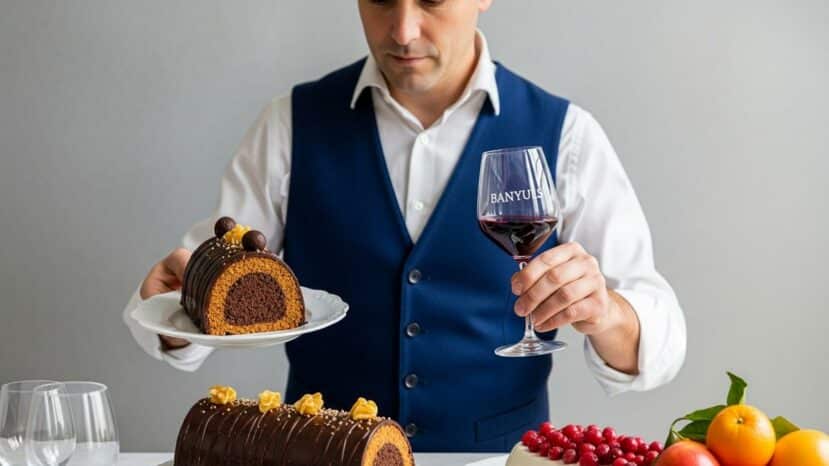
The log arrives, the glasses follow, and the sommeliers set the table. Sweet flavors demand precise pairings, yet sweetness is not the only criterion. The style of dessert and serving temperature often make the difference.
Sweet pairings for chocolate and praline logs
Banyuls – Banyuls (Vin doux naturel). Sommeliers often place it at the top of the list for dark chocolate, as garnet and cocoa interact seamlessly.
A Banyuls served at 12-14°C coats the bitterness, and respects the texture of a ganache or full-bodied praline.
Cocoa calls for a sweetness that’s present but held, as excess quickly wearies. Sommeliers therefore recommend natural sweet wines with supple tannins.
Red fruit, lychee and citrus: aromatic balance
Gewurztraminer d’Alsace – Gewurztraminer d’Alsace (aromatic white wine). With raspberry, rose, lychee or sweet spices, the pairing gains in finesse.
Thus, a soft rather than syrupy style retains freshness, and sommeliers appreciate it for its relief.
“
It’s better to match the sugar level of the wine to that of the dessert, rather than the other way around”
An aromatic white assumes greediness, yet it must remain lively. In addition, a dry Muscat d’Alsace can support a light citrus cookie. Sommeliers recommend avoiding overpowering competing flavors. The aim is harmony, not fragrance.
Sweet Loire, festive bubbles and just the right amount of sugar
Coteau du Layon – Coteau du Layon (Chenin de Loire, sweet wine). Chenin blends honey, quince and clean acidity to energize a yellow-fruit log.
Served at 10-12°C, it retains its springiness, and sommeliers see it as a sure support for light creams.
- Match the sugar content of the wine to that of the log.
- Serve between 8-14°C, depending on style, to preserve balance.
- Pour in small volumes to avoid saturation.
- For frozen desserts, opt for freshness and fruit.
- Choose an aromatic, low-sugar alcohol-free option.
Bubbles love airy textures, and the party follows. For example, a brut Champagne goes well with lightly sweetened cookies, while a demi-sec helps with a richer crème pâtissière. Sommeliers insist on the right dosage, as it regulates the pairing. Also, the acid attack cleanses the palate between bites.
Red fruit desserts like tension. On the other hand, a Champagne that is too strict can seem harsh on a meringue log. Sommeliers sometimes suggest a rosé de saignée for extra body. The choice therefore depends on the fruit, the cream and the glaze.
Glaze, texture and serving temperature
Champagne – Champagne (sparkling wine). Freshness supports airy desserts, meringue, cookie or vanilla desserts.
Also, aiming for 8-10°C maintains liveliness; sommeliers use this benchmark to stay on track.
The cold flattens the sugar, yet restrains the flavors. So, taking the bottle out five minutes before serving helps to open it. Sommeliers note that a very sweet glaze calls for more roundness. In short, temperature tells half the story.
Signature pairings and chefs’ logs
Pastry houses adjust textures and flavors to the millimeter. Precision also guides glass selection. Sommeliers recommend reading the composition, ingredient by ingredient. What’s more, a floral or savory note often changes the wine’s trajectory.
Pierre Hermé – Cheesecake Ispahan (Bûche glacée). Raspberry, rose and lychee call for a fresh, delicate and aromatic wine.
Thus, a low-dose rosé Champagne or a tender Gewurztraminer make sense, and the sommeliers validate this duo.
Want to limit the alcohol without losing the harmony? A white tea with rose, served at 70-75°C, extends the idea of an aromatic pairing. Non-alcoholic grape-based bubbles can also help, as long as they are low in sugar. As a result, the spirit of the sommeliers remains the same: balance, freshness, coherence.


No comments
Post a comment
Always participate in accordance with the law and with respect for others.