



Pilates: 3 exercises effectively target abdominal fat and refine your waistline at home
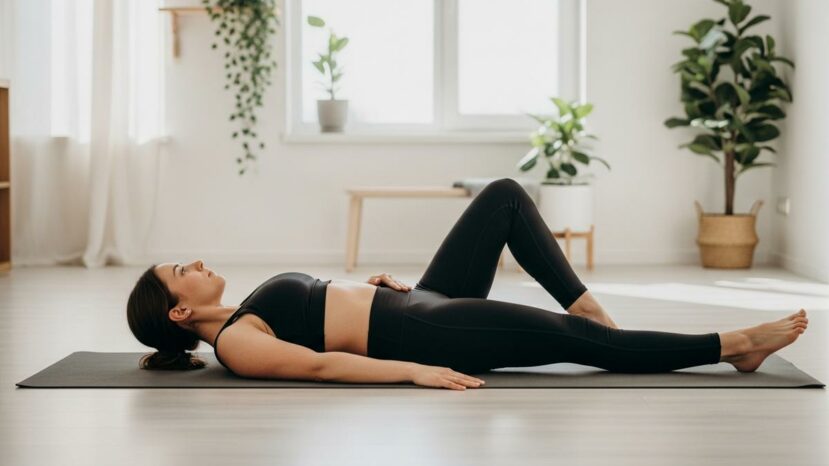
Pilates is a discreet ally for waist firming. With precise breathing and a committed center, it helps reduce belly fat without shock. Here’s how to use it to target the abdominal muscles, without equipment and at home.
Why this workout targets abdominal fat
Work focuses on the transverse, the deep muscle that supports the waist. In pilates, each movement stabilizes the pelvis and limits pressure on the lower back. What’s more, the effort is distributed, which improves daily posture.
Lateral thoracic breathing triggers engagement of the center as soon as you inhale. Then, the long exhalation tightens the abdominal girdle like a natural corset. As a result, you burn without tensing and maintain fine control.
When it comes to results, consistency is more important than raw intensity. From now on, aim for short but regular sets to obtain a measurable effect. In practice, 3 well-executed exercises are enough to get you started.
“Breathe, engage, then move: order changes everything.”
Three key pilates movements, explained step by step
We focus on quality and alignment, not speed. This way, you protect your back and maximize deep work. This pilates method values precision and controlled amplitude.
Then adapt the repetitions according to your breath and your level. If the back of your neck feels tired, rest your head for a breath, then start again. In short, listen to your body’s signals for pain-free progress.
- Keep the navel sucked in towards the spine.
- Exhale on the main effort to engage the core.
- Lengthen your neck, lower your shoulders and relax your trapezius.
- Stabilize the pelvis in neutral, without tilting.
- Prioritize quality over quantity.
Practical exercise sheet
The Hundred, a Pilates classic, awakens the core and breathing. Lie down, legs bent table top, then lift your head and flap your arms. Aim for 100 beats over 10 breath cycles, keeping your lower back stable.
Criss-cross targets the obliques and slims the waist through rotation. Stand in a reverse chair, hands behind your head, then bring right elbow to left knee. Do 8 to 12 slow repetitions on each side, without pulling on the nape of the neck.
The Pilates plank strengthens your core, shoulders and abdominal muscles. Place your forearms on the floor, push off, then align your head, pelvis and heels. Hold for 30 to 45 seconds, without arching or rounding.
Frequency, intensity and breathing
Work at a controlled tempo, then increase the difficulty in stages. Go from 2 sets to 3 when the form remains clean. As a result, you build up the internal load without losing technique.
To make progress, plan short but repeated sessions. Aim for 15 minutes a day or 2 to 3 times a week, depending on your schedule. With consistency, the girdle becomes more toned and the waistline more defined.
Tips for injury-free progress
Keep the neck long and the jaw relaxed to avoid tension. This keeps the shoulders low and the ribs from opening too much. On the other hand, if you feel any pain, reduce the amplitude or do a modified version.
Start with a thin cushion under your head if your neck feels tight. From now on, use sound breathing to feel the center connect. Also, after pregnancy or chronic pain, seek professional advice before straining.
As far as motivation is concerned, follow a simple logbook with date, duration and sensations. That way, you can measure your progress and, with pilates, you can stay the course without pressure. As a result, you’ll get into a routine and your abs will be working every week.




Aucun commentaire
Publier un commentaire
Participez toujours dans le respect de la loi et des personnes.