



Run faster: 4 expert tips for gaining seconds through training, technique and frequency
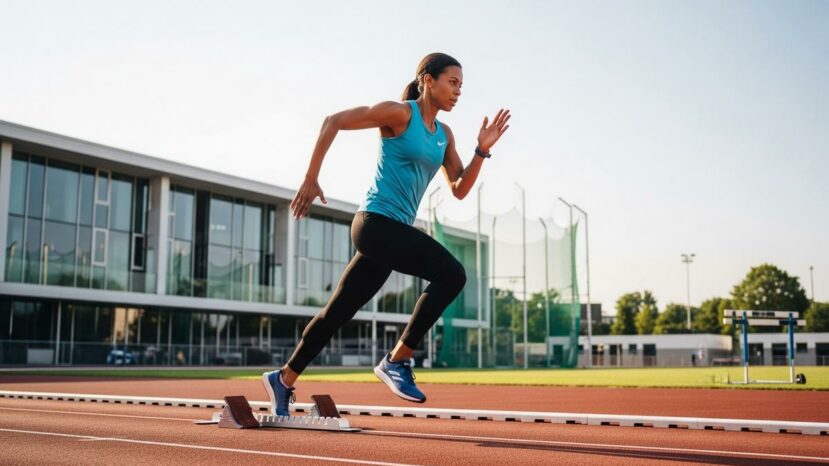
Are you looking to run faster without injuring yourself or losing the pleasure of running? Advice from trainers and physiotherapists, relayed by GQ, sheds light on the levers that really count. So you can take action on technique, training and recovery to move forward with confidence.
Laying a solid foundation for speed
Start with your posture: stand tall, gaze far away, trunk sheathed, shoulders relaxed. A cadence of around 170-180 steps/min limits impact and helps you run faster by reducing braking. What’s more, a short, rhythmic stride improves running economy at all paces.
Place the foot under the hips, without overextending the stride or tapping the heel. The arms guide the rhythm, elbows close to the chest, hands relaxed, shoulders low. Knee-highs, heel-buttocks and straight lines reinforce coordination.
Aim for fast, toned, supple strides to release energy with each step. Therefore, choose stable ground for intense sessions, especially when fatigue sets in. In short, technique progresses through short, regular repetitions, not in fits and starts.
“Speed is built on consistency, not haste.”
Key sessions to gain speed
Incorporate structured intervals once or twice a week, depending on the load. For example, 8 × 400 m at 5 km pace with 1 min active recovery help you run faster without increasing overall volume. Also, 30 s / 30 s formats develop VMA at a controlled pace.
Hill work strengthens the posterior chain and improves forward foot placement. Add a threshold tempo for 15-20 min to maintain a sustained pace and run faster for longer. In addition, increase the load by 5-10% per week, not more, to avoid glitches.
- Warm up gradually for 10-15 min, then finish with 2-4 short accelerations.
- Alternate surfaces: stable track, smooth road, soft path to spare tendons.
- Leave 48 hours between two very intense sessions to ensure proper assimilation.
- Hydrate regularly and top up with electrolytes on hot days.
- Note the perceived effort(RPE 1-10) to guide the load without excess.
Recovery, equipment and terrain
Progress is consolidated during rest, not just during the day’s training. Get 7-9 hours’ sleep whenever possible, and leave 48 hours between two demanding sessions. In this way, the risk of injury is reduced and neuromuscular adaptation is better established.
In the case of the Nike – Zoom Vaporfly Elite, the extra-thick foam sole combined with a carbon fiber plate optimizes energy return with every stride. Over long distances, this architecture can help you run faster with a more economical, stable stride.
The Nike – Vaporfly takes up this principle with a lightweight construction and an efficient roll-off designed for gestural economy. What’s more, its longitudinal rigidity provides constant support as fatigue sets in and technique deteriorates.
Strengthening completes the card and secures progress over time. Two short sessions a week targeting sheathing, glutes and calves improve useful power without heaviness. On the other hand, keep the loads moderate to preserve the quality of fast runs.
Nutrition and mental strategy
Arrive fuelled for key sessions and anticipate your needs throughout the day. Carbohydrate intake before intervals helps to maintain intensity and, in turn, to run faster with a better-controlled cardiac drift. Also, split up your hydration rather than drinking it all at once at the end of the day.
On the mental side, set a realistic target pace and define a plan B for D-day. Short mantras, rhythmic breathing and intermediate goals calm the drift when the going gets tough. As a result, you remain in control of your pace, rather than having to endure it in the final kilometers.
Action plan and follow-up
Structure a 4-6 week cycle with a gradual build-up, a peak, then a lighter week. From now on, test your progress with a simple benchmark, such as a 3 km run at a regular pace, measured under the same conditions. This way, you can make adjustments based on concrete data rather than isolated sensations.
Track three key elements: frequency, intensity and sensations noted after each session. With a simple diary, you can link volume, sleep and form to run faster, without forcing yourself on average days. What’s more, a weekly reminder of any pain or stiffness guides you in making prudent load choices.
In the event of acute pain, stop, adapt, then seek qualified advice if it persists. Adjust your stride, shorten your stride length and return with shorter blocks to maintain confidence. In short, consistency beats haste when aiming for lasting progress.
On the day, warm up for 10-15 minutes and then perform three gradual accelerations before setting off. As a result, your heart rate will be ready and the first kilometer will run smoothly. Also, aiming for a moderate negative split protects your pace and ensures an efficient finish.




Aucun commentaire
Publier un commentaire
Participez toujours dans le respect de la loi et des personnes.