



Musée des éclairages anciens in Paris: a little-known nugget at the heart of a boutique-workshop
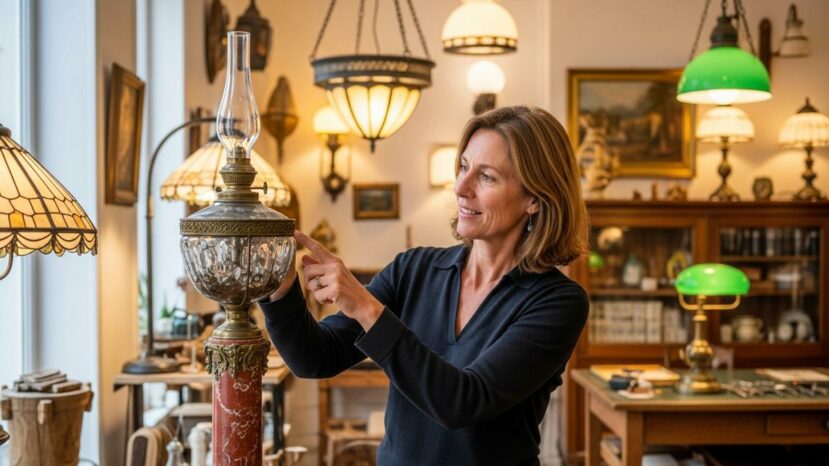
In Paris, a boutique-workshop hides a treasure trove of light: a little-known museum where each lamp tells the story of an era. Here, history is illuminated at eye level, without filter or distance. A visit thus becomes a calm and precise moment, tailor-made for the curious and the passionate.
History and setting of a treasure of light
The place is like a living reserve, as close as possible to objects and gestures. This little-known museum is built around patient expertise, restoration, advice and selected pieces. What’s more, the boutique-workshop atmosphere encourages discussion and sharing.
From the flames of the 19th to the circuits of the 20th century, there’s no sharp break. The materials speak for themselves: glass, brass, porcelain, copper and crystal, all patiently staged. In this way, each technology finds its place, from petroleum to electricity.
The tour is simple and clear, with simple markers. You can observe assemblies, spouts, shades and mounts at close quarters. As a result, the eye quickly understands the uses, the risks of yesterday and the solutions of today.
“Light tells the story of yesterday’s gestures, without sound or effect.
A few highlights
Kerosene lamp – in three-layer crystal, French work attributed to Sars-Poteries or Vierzon. The superimposed glass reveals a rare depth, while the flame shapes the color.
English lamp – from the Arts & Crafts school, before 1900, electric, in brass and copper. In this little-known museum, it recalls an ideal of useful art, designed to last and to light well.
- Before coming, please confirm times with the boutique-atelier.
- Set aside some time: each piece deserves a careful look.
- Ask questions: techniques are best understood with an example in hand.
- Be careful: many items are fragile or rare.
- Think photo, but without flash to respect old surfaces.
Techniques, materials and uses
Kerosene lamp – red stone column, brick glass reservoir with metallic flake inclusions, Duplex spout. Ornament meets performance, as the double draught boosts the light.
Student lamp – Quinquet petroleum type, anonymous, circa 1900. In this little-known museum, it shows a useful, stable light, designed for long, fatigue-free reading.
General Electric – Early 20th-century chandelier with cut-crystal globes. With its clear diffusion, the cut glass channels the brilliance, then dresses the room without dazzling it.
Kerosene lamp – very original shape, German origin, early 20th century. However, the silhouette dares to be asymmetrical, while the glasswork balances flame and safety.
From workshop to living room
Lamp – “Valentine” type in white porcelain, with a matching cardboard shade. The matte softness of the porcelain warms the space, and the pattern unites the base with the halo.
Desk lamp by Henri Peigniet-Changeur in Paris, late 19th century. Ergonomics dominates: arm, angle, screen, all aimed at a clean, precise task.
Study, office and domestic modernity
Lamp – white porcelain with matching enhancers, custom-made cardboard shade, France, circa 1875. Also, this set emphasizes proportion, and the rightness of flow.
Student lamp – bronze, green opal tulip, France, early 20th century. In this little-known museum, the tulip filters the light, then soothes reading over long hours.
Hanging lamp – fringed, France, 1st half 20th century. The textile moderates the shine, while the movement of the bangs gently enlivens the piece.
Kerosene lamp – white porcelain with “paste-on-paste” decoration. In short, the relief of the decoration catches the light, and this little-known museum reminds us why the hand still counts.



Aucun commentaire
Publier un commentaire
Participez toujours dans le respect de la loi et des personnes.