



The perfect omelette: 4 chefs’ tips for guaranteed success
Whether you’re in a hurry in the morning or late at night, you’re looking for a safe dish. The omelette is comforting, but requires an attentive hand. Here are some practical tips to help you become more consistent, without the need for expensive equipment.
The foundations of controlled cooking
First, allow 2 to 3 eggs per person, depending on appetite. Then beat until smooth, without over-foaming. For a fluffy omelette, add 1 pinch of salt and 1 knob of butter.
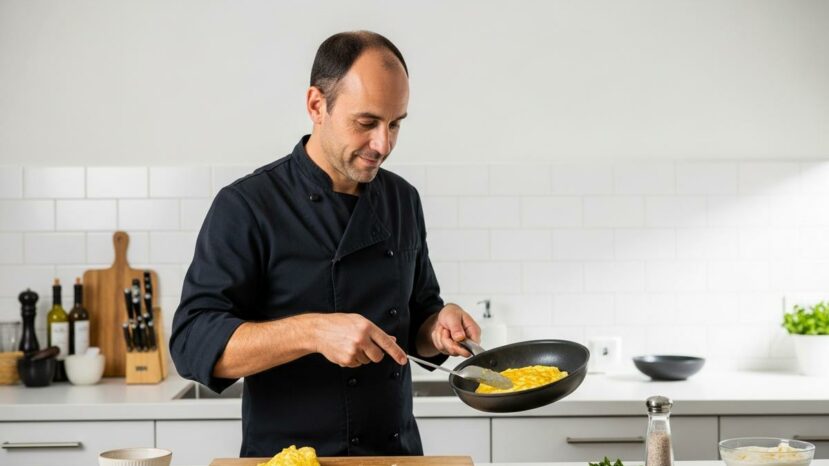
Next, preheat a 20 cm non-stick frying pan for one portion. Also, let the butter foam gently, without taking on color. One chef, a former Top Chef contestant, advises starting at medium heat.
This start-up process prevents the crust from becoming too brown, and gives the eggs time to settle. In this way, the texture remains supple, then settles into fine, glossy clots. When the omelette sets at the edges, tilt the pan and bring it back towards the center.
“Start cooking on medium heat, the texture will thank you.”
Precise gesture, soft result
Using a flexible spatula, make small circles in the center. This allows the eggs to coagulate finely, without drying out around the edges. Then smooth the surface by tilting the pan to distribute them evenly.
Do you like it slobbery, or rather well set? However, stop the heat when the surface is still shiny, a useful sign. The omelette will finish cooking thanks to the residual heat.
- Frying pan 20 cm, preheated, butter in calm foam.
- Salt at the end of threshing, never too early.
- Beat for 20 to 30 seconds, without frothing.
- Tilt, bring in the edges, smooth at the end of cooking.
- Stop at 90% cooking time, fold up quickly.
Seasoning, fats and clever additions
Add salt just before pan-frying, otherwise the water will come out too quickly. Add pepper at the end of cooking to preserve the fragrance. For a soft omelette, use clarified butter or a drizzle of olive oil.
A dash of water can soften the mass, without weighing it down. Milk adds flavor but slows egg setting. Nevertheless, keep a light hand: 1 tablespoon is enough for 3 eggs.
Add cheeses and herbs when the surface has just set. This way, they melt without soaking the omelette. Fold in half rather than roll if the filling is generous.
Safe cooking and transparent nutrition
Eggs coagulate between 62-70°C, depending on whites and yolks. For children, pregnant women and frail senior citizens, cook thoroughly. Keep everything covered, cooled within 2 hours.
In professional kitchens, pasteurized eggs are sometimes used to reduce the risk. What’s more, a dated batch remains traceable, so keep the packaging until the end. At home, a warm omelette should not be kept for more than 1 hour.
Frequent minor failures, quick solutions
Is the pan sticking? Heat, grease better, then wait a few seconds. However, too much heat crisps the protein and breaks the texture. Reduce the heat and let the butter foam gently before pouring.
Too much moisture makes the edges soft and dull. Also, wring out the sautéed vegetables before adding the filling. Your omelette will be firmer, with an even sheen.
A dedicated pan makes all the difference, even at a low price. Next, a soft trowel prevents snags and guides folding. In short, rely on short, precise strokes, 30 to 60 seconds in the center.



No comments
Post a comment
Always participate in accordance with the law and with respect for others.