



Paris 16th arrondissement: a little-known winegrowing past, from vineyards to the 19th century
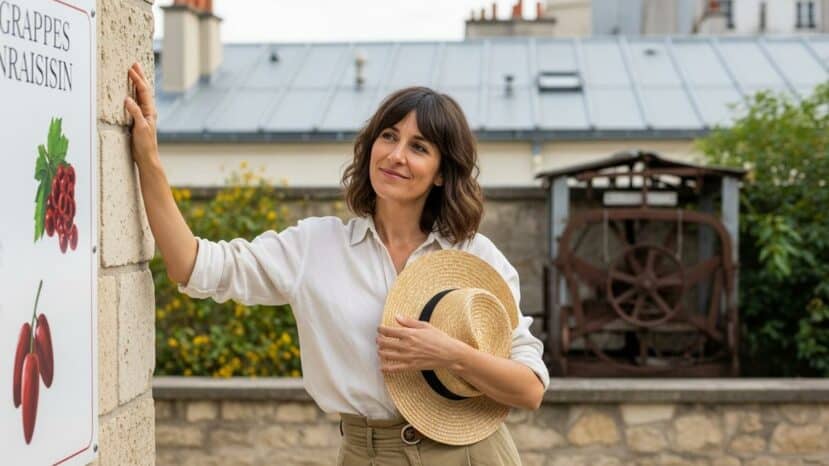
Over the years, vineyards have shaped western Paris. Yet Paris’s 16th arrondissement still hides this memory beneath its boulevards. Here,local history reveals the hillsides, villages and cellars that made wine.
Before the boulevards, vineyards on the hillsides of western Paris
Before the tall buildings, Auteuil, Passy and Chaillot were lively, commercial villages. The sunny, well-exposed slopes were ideal for growing grape vines. What’s more, the inhabitants lived to the rhythm of pruning, harvesting and pressing.
Harvests fed local cabarets and tables. River transport on the Seine also facilitated barrel sales. As a result, the 16th arrondissement of Paris was part of a local wine economy.
Religious orders often oversaw the cultivation and storage of wine. The Minimes de Passy, for example, maintained cellars dug into the rock. In short, these networks structured production and tithing for centuries.
“Beneath the avenues, traces of vines tell the story of another Paris.
From vine to city: changes and ruptures
In 1860, annexation restructured the capital’s map. Henceforth, the city nibbled away at the hillsides, and hygienism gained ground. As a result, Paris’s 16th arrondissement gradually turned the page on a long tradition.
Tramway lines, followed by subways, changed the way the area was used and its density. On the other hand, winegrowers retreated in the face of workshops and construction sites. In addition, vine diseases accelerated this gradual disappearance.
- Three historic villages: Auteuil, Passy, Chaillot.
- Role of religious orders and storage cellars.
- River transport on the Seine to move production.
- Annexation of 1860 and urbanization of the hillsides.
- Current traces: rue des Vignes, rue Vineuse, Musée du Vin.
However, some street names still bear witness to our winegrowing past. Rue des Vignes and Rue Vineuse, for example, bear witness to this agricultural past. The Musée du Vin also preserves tools, presses and stories.
The Musée du Vin and the memory of the hillsides
The Musée du Vin is located in Passy, near the Seine, in the 16th arrondissement. Its galleries occupy former monastic quarries and cellars. The visit features the gestures, tools and materials of the vineyard.
The site’s collections demonstrate the ingenuity of Parisian winegrowers and their associated trades. In addition, documents show how wine production was integrated into the life of the neighborhoods. In this way, we understand how the 16th arrondissement of Paris was integrated into the urban supply system.
Educational areas explain pruning, grape varieties and winemaking. The tours also explain how practices and tastes have evolved over time. In short, each one links the history of the vines to today’s morphology.
Harvest festivals still exist elsewhere in Paris today, every autumn. However, they serve above all as landmarks for understanding local memory. The culture of wine remains a common thread running through our walks.
Auteuil, Passy, Chaillot: three villages, one culture
Auteuil was built on well-exposed, well-ventilated slopes with little frost. Crops alternated between vineyards and gardens, depending on the season. As a result, this rural fabric supplied the 16th arrondissement of Paris and its markets.
Passy benefited from the slopes leading down to the Seine and its natural springs. In addition, the Minimes convent organized storage, circulation and rights. Today’s Rue des Eaux is a reminder of these once-useful springs.
Chaillot occupied an overhanging plateau, ideal for views, orchards and crops. Paths linked farms, wine presses and trading quays. In short, this geography paved the way for modern avenues.
Tracks in the city and ideas for outings
The traces are still visible in the toponymy and some of the walls. Rue des Vignes and Rue Vineuse are two of the most instructive places to take a stroll. What’s more, a number of passages retain the narrowness of the old paths.
You can link Trocadéro, Maison de Balzac and caves de Passy, following old alleyways. This route also lends relief to a district perceived as frozen. As a result, Paris’s 16th arrondissement is once again legible on foot.
Look at the slopes, the low walls and the luminosity of the facades, and the discreet staircases. In this way, you can rediscover the role of sun and wind in the vineyard. In addition, the heritage panels make it easy to read on your own.
This memoir speaks of the economy, techniques and urban sociability of the long term. It also links the rural past with the residential present, without forced nostalgia. In short, the 16th arrondissement of Paris reminds us that the city is still alive.


No comments
Post a comment
Always participate in accordance with the law and with respect for others.