



Luxury brands: Dior and Louis Vuitton raise bag prices to get out of the crisis
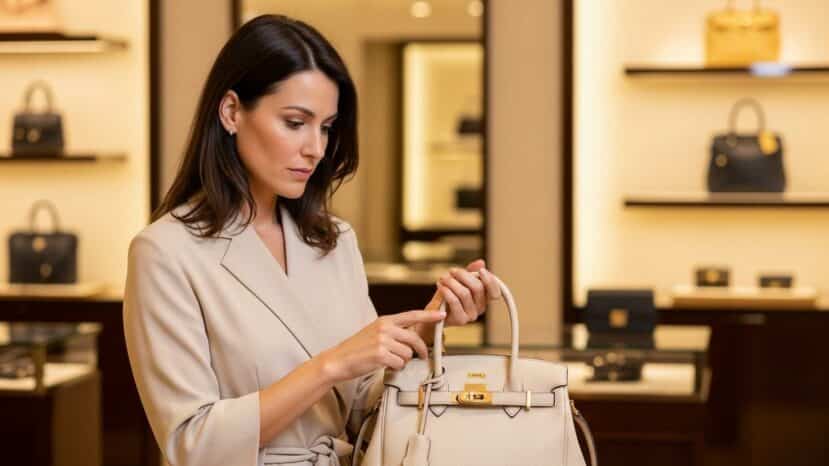
Luxury brands are adjusting their prices to weather uncertain times. As a result, they are seeking to protect margins, desirability and pace of release.
Customers are seeing rapid price rises on flagship bags. However, there are economic reasons for this, and there are purchasing strategies that can help you stay in control.
Why houses adjust their prices
The increase is not just intended to offset inflation. It also repositioned key models, reinforced thescarcity effect and supported boutique investments.
According to reports, the average price of certain bags rose from €3,300 to €3,500 in two weeks at a major fashion house. This rise of €200 in two weeks is said to have been replicated by a direct competitor, of which Dior and Louis Vuitton are often cited as emblematic references.
“A well-calibrated increase doesn’t discourage demand; it refocuses value on strong pieces.”
The role of costs, currencies and inventories
Material costs and skilled labor are more important. Consequently, prices also reflect quality, stability of supply and in-store service.
Currencies influence the final price when production and sales take place in several zones. In addition, inventories are finely controlled to maintain rotation and balance, as luxury brands regularly remind us.
- Track planned increases in advance of new collections
- Compare prices by currency and local tax system
- Ask in store about lead times and quotas for each model
- Assessing resale value on the second-hand market
- Prioritize maintenance and warranties to extend service life
Impact on customers and the secondary market
Buyers feel immediate pressure on their shopping baskets. However, in-store service and value retention remain concrete benchmarks.
The second-hand market reacts quickly, often with a slight time lag. As a result, some pieces gain a temporary premium, especially when a model becomes rarer in boutiques.
Some customers are now bringing forward their purchases ahead of a new price schedule. Luxury brands, on the other hand, arbitrate between volume, prestige and availability.
As a result, quotas per customer or per model are becoming stricter in some cities. On the other hand, manufacturers are seeking to strike a balance so as not to frustrate loyal customers.
Buying strategies to avoid suffering
Planning purchases over the year helps to smooth the budget. What’s more, requesting a store alert can help you avoid rushing when it’s time to restock.
Building an ongoing relationship with an advisor provides visibility. In this way, information on lead times, variants and after-sales services arrives earlier, even for luxury brands.
What this says about the luxury economy
These increases express relative confidence in global demand. Yet they also acknowledge higher structural costs and a volatile environment.
The travel rebound is supporting tourism sales, especially in the major capitals. As a result, availability varies widely by city and season, including for luxury brands.
Groups rely on best-sellers to anchor a reference price. What’s more, they invest in experience, logistics and traceability, not just window-dressing.
In short, price remains as much a steering lever as a positioning signal. As a result, customers arbitrate between “coup de coeur”, use value and brand power, when faced with luxury brands.



No comments
Post a comment
Always participate in accordance with the law and with respect for others.