



France’s most livable cities: the 2026 ranking
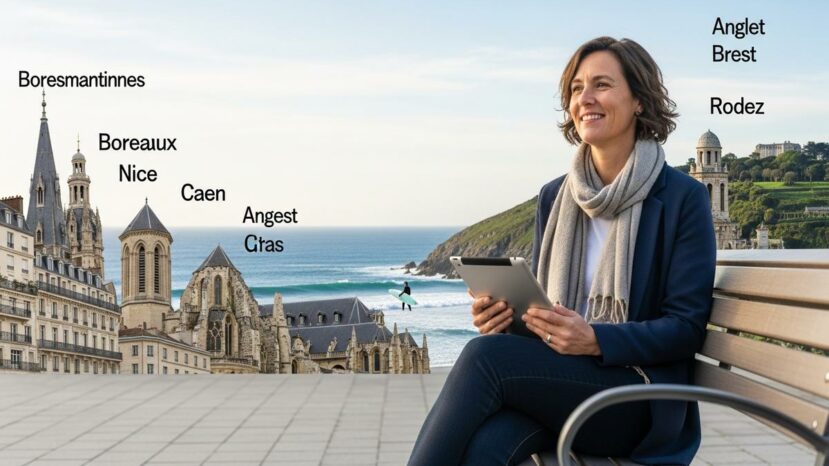
At a time when many people are rethinking their daily lives, Elle highlights ways to live better in 2026. Its panorama of cities in France provides useful pointers without dictating a single choice. What’s more, it provides a simple basis for planning a move or an extended city-break.
What the 2026 selection reveals
According to the article, the selection brings together 7 cities with varied profiles, from coast to inland. As such, it crosses everyday criteria: access to services, urban rhythm, nearby nature and cultural dynamism. In short, the aim is to help everyone prioritize, not to decide for everyone.
These include Brest, Nice, Caen, Anglet, Cherbourg, Rodez and Bordeaux. What’s more, each territory reflects a balance between employment, housing and mobility, shedding light on the diversity of France’s cities. On the other hand, the list does not claim to cover the whole country, nor to represent an absolute truth.
Concrete examples from coast to coast
On the west coast, Brest and Cherbourg focus on the sea, the winds and a lively port culture. Coastal walks, museums and community life combine with maritime-related employment. As a result, the atmosphere remains active yet breathable all year round.
“Choosing where to live means choosing between nature, jobs and links.
Further south, Anglet stretches its trails between ocean, forest and surf. Nice relies on generous sunshine, and Caen on a strong heritage. Bordeaux also combines vineyards, gastronomy and artisan workshops, while certain towns in France appeal to urban profiles.
The common thread runs through concrete benchmarks: mobility, health, education, housing and green spaces. The focus is not on perfection, but on everyday balance, from the local market to evening transport. From now on, this reading grid will help you to compare similar profiles with peace of mind.
- Visit during the week and at weekends to catch the rhythms.
- Compare rents, charges and shopping basket costs.
- Test bus, bike and commuter routes during rush hour.
- Check job offers in the sectors that interest you.
- Locate doctors, crèches and public services within easy reach.
How to use this classification in real life
Start by situating your real needs: jobs, schools, nature, culture and rhythm. And measure what’s non-negotiable and what can change over time. In short, this clarification avoids regrets and makes the visit more efficient.
Then, test the theory on the ground in two or three targeted neighborhoods. This way, you’ll quickly feel whether the promise matches your tempo in these French cities. As a result, a few exchanges with local residents will provide the nuance that the figures don’t.
Think of tomorrow’s challenges: heatwaves, flooding, low-carbon mobility and urban biodiversity. On the other hand, older housing stock may require work, but it offers charm and volume. What’s more, your commuting footprint weighs as much as your rent.
Budget, housing and the pace of daily life
Prepare a realistic housing budget, taking into account heating, utilities and insurance. For example, a reasonable rent can become tight if you have to pay extra to travel to these cities in France. Also, compare hidden costs: parking, private crèche, subscriptions.
For teleworkers, target quiet locations, good 4G and nearby third-party sites. What’s more, a reliable train station or accessible airport simplifies hybrid weeks. In short, these are concrete levers to keep you on track without stress.
Looking ahead to 2026: testing, networking and anchoring
There’s no substitute for a local lifestyle test, Monday to Sunday, in many French cities. Take the bus during rush hour, stroll through the market, come home late and get a feel for the city. Then you’ll know whether the setting really suits you.
Build bridges before you move: sports associations, cultural groups, neighborhood mutual aid. What’s more, these networks provide concrete reference points and speed up integration. On the other hand, make time for the unexpected, and leave room for the day-to-day.
Finally, a successful mobility project relies on reliable information, structured visits and a monitored budget. In this way, the panorama of cities in France serves as a starting point, and your own experience does the rest. In short, everyone can chart their own course in 2026.



Aucun commentaire
Publier un commentaire
Participez toujours dans le respect de la loi et des personnes.