



Solar eclipse on February 17, 2026: the year’s most powerful cosmic alignment not to be missed
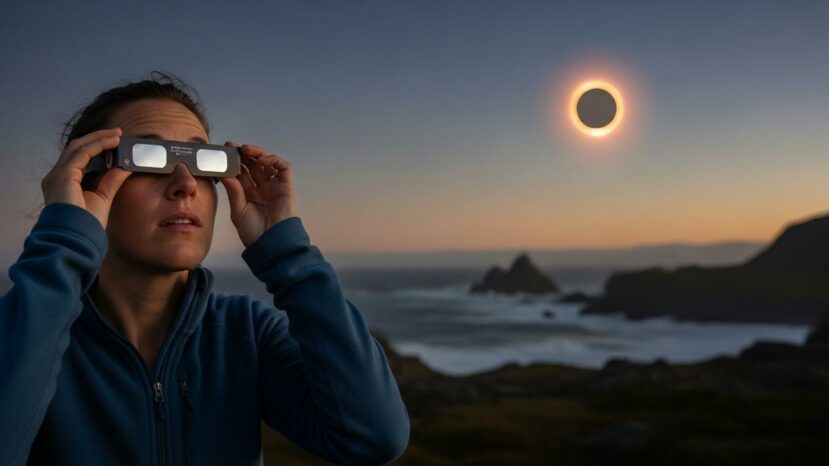
On February 17, 2026, a rare celestial event will captivate millions of eyes around the world. This annular solar eclipse will occur at the time of the new moon, offering a natural spectacle of breathtaking beauty. For astronomy enthusiasts and the curious alike, this event promises intense emotions.
A celestial phenomenon eagerly awaited
The February 2026 solar eclipse will be visible from many parts of the globe. Antarctica, the far south of South America and parts of the Atlantic Ocean will enjoy the best viewing conditions. As a result, many travelers are already planning their trips to these privileged destinations.
The phenomenon is characterized by theperfect alignment of the Sun, Moon and Earth. As a result, the Moon partially obscures the solar disk, creating a spectacular ring of fire. This particular configuration only occurs a few times a decade in one location.
Astronomers remind us of the importance of never looking directly at the Sun without suitable protection. Special certified glasses are essential to enjoy the show in complete safety. What’s more, photographic filters make it possible to capture these magical moments without risk to the eyes.
“Watching a solar eclipse remains an experience that marks a lifetime, a moment when you feel connected to the immensity of the universe.”
The astrological dimension of this event
Beyond the scientific aspect, this solar eclipse has a special significance for astrology enthusiasts. It occurs in the sign of Pisces, a water sign associated with intuition and sensitivity. As a result, some see it as a time for personal transformation.
New moons traditionally mark cycles of renewal and new beginnings. This celestial configuration invites us to set clear intentions for the months ahead. However, it’s up to each individual to decide whether or not to attach importance to these symbolic interpretations.
- Wear ISO 12312-2-certified eclipse glasses for safe viewing
- Choose an unobstructed location with a clear view of the horizon
- Arrive at least one hour before the start of the event
- Bring a camera with a suitable sun filter
- Check the local weather forecast several days before the event
How to prepare for this natural spectacle
Observing an eclipse requires meticulous preparation. The choice of location is the first crucial step in this adventure. The weather plays a decisive role in the quality of the experience.
Specialized travel agencies are already offering tours organized around this astronomical event. These tours often include expert guides to enhance the experience. Alternatively, enthusiasts can opt for more flexible personal organization.
For those unable to attend, live broadcasts will be available on the Internet. Observatories around the world are planning to broadcast the event in real time. This alternative means you can share in the excitement from the comfort of your own home.
Professional photographers recommend practicing before the big day. The limited duration of the event leaves no room for improvisation. What’s more, mastering your equipment allows you to take full advantage of the moment.
The next eclipses not to be missed
After this solar eclipse in 2026, other celestial dates await enthusiasts. On August 12, 2026, a total eclipse will cross Greenland and Spain. Each event offers different viewing conditions and unique emotions.
Keeping a calendar of astronomical phenomena enables you to anticipate your observation projects. Dedicated mobile applications now facilitate this daily monitoring. They automatically calculate precise times according to your geographical position.
A moment of connection with the cosmos
Watching a solar eclipse is much more than just a scientific observation. It reminds us of our place in a celestial system in perpetual motion. Many describe a feeling of contemplation in the face of nature’s power.
Local communities in areas of visibility often organize festive gatherings. These events create links between people from all over the world. As a result, the social aspect greatly enriches the individual experience.
Children usually have fond memories of their first eclipse. This educational opportunity awakens their curiosity for science and astronomy. So sharing this moment as a family takes on a particularly precious dimension.
The next solar eclipse visible from mainland France will not take place until 2027. Those wishing to experience it sooner will have to travel to areas of optimal visibility. This geographical constraint adds an adventurous dimension to the quest for the celestial phenomenon.




Aucun commentaire
Publier un commentaire
Participez toujours dans le respect de la loi et des personnes.