



Château de Vincennes: 5 reasons to visit this royal fortress on the outskirts of Paris
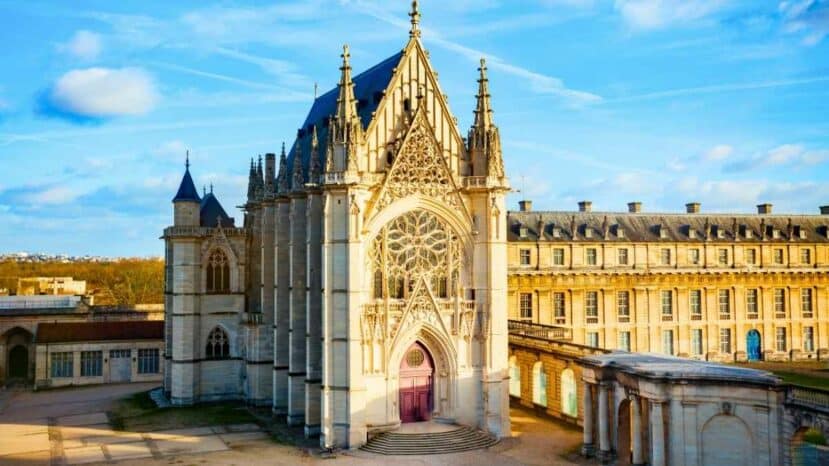
Just a few metro stops from the heart of Paris, a medieval fortress has stood for over seven centuries. The Château de Vincennes is one of the best-preserved examples of medieval military architecture in Europe. This royal residence tells a fascinating story of war, intrigue and the splendor of the French monarchy.
A fortress born in the heart of the Middle Ages
The site’s history began in the 12th century, when Louis VII had a hunting lodge built in the Bois de Vincennes. Subsequently, his successors gradually transformed the relais into a true royal residence. Philippe VI launched the construction of the keep in 1337, a project that lasted several decades.
Charles V completed this monumental keep in 1369. At 52 meters high, it became the tallest fortified tower in Europe. It was the king’s main residence and home to the royal treasury. This massive tower, surrounded by its own enclosure, offered unrivalled protection for its time.
The Château de Vincennes reached its apogee under Charles V. The sovereign developed a brilliant court and assembled an exceptional library. The monument thus became a major political and cultural center in the kingdom of France.
“The donjon at Vincennes bears witness to the power of the kings of France and their desire to create an impregnable residence at the gates of their capital.
The keep, a jewel of medieval architecture
Today, it remains the tallest keep of its kind in Europe. Its walls are 3 metres thick at the base. In addition, four corner turrets reinforce its defensive structure and offer views of the surrounding area.
The interior reveals royal apartments of great finesse. The vaulted rooms retain traces of their original decor. Visitors can therefore imagine the daily life of medieval sovereigns. The parapet walk provides an insight into the defensive strategies of the period.
- The keep is 52 metres high, a European record
- The castle walls extend over more than a kilometer.
- The Sainte-Chapelle was built on the Parisian model
- Three kings of France were born within these walls
- The site was used as a state prison for several centuries.
From royal residence to state prison
In the 17th century, Louis XIV gradually abandoned the fortress for Versailles. Nevertheless, he commissioned the architect Le Vau to build the King’s and Queen’s pavilions. These classical buildings contrast with the medieval austerity of the keep.
The Château de Vincennes began a new life as a state prison. Famous figures stayed there against their will. The philosopher Diderot was imprisoned there in 1749. The Marquis de Sade spent several years there. Mirabeau wrote some of his novels here.
The French Revolution transformed the site into a military arsenal. Napoleon installed barracks and reinforced the fortifications. However, this work profoundly altered the medieval appearance of certain parts of the site. The monument has thus weathered the turbulence of national history.
During the Second World War, the site experienced dark times. The German army executed resistance fighters here in 1944. Today, plaques commemorate these victims. The castle moat preserves the memory of these tragic events.
The Sainte-Chapelle, a Gothic treasure
The Sainte-Chapelle de Vincennes is another of the site’s major attractions. Charles V ordered its construction to house sacred relics. Its architecture was directly inspired by the Sainte-Chapelle in Paris, built a century earlier.
Work was completed under Henry II in the 16th century. The original stained glass windows, although partially restored, illuminate the nave with a colorful light. The chapel is still used for official ceremonies. Its remarkable acoustics make it a popular venue for concerts.
A living monument on the outskirts of Paris
Since 1934, the Service Historique de la Défense has occupied the classic pavilions. This institution has been preserving military archives since the 17th century. However, the site remains open to the public for guided and self-guided tours. The Centre des Monuments Nationaux manages the historical part of the site.
The Château de Vincennes attracts thousands of visitors every year. The metro station of the same name makes access easy. The journey from central Paris takes just 20 minutes. The nearby Bois de Vincennes is a great place to extend your stroll.
Regular restoration work preserves this exceptional heritage. The keep has undergone major restoration work in recent years. Visitors can now access the summit terrace. The view over Paris and its suburbs rewards the climb up the many steps.
The Château de Vincennes offers activities all year round. Temporary exhibitions enrich the permanent tour. Educational workshops are available for schoolchildren. Families appreciate the tours adapted for children. This thousand-year-old site continues to pass on its history to new generations.




Aucun commentaire
Publier un commentaire
Participez toujours dans le respect de la loi et des personnes.