



Hôpital de la Salpêtrière: this Parisian institution was once a gunpowder factory
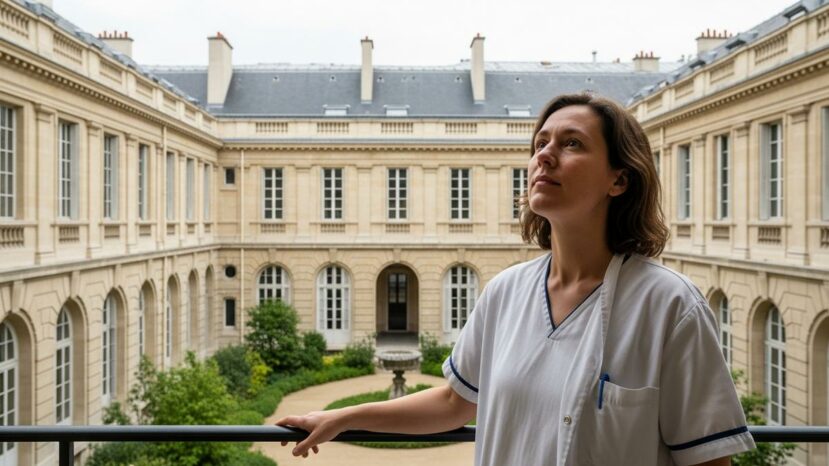
In the heart of Paris, a medical establishment hides a surprising past. This monumental Parisian hospital didn’t always treat the sick. Before becoming a place of care, it manufactured gunpowder for the royal armies.
La Pitié-Salpêtrière: a story that begins with war
The history of this Parisian hospital dates back to the 17th century. In 1634, Louis XIII had an arsenal built on the site. The aim was simple: to produce saltpetre, an essential component of gunpowder.
This strategic location was known as the “Petit Arsenal”. Workers worked tirelessly to supply the French armies. For several decades, the site was used exclusively for military purposes.
However, this vocation was to change radically. In 1656, Louis XIV decided to transform the buildings. The king wanted to create a hospice to house the capital’s beggars and vagrants.
“La Salpêtrière went from making gunpowder to caring for Paris’s most destitute.”
A major social transformation under Louis XIV
The monarch launched a vast architectural project. Architect Liberal Bruant drew up the plans for the new complex. The work lasted several years, to accommodate thousands of people.
At its peak, La Salpêtrière housed up to 10,000 residents. They included poor women, orphans and prostitutes. As a result, this Parisian hospital became the largest hospice in Europe.
- 1634: creation of the saltpetre arsenal under Louis XIII
- 1656: converted into a hospice by Louis XIV
- 1684: construction of the Saint-Louis chapel
- 19th century: the birth of modern neurology
- Today: reference university hospital center
The cradle of French neurology
In the 19th century, La Salpêtrière underwent a new metamorphosis. Doctor Jean-Martin Charcot revolutionized medicine. He studied hysteria and diseases of the nervous system.
His lectures attracted doctors from all over the world. Among his students was the young Sigmund Freud. From then on, this Parisian hospital ‘s influence extended far beyond France’s borders.
Charcot used innovative methods for the time. He photographed his patients and organized public presentations. These “Tuesday lessons” became famous throughout medical Europe.
He also described several diseases for the first time. Amyotrophic lateral sclerosis still bears his name today. His work also laid the foundations for modern psychiatry.
An exceptional architectural heritage
The Saint-Louis chapel is the jewel in the crown. Built in 1684, it features a unique Greek cross plan. Its impressive dome still dominates the 13th arrondissement district.
Architect Bruant designed four separate naves. This arrangement made it possible to separate the different categories of residents. On the other hand, all could follow mass from their reserved seats.
Gardens and courtyards provide a peaceful setting. A number of historic buildings have survived the renovations. This Parisian hospital blends modern care with classical architecture.
La Pitié-Salpêtrière today: a healthcare giant
The site is now home to one of Europe’s largest hospitals. More than 77 hectares stretch between the Gare d’Austerlitz and Boulevard de l’Hôpital. Every year, thousands of patients receive specialized care here.
The establishment excels in a number of medical fields. Neurology remains a flagship specialty, the legacy of Dr Charcot. Cardiology and oncology are also at the forefront.
This Parisian hospital also trains the doctors of tomorrow. It belongs to the AP-HP Sorbonne University Hospital Group. As a result, research and teaching go hand in hand on a daily basis.
Visitors can still admire the historic buildings. The chapel sometimes hosts temporary exhibitions. In this way, past and present coexist harmoniously on a site steeped in history.



Aucun commentaire
Publier un commentaire
Participez toujours dans le respect de la loi et des personnes.