Hairdressers are clear about the one shade that takes years off after 45


Changing your hair colour after 45 can feel like a risk, yet a few well-considered tweaks are sometimes all it takes to transform your look. Colouring specialists interviewed by Vogue UK share a common conviction: it isn’t the colour itself that makes you look younger, but the light it brings to your face.
What hairdressers actually recommend to brighten the face
Many women assume they need a dramatic change to look younger. In reality, colouring professionals advocate a far more subtle approach. According to Beth Minardi, a colourist interviewed by Vogue UK, staying close to your natural shade or choosing something slightly lighter is often the best route, especially once grey hairs start to multiply.
The idea isn’t to erase everything, but to let your colour evolve gradually. A few strategically placed lighter pieces add dimension to the natural base and ease the transition as silver hairs appear. This kind of treatment also avoids the flat, uniform effect of a heavily pigmented all-over colour.
Elena Ruiz, a New York-based colourist quoted by Vogue UK, makes one point very clearly: bringing lightness around the face produces a more flattering result. Luminous touches create depth, visually soften features and give the complexion a healthy glow. It’s a technical detail, but its impact on your overall appearance is very real.
Why very dark shades can be problematic
A very uniform dark brown or black creates strong contrast against the face. According to the hairdressers cited by Vogue UK, that contrast can harden features rather than soften them. It isn’t a question of age, but of the visual effect produced by light and shadow.
That doesn’t mean you have to give up dark hair. A brunette can absolutely keep her base colour. The key is to give it dimension: warmer highlights, a slightly lightened frame around the face, or a less opaque shade can be enough to make a noticeable difference.
Caramel, honey, golden blonde: the shades experts recommend
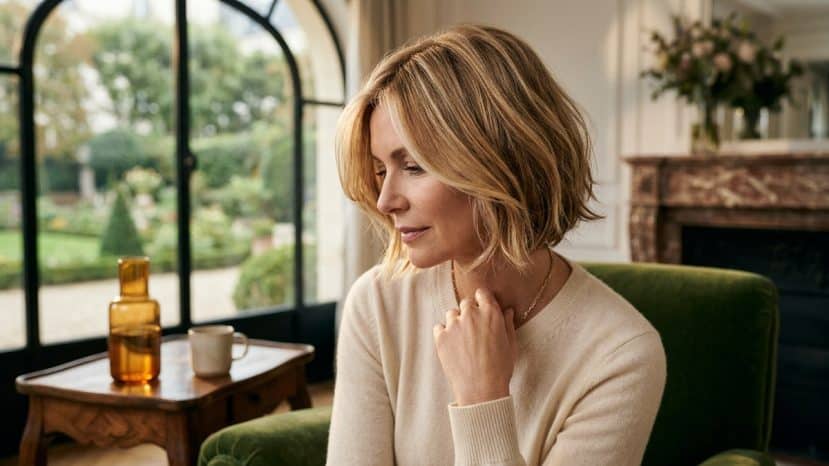
For those who want to lighten their hair, professionals steer towards warm, luminous tones. A dark brown can be revived with caramel highlights. A chestnut shade gains radiance with a few honey-toned pieces. Blondes, meanwhile, are better served by creamy or golden shades rather than a very cool, flat blonde.
- Caramel highlights to wake up a dark brown
- Honey touches to add radiance to chestnut hair
- Creamy or golden shades for blondes
- A slightly lightened frame around the face to soften features
- Less opaque shades to add depth to dark hair
The goal is the same in every case: to bring light without erasing the natural depth of the hair. This is precisely where the hairdresser’s expertise comes into its own. Two people with the same base colour may need very different shades, depending on their skin tone, eye colour and natural hue.
Grey blending: an alternative for very white hair
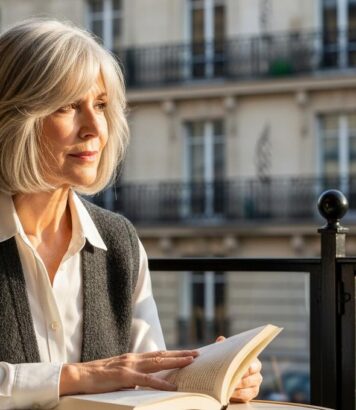
For those who already have a significant proportion of white hair, hairdressers point to another option: grey blending. This technique involves weaving white or silver hairs together with highlights and various shades, rather than trying to cover them entirely.
The result is a more gradual transition that avoids the stark contrast between a white root and a dark colour. In practice, this method can also require less upkeep than a colour designed to cover all the white hair. It’s therefore a seriously worthwhile option, particularly for those who want to simplify their routine while still achieving a harmonious result.