
Sleeping position: what it says about your mental health and which sleeping position to choose
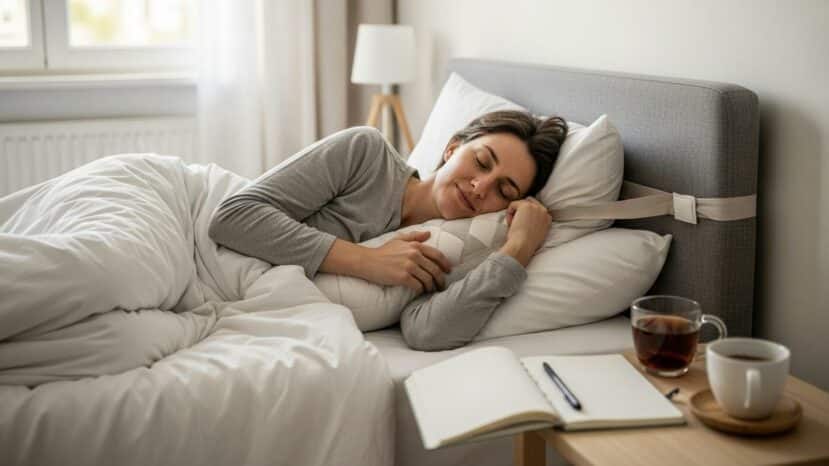


Every night, your sleeping position influences your rest and mood. So a few simple adjustments can soothe the body and clear the mind. What’s more, understanding these signals can help prevent restless nights.
What your night-time posture may indicate
Many specialists have observed links between posture and emotion. Your sleeping position may reflect comfort, pain or alertness. However, it never sums up your mental health. So, above all, it serves as a clue to cross-reference with your feelings.
Lying on your side, your breath often circulates better. What’s more, this sleeping position sometimes limits acid reflux. Some people see this as a sign of seeking security. However, only a global assessment can provide a reliable meaning.
On the back, the snoring increases in many people. As a result,sleep apnea can worsen, especially in the case of congestion. The stomach sometimes clears the airway, but the neck suffers. And the mind suffers if sleep becomes fragmented.
“Sleeping position reflects habits, not a diagnosis.”
Stress, dreams and body signals
Stress changes muscles and breathing. As a result, an overly rigid sleeping position sometimes signals a state of alertness. What’s more, frequent awakenings feed ruminations. Breaking this cycle requires concrete action.
Intense dreams cause some people to curl up. On the other hand, others stretch to release the tension. This sleeping position evolves from night to night. So noting how you feel when you wake up helps to clarify the picture.
- Align head, neck and back with a suitable pillow.
- Stabilize the pelvis with a cushion between the knees.
- Turn on your side if you snore frequently.
- Reduce alcohol consumption in the evening to limit apnea.
- Aerate the room for freer breathing.
Adjusting your posture, step by step
Start by supporting the nape of the neck with a suitable pillow. In this way, head-shoulder alignment reduces micro-awakening. What’s more, a mattress that’s neither too firm nor too soft stabilizes the sleeping position. In short, comfort reduces internal noise and supports the targeted 7 to 9 hours of sleep.
On the left side, digestion is often calmer. As a result, the night gains in continuity for some people. This sleeping position can also help during pregnancy. On the other hand, listen for pain signals.
The evening ritual guides the body towards sleep. Gentle stretching and breathing calm the system. What’s more, choosing a comfortable sleeping position becomes easier. As a result, you fall asleep more regularly.
When to seek professional advice
Consult your doctor if the pain wakes you up every night. On the other hand, seek rapid advice in the event of respiratory pauses. Sleeping position doesn’t explain everything. A sleep assessment can provide clear answers.
A psychologist can help with nocturnal thoughts. Brief techniques reduce hypervigilance. Adjusting your sleeping position also helps. In short, mind and posture work together.
Frequently asked questions and useful tips
Should I sleep on my back to rest my spine? The side, on the other hand, often reduces tension. The correct sleeping position is one that aligns the back without pain. So check your comfort after each micro-adjustment.
Snoring bothers the couple and fragments the night. So avoid lying on your back if the noise persists. This sleeping position promotes tissue collapse. An anti-snoring device can complement the effort.
What if the anxiety returns at bedtime? In addition, write down three worries on paper before the light. Then choose a stable, reassuring sleeping position. This makes it easier for the brain to let go of the anxiety loop.