Dragon Flag: strengthens abs more effectively than planking
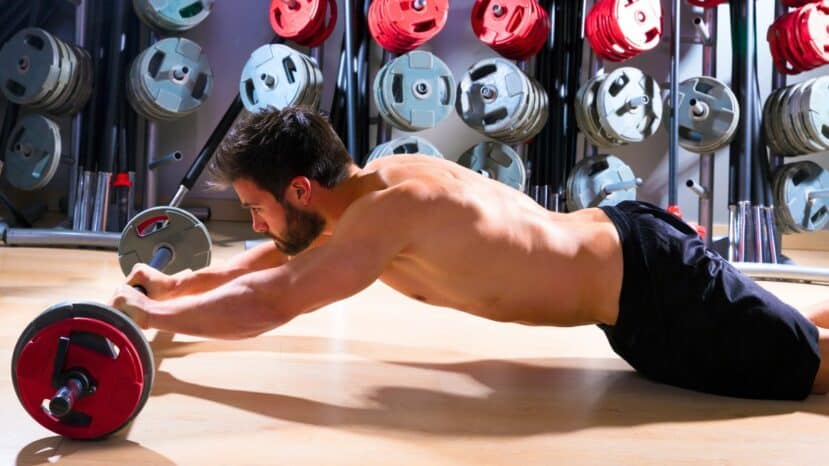


The Dragon Flag intrigues, motivates, then impresses. Looking for a challenge that strengthens the core well beyond the plank? This highly visual, cult exercise attracts with good reason, but requires method and patience.
Why the Dragon Flag fascinates sports fans
The exercise gained notoriety thanks to Bruce Lee. The principle seems simple: keep the body upright, pivoting around the shoulders. Yet the tension required of the trunk far exceeds that of a plank. The Dragon Flag involves the whole body, not just the abs.
The movement reinforces anti-extension and anti-flexion of the spine. As a result, it protects the lumbar region, provided the technique remains clean. What’s more, the sheathing is combined with strong back and gluteal action. The result is improved posture and stability.
Many see it as a test of body control. On the other hand, the level required remains high for a beginner. It’s best to arrive with a solid core and controlled breathing. The Dragon Flag rewards progress, not haste.
“The strong center changes posture, not just aesthetics.”
How to execute the Dragon Flag step by step
Lie down on a bench or on the floor, hands anchored behind your head. Place a strong retroversion of the pelvis to lock the trunk. This keeps the neck neutral and relaxed. In addition, breathe in on the bottom and out on the top.
Raise your legs, then your hips, with your body in a rigid plank. Slowly descend like a hinge, until you’re just touching the support. As a result, keep your glutes tight and your ribcage “tucked in”. The Dragon Flag becomes effective when the descent is controlled.
- Activate the glutes before the climb to protect the lumbar vertebrae.
- Tighten the dorsal muscles against the “anchor” to stabilize the shoulders.
- Manage the exhalation on the effort, to gain tension.
- Allow 3 seconds for a smooth descent.
- Stop the series as soon as the technique deteriorates.
Progressions and alternatives for a steel trunk
Start with “tuck” versions: knees towards the chest. This shortens the lever and secures the lumbar region. In addition, practice negative descents at the end of the session. The Dragon Flag then gains in quality without unnecessary overload.
Then switch to a straight leg, then to both. Program 3 to 5 strict, controlled repetitions. Aim for 2-3 sets with 60-90 seconds rest. A clean Dragon Flag wins out over sloppy volume.
Vary the basic exercises to strengthen the base. Dead bug, hollow body, reverse crunch and barbell raises form a continuum. What’s more, these movements teach retroversion and breathing. They make the Dragon Flag safer and more stable.
Choose a sturdy, non-removable anchoring point. On the other hand, avoid slippery surfaces and fragile handles. To be on the safe side, test your grip before each set. Caution limits risk far more than brute force.
Dragon Flag vs. plank: how do they fit into a program?
The board remains an accessible and useful exercise. The short lever, the low load, the obvious daily transfer. The Dragon Flag, on the other hand, requires maximum leverage. This difference makes all the difference to the anti-extension system.
Let’s not pit these two tools against each other. The plank builds endurance and basic alignment. Advanced movement improves power and control under stress. The choice depends on the objective, the history and the time available.
Safety, frequency and progress monitoring
Warm up shoulders, hips and spine for 8 to 10 minutes. Mobilize the upper back and practice hollow holds. Prepare your chest breathing before your first attempt. The Dragon Flag is won first and foremost by the quality of the setup.
Watch for signals: neck or lumbar pain? Stop short and adjust. As a result, reduce leverage, or go back to negative. A coach can correct key angles and breathing.
Measure the time under tension and the amplitude reached. Note repetitions held without visible arching. In addition, keep to 1 or 2 times a week to make progress without excessive fatigue. Regularity builds a lasting base, session after session.