Croissant and pain au chocolat inspired by Vienna: the story of their origins in Paris since 1839
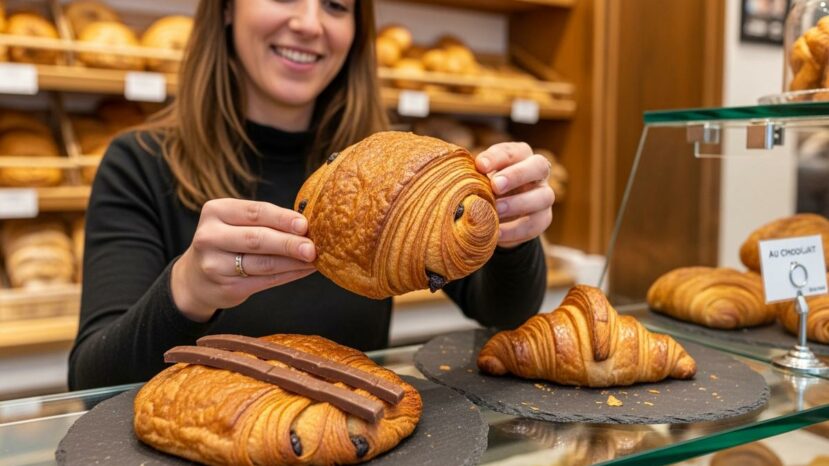


At the counter, the smell of hot butter beckons. From the very first bite, the pain au chocolat tells a story longer than the morning line.
The origins of a Viennese pastry that became French
The story begins in Vienna, with the kipferl, a croissant in shape but different. And so, taste first takes root in Austria, then travels. In
A key milestone emerged withAugust Zang ‘s Viennese Bakery around 1839. Thanks to this address, the capital discovered a rich, airy dough. French craftsmen then refined the gestures. On the other hand, they developed other shapes, including pain au chocolat.
From kipferl to puff pastry
The French croissant was born of a technical metamorphosis. In the 19th century, puff pastry was introduced. Butter and towers are alternated to create thin layers. As a result, the texture becomes crisp on the outside and soft on the inside.
“The pain au chocolat, discreet heir to the croissant, tells the story of a Viennese journey that became French.
The same dough will soon be used for other formats. Rectangles folded around chocolate make their debut. Also, workshops often slip
Name, shape and discussion of a snack symbol
The country gives it different names, depending on the region. In the South-West, we often ask for a “chocolatine”. Elsewhere, on the other hand, people order a pain au chocolat without hesitation. So, the menu changes, but the delicacy remains the same.
- The term “viennoiserie” refers to historical Austrian inspiration.
- A beautiful honeycomb indicates a good puff pastry and controlled fermentation.
- Reheating for a few minutes in the oven revives the crispness, not in the microwave.
- Chocolate sticks stand up better to baking than conventional squares.
- “Chocolatine” is mostly found in the southwest, alongside “pain au chocolat”.
The shape is no accident. It protects the melting core during baking. What’s more, it’s easy to hold for breakfast. As a result, the format is suitable for both morning commutes and snacks.
Quality rests on small, concrete details. A good puff pastry cracks, then flakes without breaking. The crumb must also be evenly honeycombed. A successful pain au chocolat offers all three at the same time.
What archives and usage have to say
The first French references follow the Viennese wave. Craftsmen popularized the format at the turn of the 20th century. Cafés helped, as they were quick to serve these golden pieces. As a result, the morning break became structured around these landmarks.
As the modern city evolves, so do its uses. The office imposes tight rhythms, but the break remains. The object becomes a simple, reassuring ritual. Pain au chocolat has become an enduring part of these urban routines.
Practical information to help you make the right choice
Start by looking at the list of ingredients displayed in the store. That way, you can spot the presence of butter or other fats. What’s more, longer baking time means better taste. A well-made pain au chocolat has nothing to hide.
Then observe the cooking process. The color should be brown, never dark. On the other hand, if the color is too pale, it means that the cooking time has been shortened. As a result, the texture loses relief and flavor.
The chocolate is just as important as the dough. So it has to melt without leaking with every bite. Its flavor balances fat and sugar. A harmonious pain au chocolat leaves the mouth clean and light.
Why this classic crosses generations
The hand holds a simple object, but it’s full of stories. Each leaflet tells the story of a gesture passed down from baker to baker. What’s more, the square of sweetness recalls the childhood of snacking. The pain au chocolat brings these memories together without discourse.
Over time, recipes stabilized, then became more refined. The flours change, the butters vary, but the method remains the same. And the pleasure comes from the consistency of the result. Pain au chocolat retains its immediate comforting power.
The essentials without myth or folklore
A Viennese inspiration, a French technique, a clever format. So you can read the story in the clay, not in the captions. What’s more, key dates like 1839 help set the scene. Pain au chocolat is easier to understand with these simple reference points.
The words differ from region to region, but the table brings people together. Everyone recognizes the crunchy, warm crumb. The chocolate at the heart links morning with afternoon tea. Pain au chocolat remains a clear sign of conviviality.
You want to get to the heart of the matter when you make your next purchase. Look at the color, smell the butter, listen to the crunch. Then, judge the dough-chocolate balance from the very first bite. With these reflexes, pain au chocolat delivers on all its promises.