
100% second-hand apartment renovation: 12 tips for bargain-hunting, renovating and decorating without breaking the bank
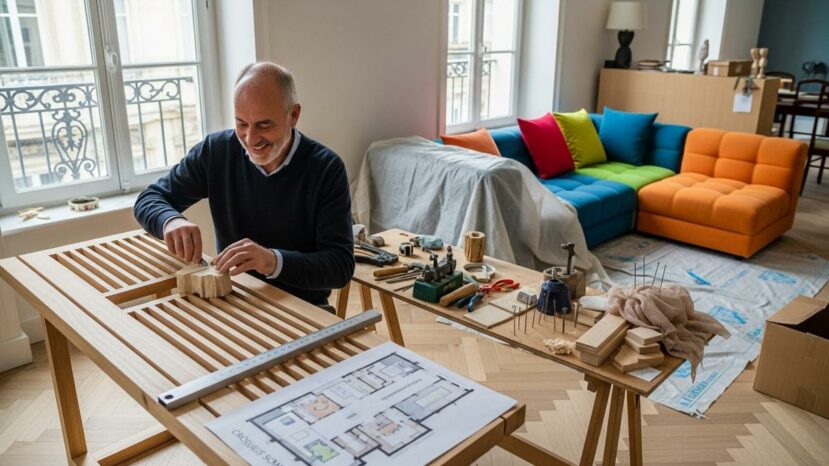


Dreaming of an apartment renovation that respects your budget and the planet? Second-hand offers concrete, elegant and sustainable solutions. Here’s a simple method, inspired by real-life experience, to get you from idea to stress-free action.
The three-step action plan, from need to purchase
First, clarify the function of each room and set a target style. In this way, you can avoid impulse buying and focus on
Next, draw up a list of items by priority: seating, storage, lighting, textiles. What’s more, set up alerts on your favorite platforms and locate local flea markets.
Then arbitrate between condition, rarity and cost of refurbishment. On the other hand, anticipate
“Buying less, but better, turns every constraint into style.”
Negotiate without risk, and secure every acquisition
Before you visit, ask for photos in natural light and close-ups. Also, ask for exact dimensions and maintenance history if possible. This rigor secures your apartment renovation and avoids costly returns.
Test the structure: seat, base, stability, runners, hinges. Consequently, reject any piece of furniture stained with active moisture or structurally cracked. In short, a “good bone” that can be repaired is better than a beautiful, fragile varnish.
- Useful dimensions: width, depth, height, door opening
- Structural condition: solid wood, steel, screws, bonding
- Hidden costs: reupholstering, foam, legs, electricity
- Transport: adapted vehicle, straps, protection, floor
- Hygiene: steam cleaning, laundry, textile quarantine
Repair, divert, sublimate: the potential of materials
Start with the basics: wood, metal, glass, fabric. Gentle sanding, waxing or mineral paint will bring your home back to life without masking the patina. For lighting, have the wires and switches checked to ensure they comply with standards.
Roche Bobois – Mah Jong (Sofa)[3]. A modular icon, it lends itself to custom covers, color schemes and evolving configurations.
For textiles, opt for washable covers and new foam. Then, think of ways to divert: a sideboard becomes a china cabinet, a trestle becomes a desk. The result looks new, but breathes history.
Compose a coherent style without copying and pasting
Mix different eras, but keep a common thread: a wood species, a motif, a chromatic range. Vary textures to balance volumes. This approach is ideal for apartment renovation, while preserving your individuality.
Cinna – Plumy (Sofa; 80s; floral version)[2]. Its generous roundness brings comfort, while the floral print spreads a cheerful, vintage note.
Logistics, budget and impact: one step at a time
Plan the rotation of rooms: first sleeping, then seating, then storage. This way, you live in the space during the changes, without chaos. As a result, you stay the course without sacrificing daily use.
Thonet – Thonet chair (Chaise)[2]. Lightweight and stackable, it structures a dining room, can be easily stripped and ages gracefully.
Clean methodically: wash gently, dry thoroughly, then protect appropriately. Also, document every purchase with invoice or receipt, photos and dimensions. This traceability simplifies insurance, resale and future apartment renovation.
Where to shop, what to aim for, how to last
Target flea markets, neighborhood sales and garage sales to reduce your transportation footprint. What’s more, choose solid wood,steel and glass, which are easy to repair. You’re investing for the long term without compromising on aesthetics.
Focus on frequently used pieces: sofa, table, lighting. Then add a touch of iconic or handcrafted elements for character. This mix makes the whole look lively, never uniform.
Finally, move forward by season: textiles in summer, lighting in autumn, large pieces of furniture in spring. In this way, you can spread out expenses and take advantage of the best periods. As a result, your apartment renovation remains controlled, joyful and resolutely sustainable.