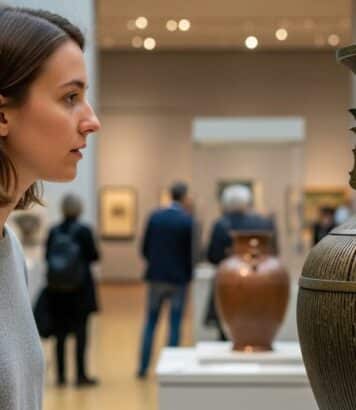
Musée d’Orsay in Paris: the former railway station of 1900 transformed into a museum in 1986
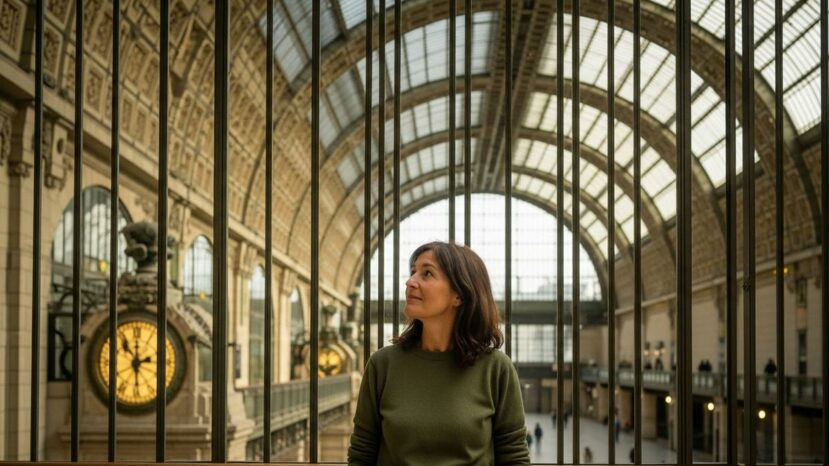


In Paris, the Musée d’Orsay hides a history of rails and steam. Behind its luminous nave, you can still make out the rhythm of a station built for the Universal Exhibition. The address tells the story of a century of urban and cultural change.
From railway station to cultural stage: metamorphosis of a place
First, the building was erected between 1898 and 1900, facing the Seine. The Compagnie du Paris-Orléans commissioned the architect Victor Laloux. In addition, the building adopts a Beaux-Arts style, with glass, stone and iron.
The original station serves trains to the southwest. The glass roof floods the platforms with useful, soft light. However, the length of the platforms soon limits the capacity of modern trains.
In 1939, the main departures moved to Austerlitz. The station was used as a postal hall, a stage and then a movie set. Its hotel later closed, leaving a sleeping giant on the platform.
“Born to accommodate trains, the nave has become a showcase for light.
What the Musée d’Orsay owes to the original station
The structure retains its monumental clocks. They still punctuate the visit and frame the view of the Seine. As a result, the memory of travelers remains palpable.
Today, the longitudinal plan guides the visitor’s path. The volumes impose a large-scale scenography. The former central thoroughfare becomes an alley of works of art.
- 1900: inauguration for the Universal Exhibition.
- 1939: end of mainline services at Orsay station.
- 1978: protected as a historic monument.
- 1986: the museum opens to the public.
- Preserved clocks, glass roofs and carved stone.
Filming sessions mark the years of relative neglect. The hall housed sets, then events. In short, the station remains useful, despite the uncertainty.
Inside the Musée d’Orsay: heritage and scenography
A competition launched the conversion in the late 1970s. The winning team breathed new life into the existing building. Architect Gae Aulenti then designed the museum interior.
The exhibition focuses on art from 1848-1914. Paintings, sculpture, objets d’art and photography are all on display. In this way, the setting combines historical coherence with spatial clarity.
The site opened in 1986, after years of study. The project was supported by the French government, then inaugurated at the highest level. The workshops also conserve and restore on site.
The public benefits from vast, legible spaces. The glass roofs filter a light that respects the works of art. As a result, the former station becomes a lasting cultural landmark.
Key dates and players in the transformation
Victor Laloux ‘s name accompanies the birth of the railway. Gae Aulenti ‘s is the name of the museum’s identity. Nevertheless, French teams steered the project over the long term.
The 1978 heritage classification prevents demolition. It guarantees the preservation of facades and roofs. This protection also provides a framework for further work.
The collections are gradually being installed. Technical studies adapted the climate and loads. The nave now supports major works of art.
Why this story still matters to Paris
The story of a station turned museum inspires the city. It shows that a living heritage can be reinvented. On the other hand, every intervention respects the spirit of the place.
This railway memory attracts curious visitors. The view changes when you know the former function. The Musée d’Orsay reads like a city in miniature.
Beyond masterpieces, architecture is about use. It links mobility, industry and creation. In this way, the Musée d’Orsay proves that reasoned adaptation is a means of transmission.