Brigitte Bardot, the woman who spoke to the sea: farewell to the lady of La Madrague



She had chosen to withdraw from the world, facing the Mediterranean, behind the blue shutters of La Madrague. With the death of Brigitte Bardot, a whole idea of freedom, sunny and fragile, died out in Saint-Tropez.
In the little white house with blue shutters on the Route des Canebiers, time had long since stood still. Brigitte Bardot lived there almost as a recluse, surrounded by animals, far from movie sets, TV sets and red carpets. The woman who had set the world on fire with Et Dieu… créa la femme had finally grown tired of the din of celebrity. She preferred the surf, the wind in the pines and the silent company of her dogs and goats.
La Madrague, a house with its feet in the water
It all began in 1958. On the advice of her parents, already settled in Saint-Tropez, Brigitte visited a fisherman’s cottage for sale, right on the water, near the Canoubiers beach. It was love at first sight. She bought La Madrague on the spot, for 24 million old francs.
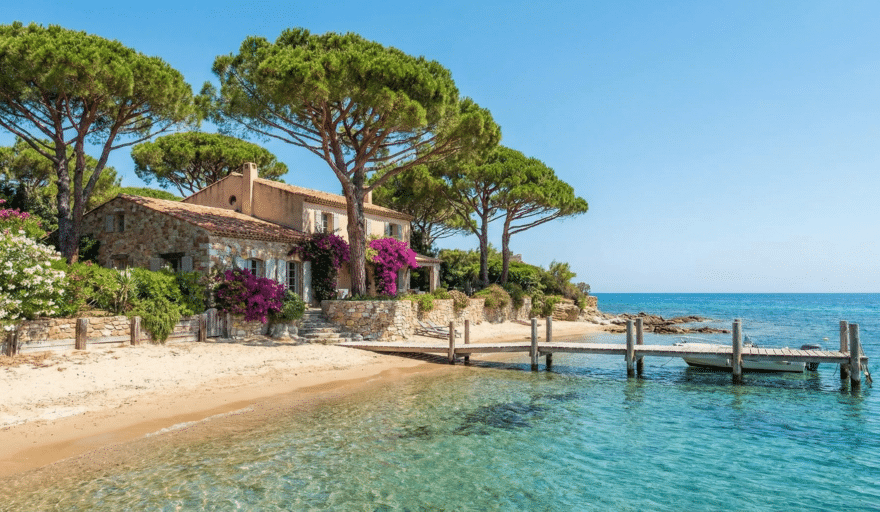
There’s nothing palatial about the house. A low wall washed by the waves, weathered tiles, pale blue shutters, a garden tangled with pines and tamarisk. The luxury here is discretion. In the morning, the light glides across the bay, almost golden. In the evening, the sky is tinged with pink behind the moored masts. Bardot wanted to live “with her feet in the water”, and the décor follows her every word.
La Madrague soon became the scene of romantic summers, watched from a distance by the Parisian newspapers. Sacha Distel, Alain Delon, Jean-Paul Belmondo… Riva arrivals, laughter late into the night. In 1966, flamboyant lover Gunter Sachs rained rose petals down on the house from a helicopter. A scene worthy of a movie, but one that belongs to his life.
In 1963, Bardot gave this refuge a song, La Madrague, a slightly melancholy sweetness that recounts the end of summer, the stacked chairs, the departing boats. The title was directly inspired by her house in Saint-Tropez, which she used as the backdrop for the video, shot on the water’s edge.
From party decor to animal shelter
As the years went by, the noise died down. Brigitte Bardot made her last film in 1973, then decided to leave the cinema to devote herself entirely to the animal cause. La Madrague changed its role from social address to shelter. The most regular guests were the dogs, cats, geese, sheep and goats she took in. Bardot often repeats that she “lives with her animals”.
In 1992, she donated the property to the Fondation Brigitte-Bardot, retaining the usufruct to ensure its continuity in the service of her battles. In the garden, small, simple tombs nestled among olive trees watch over the departed companions. She also expressed the wish that, after her death, La Madrague should become a museum, with proceeds going to her foundation, and that she should be buried there, among her animals.
Right up to her final days, she continued to sign press releases and speak out against hunting with hounds and bullfighting, from this house that had become an outpost of relentless militancy.
Saint-Tropez, the setting for a French legend
It’s hard to imagine Saint-Tropez without Brigitte Bardot. The little fishing port and the young actress have shaped each other to the point of becoming inseparable. The Baie des Canoubiers is now known the world over for the discreet house that can be seen behind the pine trees: La Madrague.
In summer, the tour boats always slow down in front of the property. You can see her at water’s edge, almost shy, protected by her wall and two stone overhangs obtained by dispensation, to keep the paparazzi at bay.
Passengers look up, hoping to catch a glimpse of a half-open shutter, a silhouette on the terrace. Bardot hasn’t shown her face for years. But the simple line of the roof is enough to conjure up a whole imaginary world: gingham dresses, hair up, laughter on the harbor at dusk.
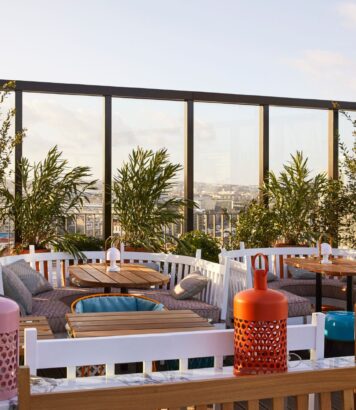
In Paris, this Tropezian spirit can sometimes be found in certain palaces and rooftops that play the Riviera card: clean lines, chilled rosé, white linen tablecloths, like an urban echo of the summers of La Madrague. From Saint-Tropez to the rooftops of Paris, the shadow of Bardot continues to inspire the way we dream of the Mediterranean.
A legend of light… and its shadows
Brigitte Bardot left an immense imprint on cinema, fashion and popular culture. Her roles in Et Dieu… créa la femme, Le Mépris and La Vérité redefined the representation of feminine desire on screen and made her a symbol of freedom in post-war Europe.
Her commitment to animals has changed the way an entire country looks at furs, slaughterhouses and factory farms. His foundation remains one of the most active on these issues.
But his career has also had its darker side. His public statements against immigration and Islam earned him several convictions for incitement to hatred, and deeply shocked the public, turning him from an icon into a controversial figure who divided French opinion.
But tonight, when we think of La Madrague, we imagine above all a woman tired of the noise, seeking peace in the sound of the sea. A Parisian turned Tropezian, who lived according to her own script, sometimes violent, often moving, always free. On the abandoned beach, the “shells and crustaceans” of her song suddenly seem to take on the color of mourning. Yet, in the collective memory, Brigitte Bardot will long remain that blonde silhouette opening an old gateway to the Mediterranean.
📍 Practical information
La Madrague – home of Brigitte Bardot
La Madrague, route des Canebiers, 83990 Saint-Tropez, France
Private property, not open to the public.
It can only be seen from the sea, on boat trips from the port of Saint-Tropez.