Brigitte Bardot, a star’s journey from Paris to Saint-Tropez
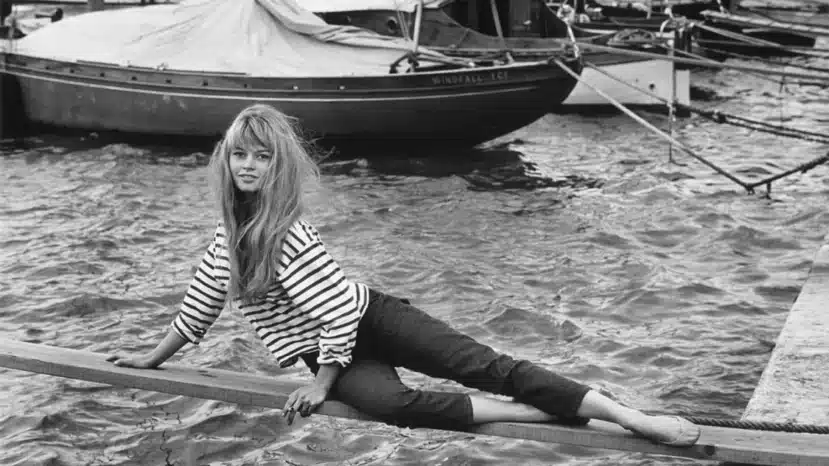


Brigitte Bardot passed away this Sunday, December 28, 2025, at the age of 91, in her famous residence at La Madrague in Saint-Tropez. With her passing goes the last living figure of a French myth, a woman who overturned the codes of cinema and femininity for more than two decades.
The end of a French cinema myth
The Brigitte Bardot Foundation announced with great sadness the death of its founder and president, recalling that she had “chosen to give up her prestigious career to dedicate her life and energy to the defense of animals”. Hospitalized in Toulon for surgery in October, BB had returned home to rest, where she spent her last days surrounded by her animals.
More than an actress, Brigitte Bardot was an aesthetic and moral shockwave. A feminine figure of the 1950s-1970s, she embodied the roles of liberated, non-conformist and sometimes fatal women, rapidly becoming a worldwide sex symbol and a muse of emerging sexual freedom.
“Freedom is being yourself, even when it’s inconvenient”- Brigitte Bardot, Mon BBcédaire (October 2025)
The beginnings (1934-1955)
Born on September 28, 1934, in the 15th arrondissement of Paris, Brigitte Anne-Marie Bardot grew up in a strict bourgeois family. Her father, Louis Bardot, was an industrialist with a passion for cinema. Her mother, Anne-Marie dite “Toty”, passed on her love of dance and fashion. It was through ballet that she discovered grace before rebellion.
In 1949, at the age of 15, she was hired by Hélène Lazareff, director of Elle magazine. That same year, at an audition, she met Roger Vadim, Marc Allégret’s young assistant. Their admiration was mutual, and marked the beginning of a major artistic collaboration.
In 1952, she landed her first film role in Jean Boyer’s Le Trou Normand, alongside Bourvil.
The meteoric rise (1956-1965)
In 1956, Roger Vadim, who had become her husband, revealed her to the world with Et Dieu… créa la femme. The film caused a scandal and propelled the 22-year-old actress to international stardom. Her frenetic on-stage dancing became legendary, symbolizing a new sensuality that upset the conservative mores of the post-war era.
In 1958, she starred in Claude Autant-Lara’s En cas de malheur opposite Jean Gabin. In 1960, Henri-Georges Clouzot offered her the role of a lifetime in The Truthin which she played Dominique Marceau, a young woman accused of murdering her lover.
In 1963, Jean-Luc Godard entrusted him with Le Méprisan absolute masterpiece in which she stars opposite Michel Piccoli. The famous opening scene remains engraved in cinematic history. In 1965, Louis Malle’s Viva Maria! reunited her with Jeanne Moreau for an explosive duet.
The end of a career (1973)
On June 6, 1973, at the age of 38, on the set of L’Histoire très bonne et très joyeuse de Colinot trousse-chemise, Brigitte Bardot decided to call a definitive halt to her film career. She had just saved a little goat from death, and suddenly felt ridiculous in her period costumes.
“I could see myself in my dressing room mirror with my henna and frilly skirts. I wondered what the hell I was doing bundled up like that. “Brigitte Bardot