
Foundation: avoid the eye area, the only zone that should not be covered for a natural, crease-free finish.
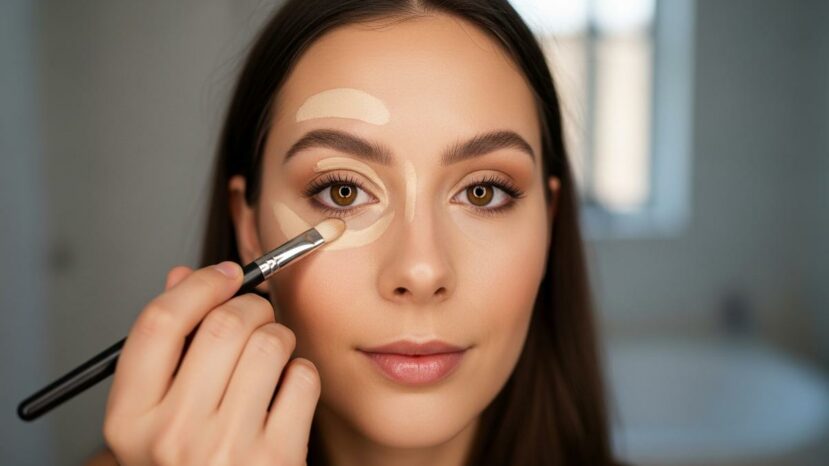


Your routine often comes down to one detail: the application of foundation. A tip shared by professional make-up artists reminds us that a specific area should be spared. That way, you avoid shine, creases and tired eyes from the very first hour.
The only area left without tinted base
The area to avoid is the eye contour, especially the mobile eyelid. This skin is thin, mobile and highly expressive. As a result, the product moves quickly and marks every crease.
On the eyelid as well as under the eye, the oily film slides towards the lashes and mucous membrane. What’s more, the pigment accumulates in fine lines, accentuating shadows. In short, the look is heavier, even if the application seems impeccable from the outset.
Aim for a targeted strategy: correct without overloading. This means keeping the contour clean and comfortable, and reserving foundation for the rest of the face. This simple guideline concentrates effort where the skin can really tolerate it.
“Less product in the right place, more sparkle where it counts.”
How to correct without overloading the eyes
Start with a light color corrector on the bluish or purplish shadow of the dark circle. Next, dab a fluid concealer only where the color persists. In this way, light returns without filling in the area.
Apply foundation to cheeks, forehead and chin, working outwards from the center. On the other hand, blend the edges of the foundation into the eye socket, without crossing the line of the ring. In addition, set very lightly with ultra-fine powder to avoid any migration.
- Moisturize the eye area before applying make-up, then leave on for 5 minutes.
- Correct the color, then camouflage with a fine texture, patting on.
- Avoid back-and-forth movements, preferring the gentle pressure of a sponge.
- Fix locally with micro-fine powder, in very small quantities.
- Keep a setting mist handy to revive freshness.
Preparing the skin: moisturizing, textures and tools
A careful skincare base changes everything, especially around the eyes. A light, unscented contour cream limits tugging and clumping. Also, let the cream penetrate the skin to avoid fluffing.
Choose textures that suit your purpose. For example, a fluid foundation with adjustable coverage is better suited to the cause of clarity than a thick formula. What’s more, a satin finish reflects light without freezing features.
As for tools, alternate between a moistened sponge and a soft brush, depending on the area. The sponge taps and blends the material, while the brush stretches with precision. In short, use your fingertips to blend the edges as close as possible to the eye socket.
Common errors and quick fixes
An overdose of powder under the eye freezes the look. So restore movement with a micro-drop of skincare or mist, then tap the sponge. As a result, the surface regains suppleness and creases fade.
A shade that’s too light will amplify dark circles, even when applied cleanly. Test the shade in daylight, next to your foundation. On the other hand, keep a neutral or peachy undertone to correct without graying.
Special cases: dry, oily and mature skin
Dry skin? Give priority to water and comfort. A moisturizing base, followed by a thin concealer, is often all you need. What’s more, a veil of powder applied only to the outer corner of the face will keep your eyes looking their best.
Oily skin or shiny eyelids? Choose an eyelid base designed for this area, not a complexion base. As a result, color lasts without a veil of tinted product migrating to the lash line.
Mature or sensitive skin? Look for supple textures and gentle gestures. From now on, the priority is light, not coverage around the eyes. This way, the rest of the face can receive foundation while the eyes remain free and fresh.