Monumental pyramid at Père-Lachaise: the ambitious 19th-century project falls into oblivion
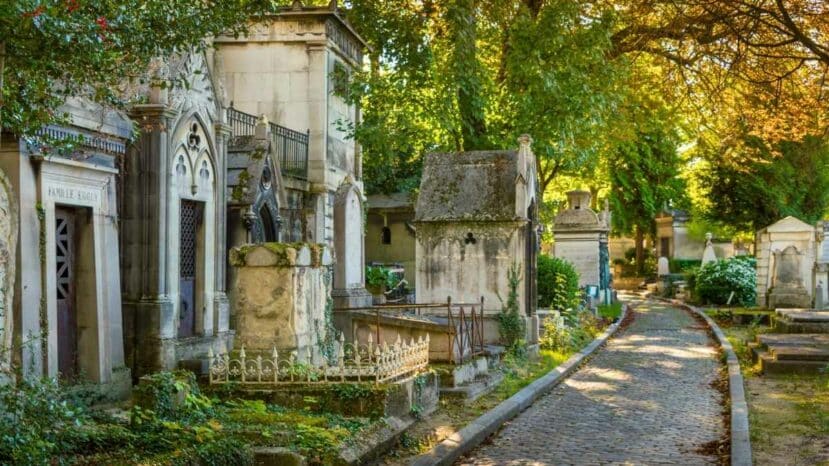


You’re walking between the cypress trees when the idea strikes: what if a pyramid had dominated these alleys? At the heart of urban historyA monumental project once envisaged a radical transformation of Père-Lachaise. Yet this dream of stone has slipped into oblivion, leaving behind some very topical questions.
A pyramid for collective memory
In the 19th century, Paris debates space, hygiene and the dignity of the dead. In this climate, some voices proposed a giant funerary pyramid. In this way, a single landmark was to gather remains, structure flows and assert a vision of public memory.
The project aimed for a large-scale public ossuary, conceived as a sustainable response to exhumations and saturation. In addition, the pyramidal architecture promised a clear symbol, legible from afar, and an interior pathway conducive to contemplation. The ambition was not just aesthetic, it was intended to be useful.
In Père-Lachaise, the idea seemed almost logical: already a place of funerary art, the cemetery would have welcomed a major landmark. However, reservations arose about the costs, the technical challenges and the risk of overwhelming the diversity of the tombs. The debate lasted, then died down.
“A monument can nourish memory without crushing it.”
Historical origins and urban setting
Opened in 1804, the cemetery was part of a new burial policy. Inspired by clear principles of urbanity and landscape, the site was built on the heights of eastern Paris. As the city grew, so did burial pressure.
Authorities are looking for solutions for temporary concessions and exhumed remains. A single, rational volume seemed an attractive way of simplifying management. At Père-Lachaise, hopes, fears and budgetary calculations all converged around this solution.
- 1804: opening of the cemetery and change in funeral regulations.
- 19th century: debates on hygiene, space and the role of ossuaries.
- Pyramid project: a monumental landmark serving as an ossuary.
- Major obstacles: cost, technology, landscape, social acceptability.
- Inheritance: a documented idea, but never constructed.
What the project promised
Architecturally, the pyramid had to offer a simple, strong mass that everyone could understand. Its faces guided light and its internal galleries organized circulation. As a result, the monument would have oriented steps and framed the view right from the entrance.
The program was clear: a protected, ventilated, signposted public ossuary. In addition, spaces for meditation punctuated the itinerary, with signage designed for families with diverse expectations. Convenience was as important as symbolism.
In the city, such a volume would have interacted with the landscape axes and alleys. The landmark was also intended to facilitate orientation for the many visitors who sometimes got lost. The site gained in legibility without losing its sensitive dimension.
In social terms, the idea held out the promise of equality. Anonymous remains would find a dignified, protected and visible place. In short, the monument linked shared memory with individual respect.
Reasons for giving up
The first obstacle was financial, as the cost was deemed too high and weighed on urban priorities. At the time, the city was investing in water, sanitation and schools. In Père-Lachaise, these trade-offs quickly put an end to the initial enthusiasm.
Then came symbolic and technical issues. Some feared that the sign would be too dominant, or even out of place, in front of family graves. As a result, uncertainties about soil and safety reinforced opposition.
A trace that still raises questions today
As you stroll among the monuments, the absence of this pyramid tells a different story. Yet it sheds light on our current choices in terms of memory and landscape. The site retains its strength, without overwhelming the horizon.
Funeral management is now evolving with cremation, renewable concessions and heritage mediation. As a result, our solutions are more discreet, but better integrated into existing practices. The balance between the need for space and family privacy guides our actions.
The lesson remains: ambition must not erase the plurality of rites. What’s more, sobriety can serve solemnity just as well as a monumental gesture. At Père-Lachaise, the diversity of chapels and steles proves this every day.
For visitors, understanding this page of history enriches the walk and the look. Also, paying attention to alignments, perspectives and crossroads reveals the intelligence of the layout. In short, the cemetery speaks, even when projects aren’t being built.