
Sneakers: a podiatrist recommends pairs that combine comfort and style after 50 this winter
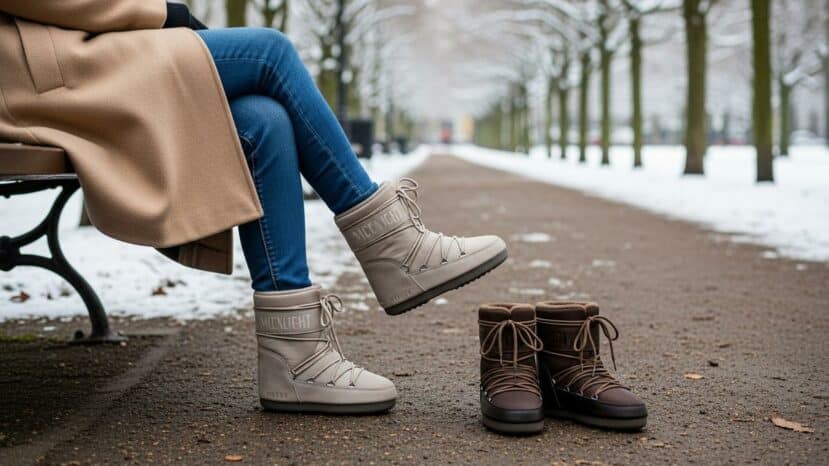


Once you’re past fifty, choosing sneakers for winter becomes as much a question of health as of style. Cold, damp and sometimes more sensitive feet call for simple but precise criteria. Here, a podiatrist provides concrete guidelines for long-lasting walking, both in town and in the country.
After the age of 50, a podiatrist’s guidelines for making the right choice
In the specialist press, a podiatrist details a clear method for choosing sneakers after the age of 50. First of all, stability is paramount: a well-set heel, a firm arch support and a flexible forefoot in the right place. In addition, aim for a drop of 6 to 10 mm to spare the Achilles tendon.
Comfort also comes from the sole. It must provide cushioning without sagging, and remain stable on wet surfaces. If chronic pain persists, consult a professional as soon as possible.
The toe box should leave plenty of room, especially in the case of hallux valgus. On the other hand, avoid rigid reinforcements that rub on the metatarsal heads.
“The right shoe is the one that fits your foot, not the other way around.”
Common pitfalls that tire your feet
Shoes that are too flat put a strain on the Achilles tendon, especially in cold weather. But soles that are too soft tire the stabilizing muscles. And heavy sneakers weighing more than 350g per foot make walking expensive.
On slush, a smooth sole slips quickly. So look for textured rubber, with shallow but regular studs.
- Strong heel and firm counter
- Drop between 6 and 10 mm
- Front width, approx. 1 cm margin
- Reasonable weight, around 300-350 g
- Notched tread for wet sidewalks
Useful winter materials, finishes and settings
In wet weather, opt for treated leather or mesh lined with a breathable membrane. What’s more, an insulating insole limits the sensation of cold. Finally, laces help you adjust compression when the foot swells at the end of the day; these details make your sneakers more tolerant.
Moon Boot – Moonlight relies on warm hues, from dark brown to greige, but also cream and chocolate. This sober choice pairs easily with straight jeans or a long coat.
To preserve warmth, combine merino wool socks with a felt insole. What’s more, a removable insole makes it easier to insert an orthotic if required. In short, the foot and shoe assembly should function as a system, not as isolated elements.
When it comes to fastening, classic lacing remains the most flexible. Certain eyelets now allow for “runner” lacing, for better heel retention. These adjustments improve the grip of your sneakers on downhill slopes or wet cobblestones.
How to try without making a mistake
Go to the store at the end of the day, when the foot is a little wider. This will validate the 1 cm margin in front of the toes. Then walk on an inclined surface and test a sharp right and left turn.
The heel should hardly move at all. Also, refuse a model if a seam irritates in the first few minutes, especially with new sneakers.
Maintain, alternate, replace: the winning trio
After a rain shower, remove the inner sole and leave to air dry for 24 to 48 hours, away from the radiator. Then brush the outer tread to remove salt and gravel. As a result, grip remains reliable for longer.
Alternate two pairs in winter. In this way, the foam regains its volume and your weight is distributed more evenly.
Based on clinical feedback, a pair will often last between 500 and 800 km of urban walking, depending on weight and terrain. After that, watch for diagonal heel wear and reduced cushioning. On the other hand, change sneakers as soon as you feel more shock in the knees.