Île-de-France: a huge museum of street art and urban cultures is being planned in Saint-Denis
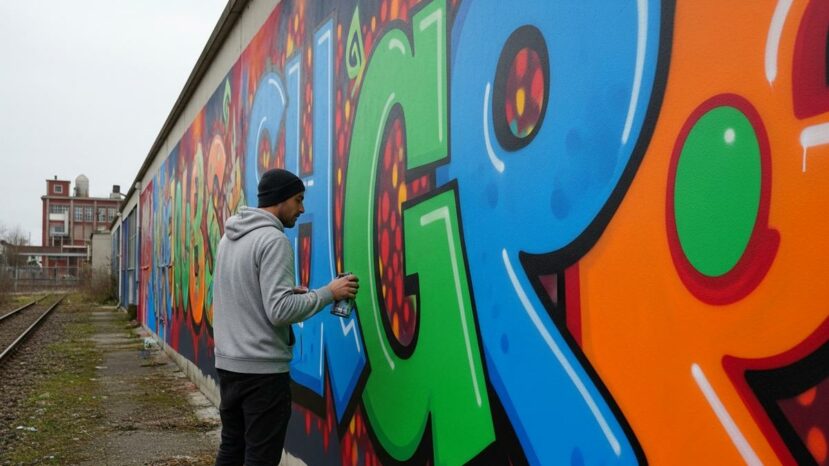


In Saint-Denis (93), a major cultural project is progressing patiently but surely. Driven by the impetus of urban creation, the future street-art and urban culture museum aims to articulate industrial heritage and living practices. The site promises an accessible experience, anchored in the city and attentive to public expectations.
What’s the status of the Saint-Denis project?
The project is located on a converted brownfield site near Saint-Denis Pleyel. It is part of the transformation of northern Paris, fuelled by the Grand Paris Express. As such, the ambition is supported by an already tangible urban and cultural dynamic.
The stages are progressing in stages, between studies, consultation and technical coordination. This street-art and urban culture museum is being built in conjunction with local players and cultural professionals. In addition, the question of everyday use is guiding the pace of the project.
A finalized timetable has not yet been made public. The promoters are talking in terms of a phased approach, with a prefiguration beforefull opening. Consequently, tests of formats and spaces are envisaged to adjust the reception.
“Bringing together the memory of the walls with the energy of the present, without betraying either.”
Players and governance
The project would be managed by a structure based on the Aérosol experience and local partners. The City of Paris, the Établissement Public Territorial and historic landowners would be involved. The regional level could also support certain investment components.
The economic balance is based on a mix of resources. Ticketing, sponsorship, space rentals and subsidies would round out revenues. In short, governance would aim for stability while maintaining a demanding artistic line.
- Prospective site near Saint-Denis Pleyel, a strategic hub for northern Paris
- Opening in phases, with a prefiguration before full commissioning
- Hybrid business model: ticketing, partnerships and sponsorship
- A program combining exhibitions, mediation, residencies and urban practices
- Legacy of the Aerosol experience in Paris 2017-2018
A legacy of the Paris Aerosol ephemeral
The previous Aerosol, born on a railway site, left its mark on 2017-2018. The frescoes, workshops and conviviality attracted a varied audience. As a result, the idea of a permanent venue was born.
The DNA remains the same: openness, education and respect for practices. On the other hand, the museum dimension requires enhanced conservation and mediation facilities. In addition, dialogue with local residents remains a pillar of the project.
The move to Saint-Denis (93) changes the scale and urban setting. From now on, the project will combine in-situ creation with structured programming. As a result, it has to deal with broader expectations and a steady flow of visitors.
Urban integration and access
The Saint-Denis Pleyel hub is being structured in stages with the Grand Paris Express. Metros and RERs will facilitate access from several metropolitan hubs. As a result, the public from the Paris region will benefit from an easier route to the street-art and urban culture museum.
High visitor numbers are expected at weekends and during major exhibitions. For this reason, special time slots will be set aside for schoolchildren and families. In short, the reception area will be designed to ensure clear routes and reduced mobility.
Programming, mediation and impact
The core of the project brings together temporary exhibitions, commissions and artist residencies. The works would interact with the history of the walls and practices. What’s more, the programming of the street-art and urban culture museum would see the city as a partner.
The mediation would be aimed at a wide range of audiences, from schoolchildren to the experienced curious. Workshops, meetings and guided strolls would provide guidelines for reading the street. In this way, supervised practice would reduce tensions linked to unauthorized use.
The expected impact is measured on a local and metropolitan scale. Cultural employment and urban redevelopment would support the post-Paris2024 momentum. As a result, the street-art and urban culture museum could become a landmark for the north of the capital.