
The Commanderie des Templiers in Seine-et-Marne: visit a rare medieval heritage site near Paris
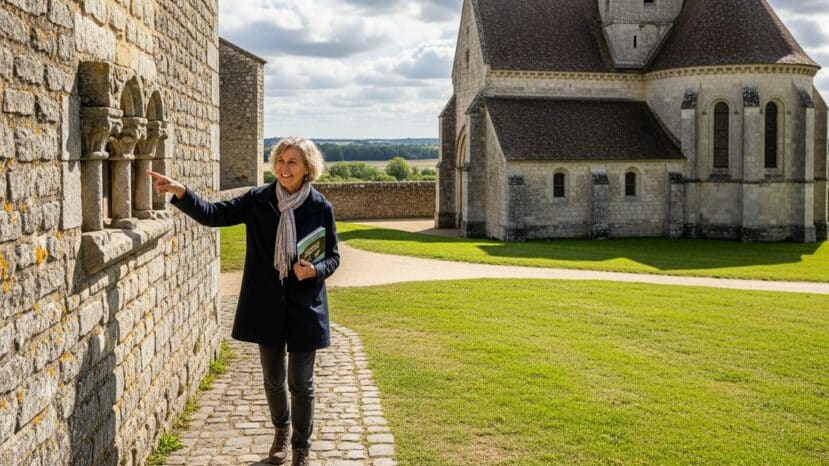


On the banks of the Grand Morin, an ancient commandery reminds us of the strength of the knightly orders and the memory of the builders. Set in a countryside setting, it offers a tangible journey to the heart of the Middle Ages. From the very first stone, the Seine-et-Marne can be read like an open book, between living archives and peaceful strolls.
A Templar heritage in the heart of the Briard region
A commandery was a rural estate structured around a mission: to manage land, shelter brothers and welcome travelers. In this way, the site combined prayer, logistics and agricultural cultivation. In addition, the settlement met concrete needs in terms of circulation and defense.
Here, the whole complex, with its chapel, farm buildings and open spaces, is a reminder of this role. You’ll find yourself wandering between medieval masonry, remains and floors that bear the imprint of former uses. In short, the architecture remains legible, even for visitors new to archaeology.
The site preserves the memory of successive eras, from the time of the knights to that of the reconversions. The Order of the Temple disappeared in 1312, but the land has endured and adapted. As a result, patient restoration work has made the building phases from the 12th-13th centuries up to modern times legible.
“Here, each stone seems to hold counsel with time, without pressing the visitor.”
What do we see on site?
The chapel, with its sober volume, is the first to be spotted, followed by the farm buildings. The whole ensemble evokes a small farm organized around a spiritual core. This stopover in Seine-et-Marne soothes the eye, as everything here speaks of use and duration.
Mediation panels describe the site, and guided tours are offered according to the season. Mediators are also on hand to guide visitors through the history of the commanderies. On the other hand, each tour follows the pace of the group and the conditions of the day.
- Bring comfortable shoes, as the ground can be uneven.
- Allow time to read the signs and enjoy the views.
- Photos are generally permitted, with due respect for the site.
- Find out about precise opening times for different periods.
- Stay on the marked paths to protect the remains.
Families will find it a tangible, simple story to tell their children. What’s more, the rural setting makes you want to extend the outing with a stroll along the river. As a result, the visit goes well with a discovery of the local area, from the market to the Coulommiers cheese.
From memory to transmission
Preserving such an ensemble requires constant care, surveys and choice of materials. Here, local teams join forces with technical partners. In this way, the Seine-et-Marne region is able to promote a local heritage, accessible without long journeys.
Construction phases alternate with periods when the building is open to the public. In this way, masonry is stabilized, a framework consolidated, and then reopened when it’s safe to do so. What’s more, historical research progresses in stages, as sources and field observations come to light.
The site comes alive during the European Heritage Days and other cultural events. Workshops for schoolchildren provide concrete tools for understanding the Middle Ages. In this context, mediation focuses on gestures and materials, with telling examples from Seine-et-Marne.
Digital tools are sometimes used to complement the visit, without replacing the on-site presence. Nowadays, visitors can prepare their own itinerary, then compare their landmarks with the actual walls. In short, this combination enhances understanding, while respecting the fragility of the site.
Preparing your visit
From Paris, Transilien line P serves Coulommiers, then a short walk leads to the site. Thereafter, access varies according to the time of year and the work in progress. However, the reception team points out sensitive areas and useful instructions.
Times and facilities vary according to the season and municipal programming. What’s more, public holidays attract more visitors, so it’s best to plan ahead. This flexibility is commonplace in Seine-et-Marne, where visitor safety and conservation are reconciled.
Why this site counts today
Such a heritage offers a calm experience, far removed from the hurried crowds. As such, it supports an attentive form of tourism, respectful of rural rhythms. As a result, neighboring businesses and accommodations benefit from these measured stops.
The site communicates with other medieval landmarks in the area, such as the ramparts and old towns. What’s more, this complementarity creates a common thread for the weekend or the week. Secondly, it encourages themed tours, benefiting the local network.
For local residents, the area fosters a sense of belonging. For schools, too, it’s a concrete opportunity to talk about history and ecology. In return, citizen initiative strengthens protection, in Seine-et-Marne as elsewhere.
We’re already preparing for what’s to come, by keeping a close eye on the climate and harnessing the skills of our craftsmen. Every intervention strikes a balance between authenticity and safety. In short, the Commanderie is a reminder that preservation means passing on knowledge without hastening or freezing time.