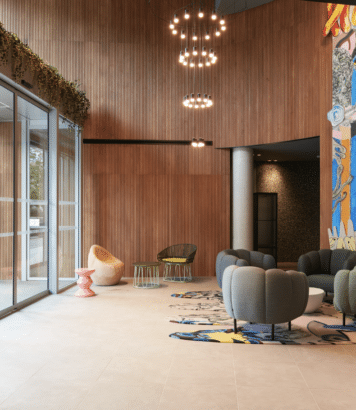
Former town halls in the 1st to 4th arrondissements of Paris: since 2020, they have become annexes housing municipal services.
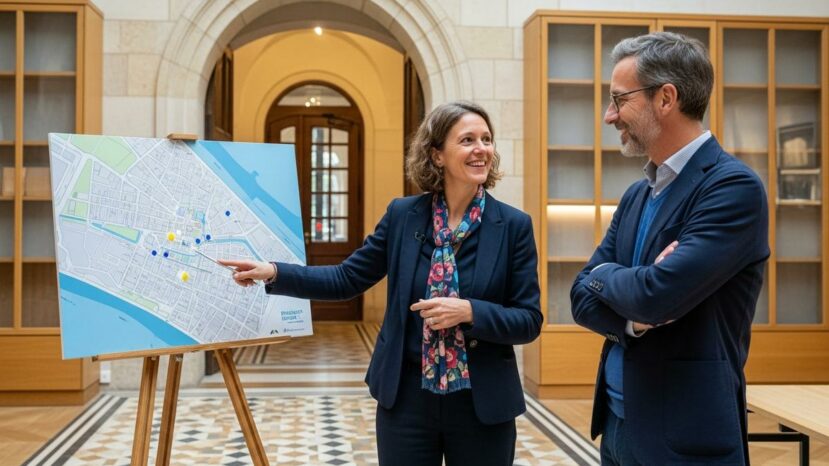


As of 2020, four Paris arrondissements now form a single, shared administrative sector. This change affects daily life, from counters to municipal halls, and is reshaping old habits. As a result, many people are still wondering about the future of the old town halls and their new practical uses.
Borough mergers: what’s changed for residents
The merger gave rise to Paris Centre, with its headquarters in the former 3rd arrondissement town hall. From now on, this address will be responsible for the main registry office, marriages and arrondissement councils. In addition, it coordinates the remote counters and duty offices spread across the four historic sites.
The aim of this reorganization is to provide a clearer administration and pooled resources for around 100,000 inhabitants. At the same time, the teams have streamlined services without cutting local ties. In short, each building retains its public vocation, depending on its condition, size and neighborhood roots.
Old town halls today: functions and continuity
In this context, the former 3rd arrondissement town hall remains the operational heart of the sector, including for Paris. This is where our teams manage key appointments and sensitive procedures. However, physical reception is still possible at other sites, depending on the time of year and requirements.
“Each place must remain useful, open, and true to the history of the neighborhood.”
The former town halls of the 1st, 2nd and 4th arrondissements now house complementary functions. These include meeting rooms, social services and, occasionally, temporary exhibitions. On the other hand, according to the public information available, most of the heavier procedures are carried out at the head office.
Renovated buildings: services, culture and remembrance
A number of rooms have been allocated to associations, with a shared calendar for the whole of Paris. What’s more, some rooms are used as relays for one-off events, such as school enrolment campaigns. As a result, residents have a familiar reference point, while benefiting from extended opening hours at the central site.
- A single headquarters for civil status and coordination.
- Local relays in old buildings.
- Rooms open to associations and meetings.
- A shared calendar for reserving spaces.
- Common signage to guide the public.
The building’s heritage remains visible, as the wedding halls, main staircase and facades are listed in the protected register. In this way, the use of the building is compatible with its architecture and conservation requirements. What’s more, the work required is part of multi-year budgets, with site-by-site planning.
In practical terms, access is now via a unified appointment system and virtual queues. In addition, vulnerable customers are provided with dedicated slots and on-site assistance, even outside the Paris Centre. As a result, circulation between sites is made easier with clear signage and regular announcements.
Daily life for users: benchmarks and new habits
For civil status documents, births and marriages follow a simplified chain. The user chooses a time slot, transmits the necessary documents in advance, then completes the procedure at the appropriate counter. What’s more, dedicated agents are on hand to assist with online procedures where the digital divide is still a barrier.
Merchants and associations now have a single point of contact for all matters concerning the occupation of the public domain in Paris. Event authorizations follow a common calendar, shared between the four former territories. On the other hand, requests specific to a heritage site sometimes require additional processing.
Next steps and urban issues
The question of local memory often comes up, as each town hall embodies a civic history. As a result, mediation projects include signage, tours and district archives accessible to the public. As a result, the transmission of information must be reconciled with the imperatives of daily use and safety.
In terms of governance, the sector relies on neighborhood councils, public meetings and the participatory budget. What’s more, the municipal team monitors concrete indicators: counter delays, satisfaction rates and attendance by site. In addition, the presence of 4 historic sites serves as an asset for distributing traffic.
In the medium term, the rise of online services will alleviate some of the queuing in Paris. However, there will still be a strong demand for a human touch at sensitive moments in life. In short, the balance between proximity, heritage and efficiency will guide the choice of location.