Île-de-France medieval city: hanging gardens and ramparts, a jewel to visit less than 2 hours from Paris
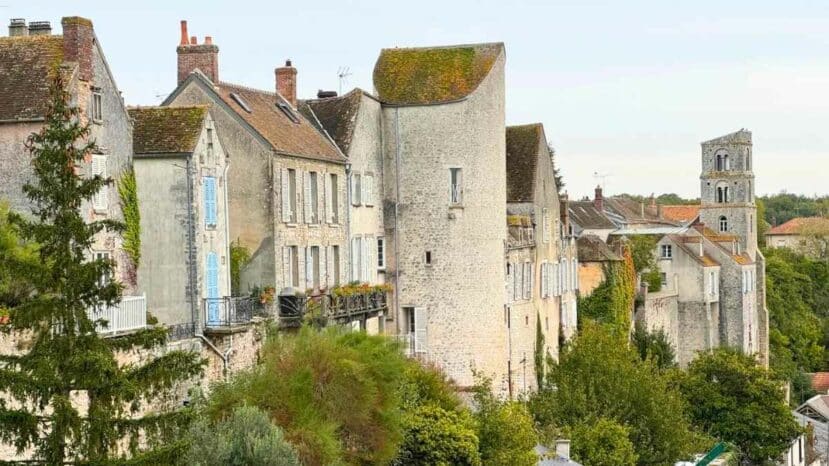


Less than two hours from Paris, a medieval town still watches over the Fusain valley. Its hanging gardens, sloping streets and religious remains tell the story of a living history. The heritage of the Ile-de-France region can be seen in a landscape sculpted by time and water.
A promontory overlooking the Fusain valley
In the south of Seine-et-Marne (77)Château-Landon occupies a limestone spur overlooking the Fusain river. Traces of ramparts and ancient gates still structure the historic center today. In this medieval town, housing is adapted to the slope, springs and prevailing winds.
The hanging gardens are laid out in terraces, held in place by patinated, flower-filled stone walls. Water from the hillside irrigates vegetable, fruit and herb gardens in fine weather. This model dates back to the 11th-12th centuries, according to local records consulted by heritage services.
Terraces and hanging gardens in Château-Landon
Stairs link the plateau to the riverbanks, where you come across washhouses, footbridges and old water intakes. As a result, views of the rooftops, valley and orchards below multiply. The urban layout remains legible, despite recent transformations linked to contemporary uses.
“
Between stone and water, the slope tells the story of nine centuries of gestures.
The medieval city can be read in strata, from the sacred to the daily gestures of its inhabitants. The terraces tell of seasonal farming practices, harvests and patient community maintenance. On the other hand, each level has its own function, sometimes as a vegetable garden, sometimes as an ornamental feature, sometimes simply for circulation.
As a result, morning light reveals volumes, low walls and orchards, with sharp, graphic shadows. In the evening, the facades take on warm hues above the gently darkening stream. Don’t forget to bring good shoes, as the gradient remains steep and the steps can be uneven.
- Access by train on line R to Souppes-Château-Landon, then by bus or cab.
- Recommended itinerary: upper town, belvederes, staircases, banks of the Fusain river, return via alleyways.
- Equipment: sturdy footwear, water, light windbreaker, twilight lamp.
- Respect: no picking, no drones, discretion near homes and gardens.
- Timing: very pleasant spring and autumn; weekdays quieter than weekends.
Routes, access and best practices
By train, line R leads to Souppes-Château-Landon, then local bus or cab depending on timetable. Allow around 1 h 30 from Paris by car via the A6, depending on traffic conditions. The medieval town is best approached from the upper part, where several pedestrian itineraries begin.
Start at the church, then climb to the belvederes before taking the stairs down to the river. In addition, a short loop allows you to return via the narrow streets in the center, without having to repeat the same steps. A map is available from the tourist office, which indicates areas where work is in progress.
However, the steps make access difficult for baby carriages and wheelchairs, especially in wet weather. Views are still possible from squares, high promenades and public gardens. The medieval city requires respect for property, vegetation and the peace and quiet of local residents.
Built heritage and local memory
The parish church retains its Romanesque foundations, according to heritage inventories available for consultation at the town hall. Towers, curtain walls and wine cellars can be seen in the streets and passageways. The medieval town laid down a street plan that we still follow, almost without thinking about it.
According to historians, the local stone, which is light and fine, was used for many of the major construction projects in the Paris region. Nearby quarries have supplied bridges, churches and homes for centuries and generations. This sector reveals a wealth of know-how, from quarrying to cutting and laying.
When to go, what to see in season
In spring, the embankments bloom and the orchards fill the lanes with the scent of flowers, under an often changing sky. Shady terraces provide welcome breaks in the afternoon, when the sun is beating down. At weekends, the number of visitors on the stairways increases, which can lengthen the visit.
In autumn, the Virginia creeper turns red and the horizons gain in depth, especially after the rain. As a result, the medieval town takes on a whole new look in the low-angled light, which is very favorable to the relief. Occasional openings give access to private plots for local events.
Winter reveals the structures – walls, buttresses and buried masonry – in an almost graphic clarity. In short, the walk makes sense whatever the season, even in cold weather. Follow the signs, find out about any local restrictions, and keep your steps measured.