
Napoleon I’s will on free display at the Archives nationales in Paris
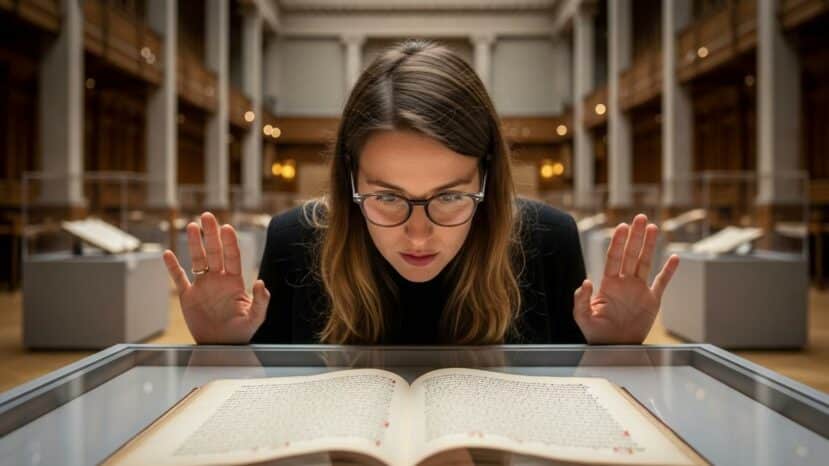


In Paris, the Archives nationales are announcing an exceptional exhibition devoted to Napoleon I’s last will and testament. From March 4 to June 29, 2026, the manuscript will be presented to the public, with free access, in a setting conducive to reading and emotion.
A rare manuscript at the heart of history
The heart of the tour is a 58-page document written by Napoleon in exile on St. Helena. The text combines personal decisions and political considerations, with tightly-written, precise formulations. Each page recounts an intention, an assessment and a final instruction.
Presentation of the manuscript remains rare, for obvious conservation reasons. Light, humidity and handling weaken the paper, which is why greater care is required and loans are limited. This exceptional exhibition therefore offers a rare opportunity, designed to combine proximity to the original with respect for heritage standards.
Audiences will be able to follow the thread of the will, page by page, like a slow immersion in the decision. In addition, the tour will contextualize the drafting, circulation and reception of this text. In this way, thestory becomes legible, material and profoundly human.
“To see the original is to measure the human part of the myth.”
Dates, access and practical information
The event runs from March 4 to June 29, 2026, in the heart of Paris, at the Archives nationales. Admission is free, depending on room capacity and reception conditions. This exceptional exhibition is aimed at both the curious and history buffs.
To prepare for your visit, anticipate a marked influx of visitors at certain times of the day. And don’t forget to allow plenty of time for reading, as the manuscript demands attention and calm. In short, the experience combines contemplation, precision and clarity.
- Key dates: March 4 → June 29, 2026
- Location: National Archives, Paris
- Tickets: free admission, depending on capacity
- Tip: set aside some time to read all 58 pages
- Public: families, schoolchildren, amateurs, researchers
Visitors are welcomed under the usual conditions of a heritage site. As a result, entrance checks and security instructions may lengthen the waiting time. Nevertheless, the comfort of the visit remains a priority for the on-site team.
Why this will matters today
The testament offers a direct window onto the end of a political and personal destiny. It sheds light on the values, disillusions and final wishes of a fallen head of state. This exceptional exhibition replaces these pages in a shared and debated national memory.
For teachers and students, the document provides concrete, dated and contextualized material. What’s more, the tight handwriting and repetitions show how a text is constructed, refined and then stopped. In this way, source criticism is brought to life before our very eyes.
Researchers will see it as both a legal and political testimony. Wills are about legacies, but they are also about responsibilities, alliances and images. As a result, it provides information about final priorities and the ordering of a trajectory.
Many visitors will be looking for a simple, direct reading experience. Paper, with its traces and mending, retains the mark of gestures. Then, the signature brings the event closer to our present, without artifice.
To prepare your visit
Arrive early or with a delay, to avoid peak times. And don’t forget your reading glasses if you need them, as the finesse of the writing justifies it. This exceptional exhibition is best enjoyed slowly, at a steady pace.
As a family, share the reading in small sequences, each taking a page, each a sentence. Then compare your impressions, as the text leaves room for interpretation. As a result, the visit becomes a conversation, more than just a passage.
To continue, keep in mind the key points you’ve noted along the way. A brief note on dates, names and themes makes rereading easier. In this way, your memory will remain vivid after your outing.
Historical benchmarks and reading guidelines
Le testament was born in exile, far from power, in a time of retreat and reckoning. This geographical and political distance changes the way we look at past glory. What’s more, the slow writing suggests a sorting out of choices, between regrets and transmissions.
The Napoleonic legend is based not only on victories, but also on founding texts. This document is part of this construction, with lines that fix an intended image. In this context, the exceptional exhibition helps to distinguish between memory, history and representation.
As an archive, the original tells its own material story. Provenance, conservation and exhibition conditions form a chain of precise gestures. In this way, the Archives nationales guarantees a balance between public access and preservation.
At the end of the tour, everyone leaves with clear, verifiable points of reference. Then it’s possible to reread the Empire from a human perspective, through words and choices. This exceptional exhibition offers a useful, sensitive encounter, firmly rooted in the document.