
Managing your budget in 2026 in Paris: between persistent inflation and digital expenses that accumulate in silence



Sophie, 31, lives in the 11th arrondissement. She’s rigorous with her finances – weekly shopping budget respected, joint subscriptions with her flatmate to share costs, second-hand purchases whenever possible. Last April, she did her accounts and realized she was still paying for a subscription to a meditation app she hadn’t opened in eight months, a cloud service she thought she’d cancelled, and three streaming platforms, one of which duplicated her boyfriend’s.
Total: 47 euros a month that was going out the door without her noticing. It’s not a problem of negligence. It’s a design problem.
2026: the year Parisians decided to take back control
The economic climate is not helping. Over the past two years, food prices have risen significantly, Parisian rents remain under pressure despite attempts to regulate them, and small digital expenses have multiplied without anyone taking any notice. Spotify, Netflix, Disney+, Amazon, iCloud, Adobe, mobile gaming with its monthly battle pass… each service taken in isolation seems reasonable. Stacked one on top of the other, they form a real budget item that many people have never really faced up to.
The generation that has grown up with these services is starting to look at them differently. Not with hostility, but with lucidity. And that’s changing payment behavior.
Invisible money, the most underestimated problem of our time
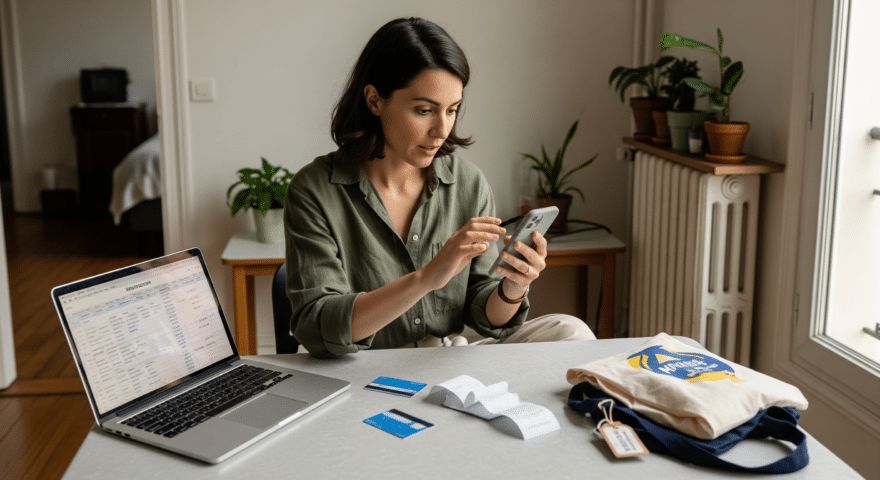
There’s a well-documented paradox in behavioral psychology: the smoother the payment, the less it feels. The contactless card, the automatic subscription, the one-click interface – everything is designed to eliminate friction. And that’s exactly the problem. Without friction, there’s no time for reflection. You spend without really deciding.
Compare with the Aligre market on a Saturday morning. You touch the bills. You count the change. You know exactly what you’ve spent and why. This physical awareness of the transaction is almost non-existent in the digital economy.
Prepaid solutions as intelligent safeguards
This is where prepaid solutions come into their own. Using a Neosurf refill on Eneba for your online purchases means voluntarily setting yourself a
envelope. You load a pre-determined amount – 20, 30, 50 euros – and operate within that limit. The bank balance remains untouched. No automatic debits, no unwanted overruns.
It’s not deprivation. It’s anchoring – a term borrowed from cognitive psychology to designate the reference point that guides our decisions. When you know you have 30 euros in credit, you make a different assessment of what you’re going to do with it. You prioritize. You choose. This is rare and precious in a digital ecosystem designed to make you do the opposite.
Confidentiality, an argument that carries weight
There’s also a dimension that many Parisians are beginning to take seriously: don’t link all your online purchases to your bank details. This isn’t paranoia – it’s a normal form of caution in the face of increasing data leakage and advertising targeting practices. Every time you enter a card number on a new platform, you leave a trace.
Prepaid eliminates this risk by design. No sensitive data exposed, no exploitable history, no attached bank account. One code, one amount, one transaction. Simple and clean.
Taking control without complicating life
What’s interesting about this movement is that it’s not ascetic. It’s not about consuming less or depriving ourselves. It’s about consuming while being present to what we’re doing. It’s about slowing down just enough to make every expenditure a choice, not an automatic one.
In a city that still values – despite everything – the art of taking one’s time, of choosing carefully, of preferring quality over quantity, this is perhaps the most contemporary form of savoir-vivre there is.