



Haircolor after 60: the hair color shade that rejuvenates the face, according to an expert L’Oréal Paris hairstylist
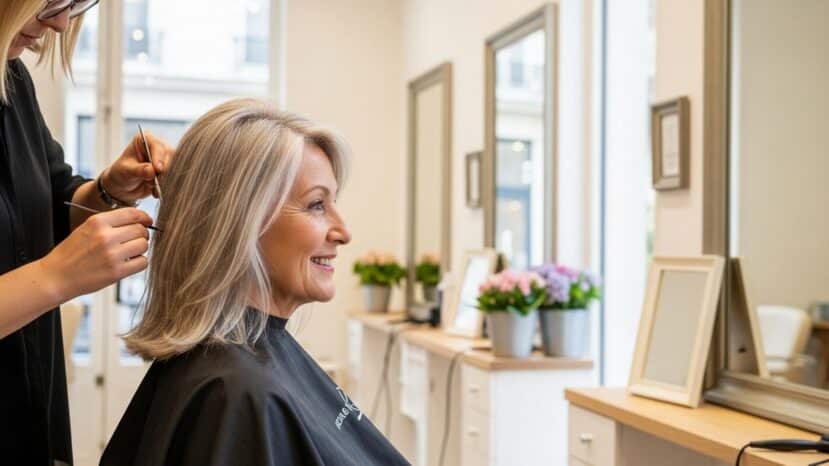
After 60, choosing the right hair color becomes a real challenge. Gray hair sets in, texture evolves, and you’re looking for a shade that illuminates without freezing your face. An expert hairdresser offers a simple rule for finding the perfect shade.
Why hair color changes everything after 60
Over time, the hair fiber becomes thinner and the skin loses its natural radiance. A shade that’s too dark marks wrinkles, while one that’s too light erases features. Professionals therefore recommend lightening hair by about half a tone from its natural base to soften the whole face.
Thomas Tuccinardi, L’Oréal Paris hairstylist and international color expert, stresses the importance of roots. According to him, the secret lies in respecting one’s original shade. This approach guarantees harmonious, long-lasting results.
“For root color, it’s best to choose a color that matches as closely as possible the base color you had before gray hair, because that’s what ages best over time.”
The golden rule for a rejuvenating tint
The expert explains that it’s important to stay as close as possible to its natural shade. This fidelity to its original base offers a credible, flattering rendering. What’s more, maintenance becomes much simpler over the weeks.
This method works for all skin tones. By slightly adjusting the warm or cold highlights, you can achieve perfect harmony between hair color and skin tone.
- Lighten its natural base by half a tone
- Adapting highlights to your skin tone
- Go for soft, tone-on-tone colorations
- Opt for a light bronzing-style balayage
- Avoid shades that are far removed from its original color
Which shade to choose for your natural base
The hair color that suits almost everyone over 60 remains its own shade revisited. A tone close to the original base, slightly lightened and adjusted according to skin tone, gives a very natural result. This approach avoids the dreaded “helmet” effect.
On a blond base, this translates into a soft ash or golden blond. On a chestnut base, a luminous light chestnut works wonders. For redheads, a more discreet cinnamon-type blush adds elegance without excess.
Professionals recommend gentle coloring to preserve mature hair. Tone-on-tone, semi-permanent or light balayage formulas blend white hair while adding highlights.
Techniques that preserve the hair fiber
Hair bronzing remains a popular option in 2026. This technique adds light without harsh contrast. It is particularly suited to women who want a subtle result.
The objective remains the same: to stay within the family of your original hair color. By simply adjusting it to your skin tone, you can achieve a rejuvenating effect without excessive effort.
Color mistakes that harden the face
Even with a good foundation, some choices can age prematurely. Thomas Tuccinardi warns that very dark browns can “harden facial features”, especially on fair skin. Too much contrast accentuates the signs of aging.
The expert also advises against blonds with overly yellow highlights. These shades look less natural and less elegant on mature hair. Similarly, reds that are too orange draw the eye to redness and wrinkles.
Another common trap is to choose a shade that is far from its base. Regrowth quickly becomes visible. This mixture of white, gray and dark-rooted hair tires the face instead of softening it.
For the expert, the choice of hair color depends on individual personality. Staying close to your original shade, in a softer, brighter version, means rejuvenating color without exhausting maintenance.

Aucun commentaire
Publier un commentaire
Participez toujours dans le respect de la loi et des personnes.