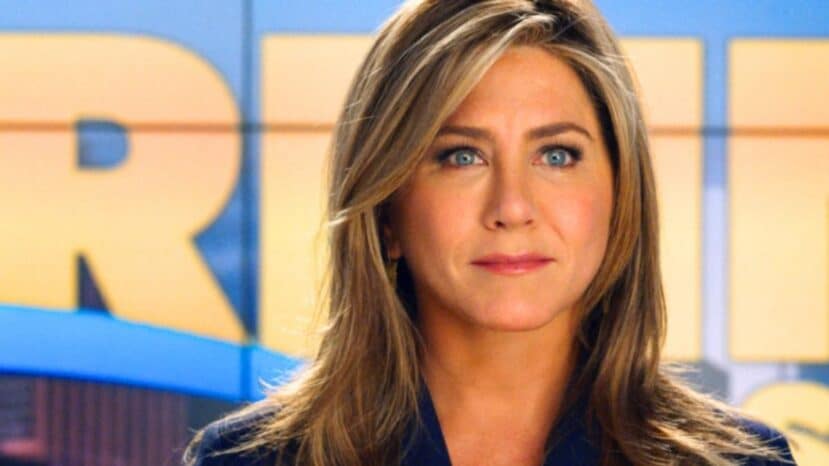
This cut, adopted by Jennifer Aniston for years, remains the most flattering for framing the face.


The women’s layered cut has survived the decades without ever losing its appeal. This technique involves gradually shortening certain strands to create volume, movement and lightness. In 2026, it remains a sure bet for those who want to give their hair a new dynamism.
Layering: a technique for every woman
The gradient is based on a simple principle: cut certain strands at different lengths to structure the hair. This method creates movement in any cut, whether short, mid-length or long. It transforms the hair silhouette in depth.
Don’t confuse gradation with tapering. Tapering is used only as a finishing touch, to lighten the ends. Graduation, on the other hand, forms the main part of the cut and truly modifies the overall look.
The women’s layered cut adapts to all face shapes and hair types. From the thinnest to the thickest, from the straightest to the curliest, there’s something for everyone. For optimum results, entrusting your haircut to a professional hairdresser remains the best option.
“A poorly executed gradient can quickly result in a botched effect that is difficult to correct without losing several centimetres of length.”
The gradient on long hair: lightness and naturalness
On long hair, the gradient offers a cut that’s both structured and natural. Shorter strands start at the jawline, framing the face and highlighting the jawline. The effect is airy, elegant and flattering.
Jennifer Aniston has been wearing this 70s-style long sweep for years. Jennifer Lopez, on the other hand, opts for a long, wavy parting. These two examples prove that this technique is equally suited to straight and wavy hair.
- The long gradient blends with curtain fringe for a bohemian effect.
- Careful smoothing gives a more sophisticated look
- This cut lightens abundant hair.
- It adds movement to a long haircut that has become too conservative.
- Short locks frame the face with elegance
Layering on medium-length hair: playing with volume
Medium-length hair lends itself perfectly to gradients, whether subtle or more pronounced. This length lets you play with volume and texture with great freedom. The gradient can be combined with a lock of hair on the side to structure the face.
Emma Watson and Emilia Clarke have both adopted this type of cut. A layered cut on medium-length hair can therefore be both chic and easy to wear every day. What’s more, this length offers numerous styling options.
On medium-length hair, the gradient works equally well on straight, wavy or curly strands. This versatility means you can revitalize a classic cut without radically changing your head. It’s ideal for those who want to gently reinvent themselves.
Layering short hair: volume and character
For women who dare to cut their hair short, the gradient adds volume and character. A short, plunging gradient is essential for an assertive rock look. The pixie cut is the most emblematic example: it clears the nape of the neck while remaining feminine.
On a short bob, the gradient effect reinforces the cut’s character. A layered bob, on the other hand, offers more volume and several styling possibilities. In both cases, a tapered gradient softens the face and avoids the helmet effect.
Adapting a woman’s layered cut to her hair type
According to Shampoo Expert trainer Fabien Hellebuyck, layering is suitable for fine hair, as long as you don’t overdo it. His advice: only straighten the edge of the face without touching the other lengths. This approach gives a discreet but effective result.
On short, fine hair, the best method is to lightly straighten on top of the head. The lengths are left intact to boost volume without creating too-fine ends. Thick hair, on the other hand, can withstand a more straightforward gradation.
For curly hair, layering structures the cut and controls curl movement. We often opt for a gradient on the ends to avoid excessive volume. This technique avoids the dreaded “ball” effect on very curly hair.
On wavy or wavy hair, the gradient brings lightness and airiness. It avoids the helmet effect common on thick hair. The result is lively, harmonious hair, without the need for daily styling tools.
Choosing a women’s layered cut according to body shape
The choice of a women’s layered haircut depends largely on facial morphology. A round face benefits from a short layered cut that clears the temples. Oval faces, on the other hand, can be cut in almost any variation.
For a square face, a mid-length gradient with a curtain fringe softens the angles. Beyond face shape, hair texture and lifestyle also count. A professional hairdresser is the best guide to the most flattering layered cut for women.
Combining bangs with a gradient gives your hairstyle even greater personalization. A straight fringe gives a sophisticated effect, while a curtained fringe gives a bohemian look. This combination acts on the perception of features and enhances every morphology.