
Dermatologists warn about the “Netflix Face”: what 6 hours of screen time a day really does to your face
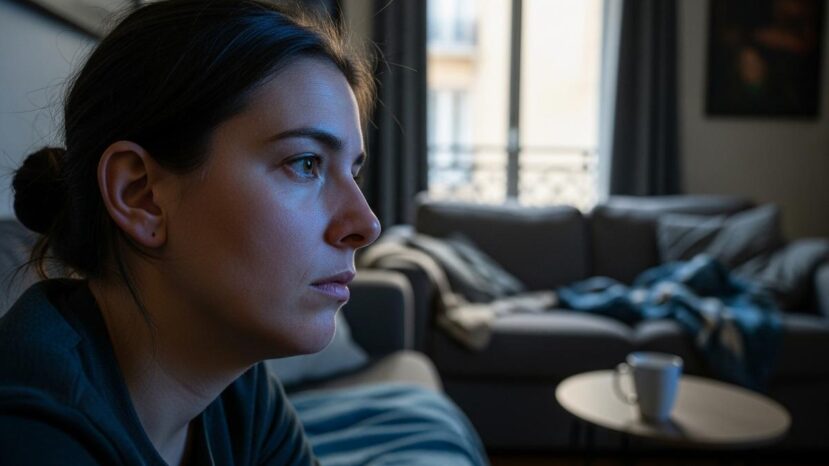


Dark circles, dull complexion, tired look: that morning, you look at yourself in the mirror after a whole night spent watching episode after episode of your favorite TV series. And yet, you haven’t set foot outside. Dermatologists have given this post-binge-watching appearance a name: the Netflix Face. Simple buzz or real impact on the skin? In 2026, this phenomenon intrigues as much as it worries.
The Netflix Face: a term that describes an everyday reality
No, the Netflix Face is not a beauty trend or the latest skincare product. The term refers to the tired look you sport after an evening spent in front of your screen. Your colleagues think you’ve been dancing all night, while you’ve been under your blanket watching Thomas Shelby in 4K.
Our grandparents used to kill time by improvising card games. Nowadays, we spend the last part of our day in front of a computer or a telephone. This habit is gradually changing our facial features. A study published in the Journal of Investigative Dermatology discusses this phenomenon and its effects on the skin.
According to the streaming platform‘s statistics, users spend around two and a half hours a day watching content. It takes them just four days to complete an entire season. Not counting computer work and sickly scrolling, we spend almost 6 hours a day in front of the pixels.
“Virtual baths are as harmful to the skin as sunbathing.”
Why your skin feels the pinch after a night of binge-watching
When you spend too long in the sun, you feel a tingling sensation. In front of the screen, it’s not as brutal. Only your eyes show discomfort, then finally tell you to stop. However, your skin suffers the consequences of the “play” button.
Dermatologists talking about Netflix Face mention a well-known ritual: settling down in front of a screen to the point of forgetting what time it is. Admittedly, blue light is not as aggressive as the sun in midsummer. It does, however, weaken the skin barrier during these long night-time sessions.
Blue light: an invisible threat to the face
According to a study reported by Madame Figaro, spending seven hours a day less than thirty centimetres from a screen for five days is equivalent to an hour and a half of exposure to the sun. Blue light accelerates skin ageing by weakening collagen and skin elasticity.
This light also misleads your brain. It blurs its day/night perception, which explains why you look “not awake” in the morning. Dark circles deepen, your complexion loses its radiance, and you look chronically tired.
- Blue light weakens skin collagen
- Reduces skin elasticity over the long term
- It disrupts the circadian cycle and sleep
- It accentuates dark circles and a dull complexion
- It acts cumulatively, day after day
Despite a well-honed skincare routine, your skin doesn’t seem to have recovered from that evening in front of the screen. The effects accumulate with each sleepless night. As a result, the Netflix Face is gradually becoming a visible reality in the mirror.
A phenomenon amplified by our modern lifestyles
Binge-watching is not limited to series. Scrolling on the phone and prolonged sessions in front of the TV are also part of it. All in all, these hours spent in the pixels end up rubbing off on the face.
Our addiction to screens is now clearly visible on our faces. It’s akin to what some call the “zombie effect”. In the face of this, skincare creams sometimes seem powerless without changing our habits.
Dermatologists’ solutions to limit Netflix Face
However, well-chosen skin care products are more than just placebos. Dermatologists insist on the use of serums enriched with vitamin C or niacinamide. These active ingredients help counter the effects of blue light on the skin.
They also remind us of the importance of sunscreen, especially iron oxide-tinted sunscreen. There are sunscreen products on the market specially designed for this purpose. These products offer a barrier against daily light aggression.
To tackle the problem at source, specialists recommend keeping your distance from screens. Keeping your nose away from the computer is one of the simple things you can do. Ideally, you should opt for gentler night-time pursuits such as reading, crocheting or drawing.
While we all dream of eternal youth, few people think about revamping their digital habits. But if you want to regain your radiance, sometimes you have to start by leaving the screen black.