
No more root touch-ups for gray hair: “I’m adjusting the slider”—the gentle method hairdressers are adopting in 2026
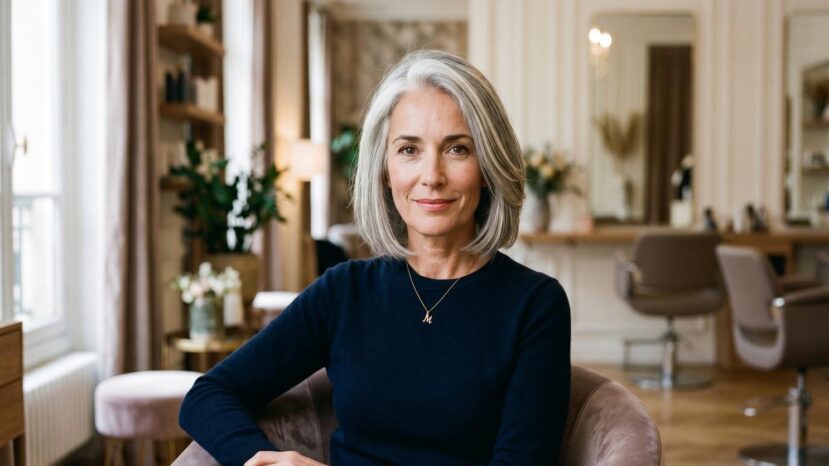


Going gray is increasingly seen as a confident and stylish choice. However, the transition remains a technical challenge that hairdressers now tackle using a precise natural method, far removed from harsh lines and frequent salon visits.
Plant-based hair dye: a great solution for graying hair
In recent years, gray hair has ceased to be seen as a sign of neglect. It’s chic, it’s elegant, and there are many techniques available to enhance it—gray blending and quiet silver are among the best known.
However, it is plant-based hair color that is currently capturing the attention of salon professionals. Unlike traditional dyes that saturate the hair shaft, it adapts to the hair thanks to its translucent quality. As a result, it doesn’t make the hair look stiff and doesn’t fade after a few washes.
This product is all about transparency and gentleness. Plus, it’s gentle on the hair shaft, making it a great choice for those who want to enhance their natural gray hair without damaging it.
Flexibility: the secret to the plant-based formula
Romain, founder of Romain Colors, developed his own formula in a French laboratory. What sets it apart is that it contains no indigo, which allows for a much wider range of shades.
As a result, the colorist can adjust the level of coverage to suit each client’s needs. Full coverage to conceal, light coverage to complement—it is precisely this flexibility that makes all the difference when transitioning to white.
“Plant-based hair dye makes it easier to adjust the color. If I want full coverage, I can do that. If I want an ultra-natural look—especially to complement gray hair—I can do that too.” —Romain, founder of Romain Colors
A two-step routine to prevent the root regrowth effect
The goal isn’t to create new gray hairs or to drastically change the existing base color. Rather, it’s about enhancing what the hair already has, while correcting the “helmet effect” caused by previous chemical coloring.
The technique used by specialized stylists involves two distinct steps. First, they work on the roots to create an optical illusion and blur the line between the roots and the rest of the hair. On the other hand, we add dimension to the lengths using a clay-based balayage technique, which is gentler and compatible with plant-based dyes.
With each visit, the stylist gradually lightens the hair. This ensures a smooth and natural transition, with no visible break between the original color and the emerging gray.
- This plant-based hair dye blends seamlessly with the hair thanks to its translucent formula.
- It does not contain indigo in the formula developed by Romain Colors.
- The procedure consists of two steps: treating the roots and applying the color to the lengths.
- On average, 2 to 3 sessions spaced one and a half to two months apart are sufficient for the transition.
- After that, maintenance is limited to a quick sweep or a deep cleaning once or twice a year.
How many sessions should I plan for, specifically?
On average, it takes 2 to 3 sessions, spaced about one and a half to two months apart, to complete the transition. This schedule allows for gradual adjustments to the opacity and transparency at each visit.
After that, maintenance is minimal. A touch-up or treatment to neutralize unwanted tones once or twice a year is enough to keep your hair looking radiant and balanced. Hair stylists who have mastered this technique emphasize this point: plant-based coloring significantly reduces the frequency of salon visits.
At what percentage of white can you really get started?
Going all-white isn’t right for all hair types at the same stage. According to the expert, it all depends on the percentage and distribution of existing gray hair.
The first gray hairs often appear in very specific areas, particularly at the temples and on the crown. This uneven distribution looks unbalanced. In such cases, hairstylists recommend not leaving the gray hair as is, but rather blending it in to create a more uniform base.
On the other hand, if more than 40 to 50% of the hair is gray and the gray is evenly distributed, the green light is given. The colorist can then play with shades to soften the effects of previous chemical treatments and help the hair reach its most beautiful state. Many hairstylists agree that this threshold is the ideal starting point for a successful transition.
The key, therefore, is to consult with a specialist to assess your situation before making any decisions. A good hairstylist not only adapts the technique but also the timing to ensure the result is as natural and flattering as possible.