
Forget the Russian manicure—this Japanese technique gives your nails a pearlescent shine without applying a single coat of polish
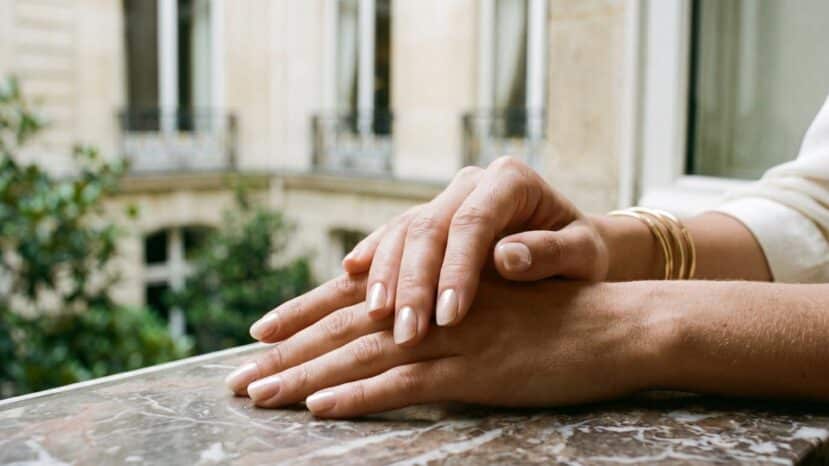


The Japanese manicure is emerging as the trend that’s shaking up the status quo this summer of 2026. Originating in Japan, this nail care technique is attracting more and more people who are looking for a different way to care for their nails—without polish or gel.
An approach focused on care, not color
The Japanese manicure is based on a simple principle: revealingthe nail’s natural luster rather than covering it up. As a result, no nail polish, no nail extensions, and no gel application are part of the procedure. Care takes precedence over visual appeal.
The treatment begins with careful filing of the nails, followed by cuticle care. The nail surface is then treated with a thick mineral paste containing beeswax and active ingredients designed to smooth and nourish thenail plate.
This paste is applied using a chamois buffer. The movements are performed with precision to work the product into the surface while gently polishing it.
“The result is similar to that of a clear top coat, but without a single coat of nail polish.” — Grazia Italy
Pearl powder: the ingredient that makes all the difference
After buffing, a very fine powder is applied. Often enriched with silica or pearl powder, it seals in the treatment and enhances the nail’s natural shine.
What’s more, it is precisely this ingredient that gives this technique its distinctive pearlescent finish. Light reflects off the nail without making it look like a product has been applied.
- Nail care and cuticle care at the start of the treatment protocol
- Application of a dense mineral paste containing beeswax
- Polishing with a chamois buffer
- Finishing with silica-enriched powder or pearl powder
- A pearlescent, glossy finish without any coat of varnish
Why Japanese Manicures Are So Popular Right Now
The main advantage of this technique is its very natural finish. The nails look smooth, shiny, and slightly pearlescent, while retaining their authentic appearance. As a result, the hands look well-groomed without appearing artificial.
According to Grazia Italy, this nail treatment also discreetly accommodates nail regrowth. Unlike semi-permanent polish or gel, there are no visible lines where the new growth meets the old, so the result remains flawless. This keeps your hands looking well-groomed for longer, without the need for frequent touch-ups.
This method is also ideal for people who want to take a break after several applications of semi-permanent polish or more elaborate manicures. The treatment replaces the nail polish, leaving the nail stronger.
A ritual that fulfills a desire for simplicity
After several seasons marked by bright colors, decorations, and intricate nail art, the trend now favors simple, luminous nails. The Japanese manicure is thus part of a minimalist aesthetic that is gaining ground in 2026.
According to Grazia Italy, this technique responds to a growing desire to care for one’s nails using gentler methods, without covering them with colored products or elaborate decorations. However, it is not suitable for those looking for a bold color effect.
Who is this trend for?
This manicure is particularly suitable for people whose nails have been weakened by repeated gel or semi-permanent manicures. The treatment nourishes the nail plate without causing further damage. In addition, it is suitable for all nail types, whether short or long.
Japanese manicures also appeal to those who prefer a subtle look for everyday wear. Pearlescent nails go well with any outfit, from the office to the weekend. As a result, there’s no need to change your manicure for every occasion.
In short, this technique from Japan offers a gentle alternative to traditional manicures. It places care at the heart of the beauty routine and provides a natural glow that even the best manicure can’t quite replicate.