“Smell is what keeps us human”: Why perfume has become the ultimate weapon of seduction in the age of Tinder
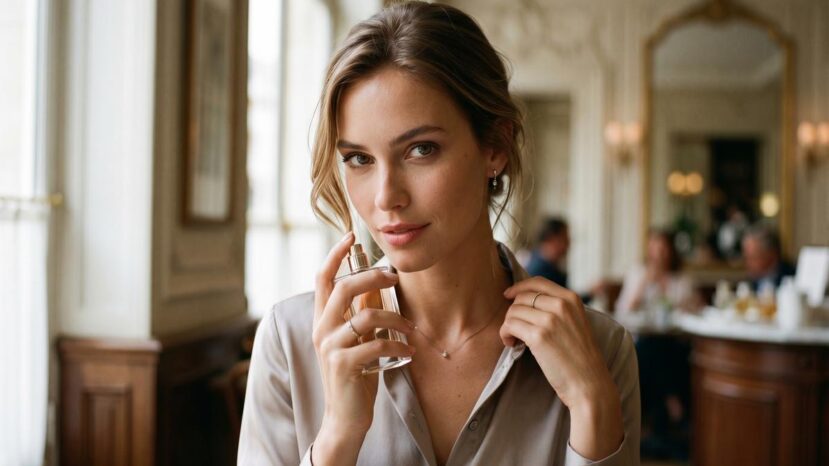


In 2026, perfume once again becomes a weapon of seduction in its own right. Driven by Generation Z, this resurgence of olfactory desire is shaping a new form of eroticism—one that’s more nuanced than that of the 1990s—and raises an unexpected question: in a world of swipes and likes, what really makes someone fall for you?
The Sense of Smell: The Last Frontier of Real Desire
A scent precedes one’s presence. It also lingers afterward, leaving an impression that neither a photo nor a message can capture. According to Mathilde Laurent, creator of Cartier fragrances, the sense of smell remains a crucial sense in an increasingly digital world.
Yet brands had gradually set aside this link between a fragrance’s trail and seduction. The reason? Representations that were too rigid and too heteronormative, which no longer resonated with young people, according to Arnaud Guggenbuhl, director of fine fragrance marketing at Givaudan. Fragrances had thus shifted their focus to personal expression rather than attraction.
This area is now back at the center of marketing strategies. Brands are embracing sensuality once again, but with more open, freer approaches. The result is a new generation of fragrances designed to captivate without being over-the-top.
What Gen Z Has to Say About Perfume
According to Arnaud Guggenbuhl, 70% of French and American Gen Zers agree that wearing a fragrance on a first date can either attract or repel someone. At a time when seduction begins with text messages and photos, scent remains the final real interaction in the process of getting to know someone.
It is, therefore, the last mysterious territory—the one that slips through the cracks of social media. At the moment of meeting, it’s crucial not to be dismissed too quickly, as if swiping on Tinder. Despite online flirting, young people long for a real-life encounter that could blossom into true, lasting love.
“Smell is the sense of transcendence, which brings all the other senses together in the brain, bypassing reason. It activates neurons in the heart, the brain, and the gut, causing them to vibrate in unison with the same sensation.” — Mathilde Laurent, creator of Cartier fragrances
Why do the scents become more intense as the perfume settles?
To capture attention in a world saturated with stimuli, the olfactory intensity must be turned up. Arnaud Guggenbuhl refers to the concept of “extremity,” a term derived from psychiatry that refers to the desire to reveal certain intimate aspects of oneself. This notion explains the need for an atmospheric intensity that fills the space.
Juliette Karagueuzoglou, VP of Fragrance at IFF, confirms this trend. She notes that using a higher concentration of scents—around 25% or 30%—can make people feel more confident. Furthermore, when self-expression is heightened by an anxiety-inducing social context, fragrance becomes both a shield and a call to action.
Brands have also chosen their brand ambassadors carefully. Rosalía, for example, was chosen as the spokesperson for Calvin Klein’s Euphoria fragrances. Red Flag, Fascent’s latest creation, draws directly on the language young people use on social media. These choices are not insignificant: they signal a confident, unapologetic allure, free from traditional conventions.
- The fragrance concentration is now between 25% and 30%, creating a powerful ambient effect.
- The animal notes of the 1990s have been replaced by vanilla, caramel, and juicy fruits.
- The musk should be clean, the leather supple, and the vanilla creamy or salty, like skin.
- The tension between reassuring and intriguing notes is now the key to creating an alluring fragrance.
- According to Juliette Karagueuzoglou, VP of Fragrance at IFF, indulgent ingredients, when blended to create contrasts, take on an air of mystery.
Notes that tell the story of the hide, not the animal
Vanilla, caramel, and juicy fruits have thus supplanted the animalic notes of the iconic fragrances of the 1990s. The latter, now considered outdated, no longer captivate. The reason is simple: a generation that has been using deodorant since the age of 12 and grew up with powerful laundry detergents associates animal scents with a lack of personal hygiene.
On the other hand, woody, soft, and comforting notes are emerging as the new codes of desire. Leather should be supple and luminous, like suede. Patchouli should be less camphor-like. Vanilla should be creamy—or salty, like skin.
Fragrances with Captivating Sillage You Should Know About
Among the current creations that embody this renewed olfactory eroticism, several scents stand out. Red Flag by Fascent combines warm woods—palo santo, patchouli, oud, sandalwood—spiced with cardamom and softened by iris and beetroot. L’Amant by L’Artisan Parfumeur dares to offer a hushed embrace in a warm-cool interplay woven from accords of ink, chili leaf, and patchouli.
In the world of musks, Narciso Rodriguez’s For Her Pur Musc Blanc Eau de Parfum Intense blends aldehydes and pristine musks with sun-kissed flowers—jasmine, frangipani, and tiare—and an amber, woody, and vanilla base. Meanwhile, Kayali’s Oudgasm Milky Musk Oud/30 Eau de Parfum Intense weaves together musk, oud, ambrette, creamy strawberries, and sandalwood, evoking the lingering scent on the skin after an embrace.
For lovers of vanilla taken to the extreme, Initio’s *Can’t Get Enough* blends caramel and vanilla with an overdose of hedione, known to stimulate the brain’s pleasure centers. Similarly, Yves Saint Laurent’s Babycat Le Vestiaire Des Parfums offers an infusion of feline Bourbon vanilla, enhanced by an accord of suede, frankincense, and saffron. These creations exemplify what experts call a fragrance that is “well-rounded, reassuring, enveloping, and familiar”—one that, almost without you realizing it, makes you want to let go.