
Bad Bunny Joins the Grévin Museum: Check Out the New Wax Figure of the King of Reggaeton in Paris
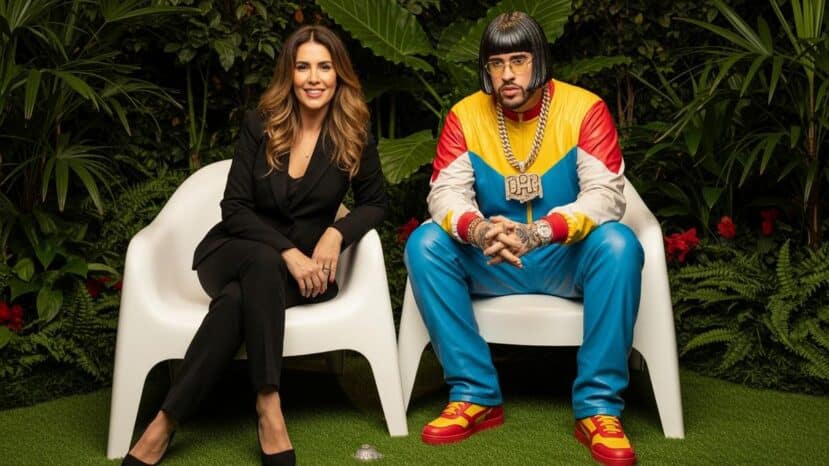


On July 1, 2026, the Musée Grévin will unveil a new wax figure that is already the talk of the capital. Bad Bunny, born Benito Antonio Martinez Ocasio in Bayamón (Puerto Rico), will thus take his place on Paris’s Grands Boulevards. The event coincides with his European tour, which includes stops in Paris on July 4 and 5, 2026, at the Paris La Défense Arena.
From Bayamon to the Grands Boulevards: An Artist of Global Renown
After breaking out in 2016 with his song “Diles,” followed by “Soy peor,” the Puerto Rican singer has built an unparalleled career in Spanish-language music in just a few years. His style blends Latin trap and reggaeton, a combination that has captivated hundreds of millions of listeners far beyond the Portuguese- and Spanish-speaking worlds. As a result, he has collaborated with Farruko, Karol G, Ozuna, J Balvin, and even Drake.
Her album *Un verano sin ti* holds the record for the most-streamed album in Spotify history. Furthermore, as early as 2020, *The Guardian* noted that her style was directly influencing other artists. In March 2026, he was unveiled as the new face of the Calvin Klein campaign, cementing his status asa global fashion icon.
Consequently, his induction into Grévin comes as no surprise to pop culture fans. The museum, founded in 1882 on the Grands Boulevards, serves as a mirror of international current events. Its staff therefore naturally chose to pay tribute to the Puerto Rican singer during his visit to France.
“Bad Bunny, whom his fans have compared to Michael Jackson, won’t be far from him at Grévin—that’s the magic of the place.”
A statue created solely from photographs
Sculptor Claus Velte and the creative teams at Grévin created the figure without ever meeting the artist. They worked solely from photographic references, which made the task particularly challenging. Capturing the contours of the face, the exact skin tone, the texture of the hair, and the color of the eyes without a live model requires exceptional precision.
The result, however, is striking. The teams were able to recreate the singer’s features with a level of detail that should satisfy even his most demanding fans. The figure will thus join the dozens of other famous figures already on display in the Parisian museum’s galleries.
- Statue created solely from photographs by sculptor Claus Velte
- Decor inspired by the cover of the latest album and the Super Bowl halftime show
- Presence of the concho toad, an iconic and endangered species in Puerto Rico
- A white, one-piece armchair left empty to invite visitors to sit down
- Tropical vegetation reminiscent of the artist’s home island
A Setting Rich in Meaning: the Super Bowl, Puerto Rico, and Biodiversity
The set design, centered around the wax figure, draws on two powerful images. On one hand, the cover of the rapper’s latest album. On the other, that historic moment from Super Bowl 2026, featuring a 100% Latino, socially conscious halftime show that left a lasting impression. In it, the artist appeared seated in a white plastic chair—the famous one-piece model—with an empty seat next to him—an open invitation to join his world.
Furthermore, the tropical vegetation in the setting is a direct evocation of the landscapes of Puerto Rico. This choice is no accident: it anchors the singer in his roots and reminds visitors of the source of his creative energy. Against this lush backdrop, every visitor can imagine for a moment that they are on the Caribbean island.
In addition, a small frog appears in the artwork. It is the concho toad, an iconic species of Puerto Rico that is now threatened with extinction. By including this animal in his latest album, the artist sends a clear message: to pay tribute to his island, but also to call for the protection of its biodiversity. Grévin has thus chosen to reflect this activist gesture with the same fidelity.
This detail clearly illustrates what sets this artist apart from others. His work embodies a sense of social commitment and cultural identity that is rare in the global pop scene. Furthermore, his ability to blend musical enjoyment with environmental awareness has earned him a fan base deeply committed to his values.
A European tour to accompany the Paris event
Outside of Paris, the singer will take his tour to several major cities across the continent in July 2026. After performing on July 4 and 5 at Paris La Défense Arena, he will perform on July 10 and 11 in Stockholm, on July 14 in Warsaw, on July 17 and 18 in Milan, and then on July 22 in Brussels. The tour thus represents a rare treat for French-speaking and European fans.
On the other hand, for those who can’t get tickets, Grévin offers a practical and accessible alternative. The wax figures provide a similar experience right on the Grands Boulevards, without having to wait for months. That is precisely what makes this museum so special: it brings to life the famous figures we admire from afar.
Grévin, Still at the Center of the Cultural Scene in 2026
The Grévin Museum is constantly updating its collection to keep pace with the times. Since 1882, it has showcased the figures who have shaped history, from sports to politics, from film to music. Now, Latin music has a prominent place there, reflecting its global influence. From this perspective, Bad Bunny is an ideal representative.
The museum teams’ approach also reflects a desire to reach a younger and more diverse audience. Featuring a figure as contemporary and socially engaged as the Puerto Rican rapper also says something about what Grévin aims to reflect in 2026. Consequently, the event goes beyond simply adding a statue: it marks a conscious move toward cultural openness.
So, whether you’re a reggaeton fan or just curious, the visit takes on a whole new meaning. You can sit in the empty chair, facing the tropical plants, and understand in just a few seconds why this artist is so fascinating. It’s this ability to tell a story—beyond mere resemblance—that is Grévin’s hallmark.
Ultimately, the Puerto Rican singer’s induction into this Parisian wax museum confirms what was already clear: Spanish-language music now occupies a central place in global culture, and Paris—through Grévin—fully recognizes this in July 2026.