Just 15 minutes from Rennes, this overlooked village hides a mysterious 23-hectare forest


Picture a Breton town of 20,000 residents, the second-largest in its metropolitan area, and yet almost entirely off the tourist radar. That is exactly what Bruz has to offer, a village near Rennes that deserves far more attention than it gets, especially in autumn.
Bruz, a village near Rennes far from the tourist crowds
Located in Ille-et-Vilaine, in Haute-Bretagne within the Pays rennais, Bruz is one of the 43 communes of Rennes Métropole and the 69 that make up the Pays de Rennes. As the capital of its canton, it holds a notable position in the local hierarchy: the 2nd largest town in the Rennes metropolitan area and the 4th largest in the Ille-et-Vilaine département. Figures that sit in sharp contrast with how little it registers in the public imagination.
And yet that very anonymity is precisely its strength. Unlike other Breton destinations swamped every summer, this commune close to Rennes remains untouched by mass tourism. For visitors in search of peace and authenticity, that is a considerable advantage.
Brittany has seen growing visitor numbers in summer, driven by rising temperatures linked to climate change. Autumn, however, offers a different way to discover the region, one that turns away from beaches and the ocean and looks instead towards villages and forests. Bruz fits that logic perfectly.
The Vilaine, a lock and a mill at the heart of local heritage
What strikes you first about Bruz is the richness of its built and natural heritage. The town runs alongside the Vilaine river, giving it a lush, soothing setting that comes into its own outside the summer season. Local history is equally present: Bruz was once a residence of the bishops of Rennes, and its church still carries that memory.
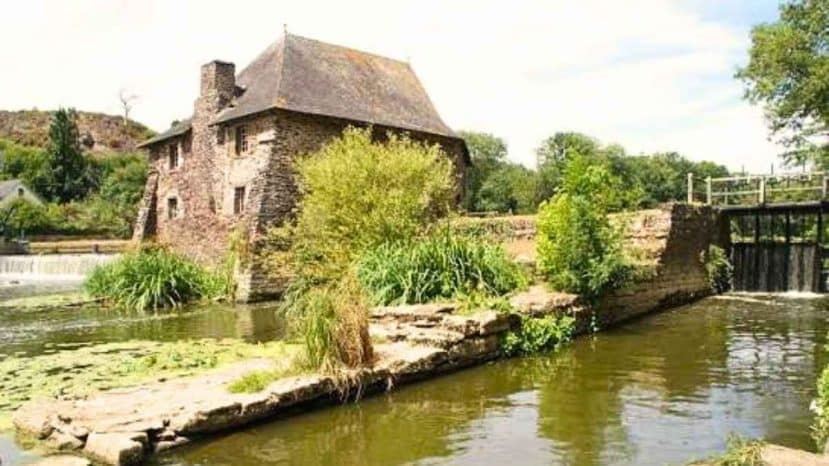
On the outskirts of town, the lock and mill at Boël are an unmissable stop. Together they form an idyllic landscape, quintessentially Breton countryside, far from the bustle of the coast. For anyone looking for a village near Rennes that offers instant escape, this site is a genuine reward.
A 23-hectare forest to explore in every season
Beyond its built heritage, Bruz possesses a remarkable natural asset. The Cicé communal forest stretches across 23 hectares and is home to a wide variety of tree species: oak, chestnut, hornbeam, birch and Scots pine, among others. That botanical richness makes it a particularly compelling space for anyone with an interest in biodiversity.
- Oaks, the emblematic trees of Breton forests
- Chestnuts, whose autumn colours are nothing short of spectacular
- Hornbeams, which give structure to the understorey
- Birches, instantly recognisable by their white bark
- Scots pines, which bring a touch of year-round green
In autumn, this forest takes on an almost mysterious quality. The low-angled light, the shifting colours of the leaves and the relative silence of the understorey create an atmosphere worlds apart from the summer beaches. For a village near Rennes, it is a rare and accessible natural offering.
A commune committed to nature and sustainable mobility
Bruz does not simply preserve its natural heritage passively. The local council has clear ambitions: the commune is actively developing sustainable transport, protecting green spaces and organising events to raise residents’ awareness of the ecological transition. It positions itself as a town that is both green and community-minded.
That commitment is tangible when you visit. Soft mobility is actively encouraged, making it easy to explore the area on foot or by bike. For a visitor coming from Rennes, the geographical proximity and ease of access make Bruz an ideal destination for a day trip, no car required.
Ultimately, this village near Rennes combines assets that few towns of its size can claim: a historic heritage tied to the bishops of Rennes, a natural setting shaped by the Vilaine, a 23-hectare forest open to all, and a municipal policy firmly oriented towards ecology. More than enough reasons to stop here, especially once the crowds have left the Breton coast behind.