
Interior designers are ditching sage green for this cocooning chocolate brown in 2026
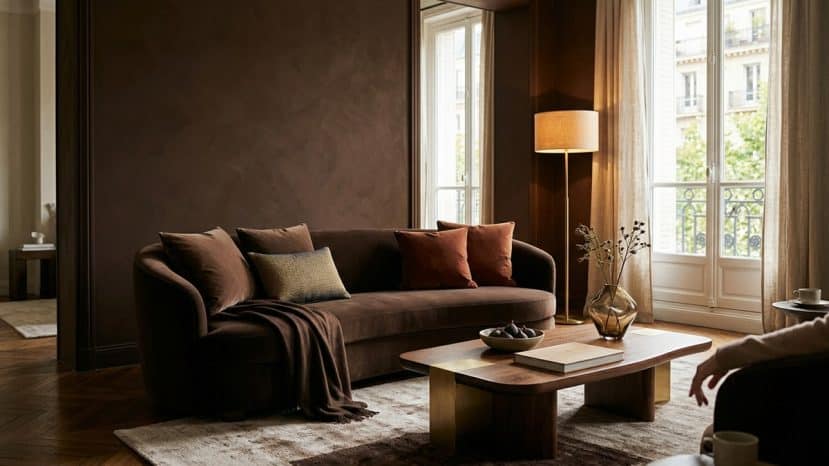


Five years on the throne, and suddenly the urge to move on: sage green, which swept through living rooms, kitchens and bedrooms alike, is starting to feel tired, both to homeowners and to interior designers. These professionals are noticing a clear shift toward deeper, more enveloping shades, ones capable of turning a living space into a genuine refuge as the days grow shorter.
When sage green loses its appeal
The success of this soft, slightly greyed hue rested on a simple logic: it evoked nature without aggression, pairing just as easily with a Scandinavian interior as with a bohemian aesthetic built around rattan and linen. Estate agents embraced it, major retailers multiplied it, and social media spread it until it reached saturation point.
That very success is what has undermined it. You now find it in furnished rentals, kitchen showrooms and every online mood board going. What once felt distinctive has become the default. On top of that, interior designers point to a practical limitation: in winter light, particularly in north-facing rooms, sage green can turn a flat, lifeless grey. This vulnerability during the short days of autumn and winter is pushing many people to look for a more resilient alternative.
Chocolate brown: the interior designers’ pick for autumn 2026
Faced with this reality, professionals are converging on the same family of shades: deep chocolate brown, ranging from chestnut to hazelnut depending on the intensity desired. This rich colour wraps a room without overwhelming it, provided it is used with care. It calls to mind raw wood, worn leather and falling leaves, and fits naturally into the wave of earthy tones that have been present in furniture and textiles for several seasons now.
What interior designers love about this choice is its ability to carry across multiple seasons without dating a space. In a Scandinavian-style living room with pale walls, chocolate brown adds depth behind the sofa. In a Haussmann apartment, it highlights the mouldings and brings out the character of an original parquet floor. Paired with a vintage 1970s sideboard, it reinforces the warm, enveloping atmosphere that defines the mood of 2026. Terracotta, meanwhile, is being relegated to accent status, carried by cushions or ceramics rather than walls.
How to embrace this palette without weighing the room down
The most common concern remains the same: paint a wall chocolate brown and end up in a dark, oppressive room. To avoid this pitfall, interior designers recommend starting with a single accent wall, ideally the one that catches the eye first from the entrance, or the one behind the sofa. The remaining walls stay in an off-white or linen beige, which preserves the overall brightness of the space.
In a small living room or a poorly lit space, a chestnut or hazelnut shade works better than a very dark chocolate. To maintain a warm balance, certain combinations work particularly well according to these professionals:
- Light wood, such as oak or ash, to visually lighten the space
- Brass or copper details to add a touch of warmth and gleam
- Linen or bouclé wool textiles to reinforce the cocooning feel
- A large cream rug to soften the overall look
Finish also plays an important role. A matte paint creates a hushed, enveloping atmosphere, while a satin finish reflects a little light in high-traffic areas. One final tip from interior designers: always test the colour directly on the wall before committing, and keep sage green or terracotta as occasional accents rather than applying them to large surfaces.