Not a repair cream”: a pharmacist sets the record straight on Nivea blue tin
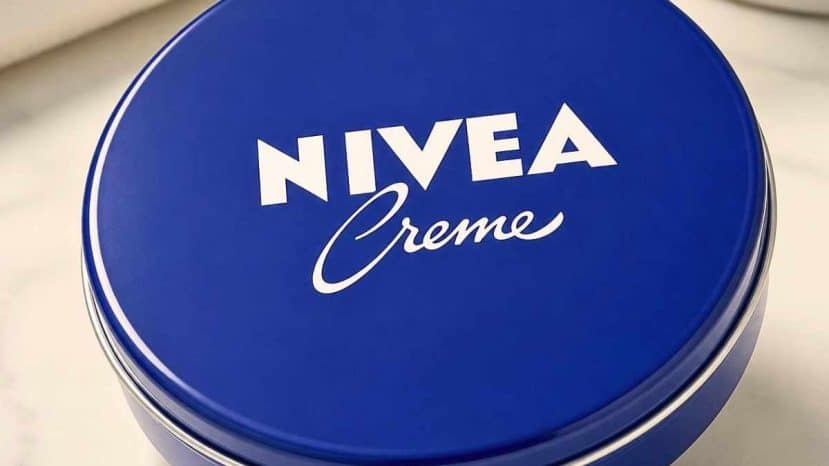


Every summer, the same ritual plays out: after a day at the beach, you reach for that iconic blue tin and slather it across your shoulders. Nivea cream, passed down from generation to generation, enjoys an almost unconditional trust. Yet a specialist pharmacist is here to clarify exactly what this product can and cannot do for your skin.
What Nivea blue tin actually does for your skin
Vicente Calduch, pharmacist and CEO of Laboratorios Calduch, is unequivocal: the blue tin is a rich moisturiser for after sun exposure, not a repair treatment. That distinction changes a great deal about how you should be using it day to day, because many people credit it with properties it simply does not have.
Its formula is built around a blend of emollients and occlusives, notably liquid paraffin and microcrystalline wax, combined with glycerin and panthenol. These ingredients work in concert: glycerin draws water into the skin’s upper layers, while the fatty agents form a protective film that limits moisture evaporation. The practical result is that skin regains suppleness and a sense of comfort after sun exposure.
In other words, this product reinforces the skin barrier and softens skin dried out by salt, sand, and heat. That is already a lot, but it is also the full extent of what it does.
Sunburn or simple dryness: how to tell the difference
Knowing the difference between skin that feels tight after the beach and a genuine sunburn is essential for choosing the right treatment. Mildly dry skin with no significant redness can absolutely benefit from a rich moisturiser like Nivea blue tin. A sunburn, however, is a different matter entirely.
Intense redness, persistent heat, pain to the touch, or even blisters: these signs indicate that the skin has been damaged. In that case, the blue tin is not enough. It contains no active ingredients designed to repair UV damage. What’s more, its formula includes allergens such as limonene, which can aggravate irritation on burned skin.
Here is how to adapt your skincare depending on the state of your skin:
- Dry skin after the beach, with no redness: Nivea blue tin is suitable for relieving tightness.
- Red, hot, and painful skin: opt for a fragrance-free soothing after-sun product, or ask a pharmacist for advice.
- Blisters, intense pain, chills, or headaches: seek medical attention urgently and do not apply anything without professional guidance.
Why the blue tin is no substitute for sunscreen
Another common misuse deserves to be addressed. Some people use Nivea cream as a stand-in for sun protection, assuming that a rich texture is enough to act as a shield. This is a mistake with real consequences.
A moisturiser, however nourishing, does not block UV rays. Only genuine broad-spectrum photoprotectors, capable of filtering both UVA and UVB rays, provide that protection. An SPF 30 or 50 should be chosen based on your skin type and the amount of time you spend in the sun.
These sunscreens should be applied generously around half an hour before exposure, then reapplied every two hours, after swimming or sweating. Even on overcast days, protecting exposed areas significantly reduces the risk of burning.
The minimalist trend puts Nivea blue tin back in the spotlight
The blue tin is making a strong comeback on the back of the minimalist beauty routine trend. Its compact format, short ingredient list, and accessible price point make it a natural fit for this approach. But its renewed popularity should not obscure its real limitations.
Used at the right moment, meaning after sun exposure without burning, on dry but intact skin, Nivea cream does its job as a post-beach moisturiser perfectly well. It is precisely because it works so effectively within that specific context that it is worth not asking more of it than it can deliver. Attributing repair properties it does not possess risks overlooking the right treatment at the very moment your skin genuinely needs it.