



Île-de-France cable car Cable 1 in Paris: how passengers get on and off
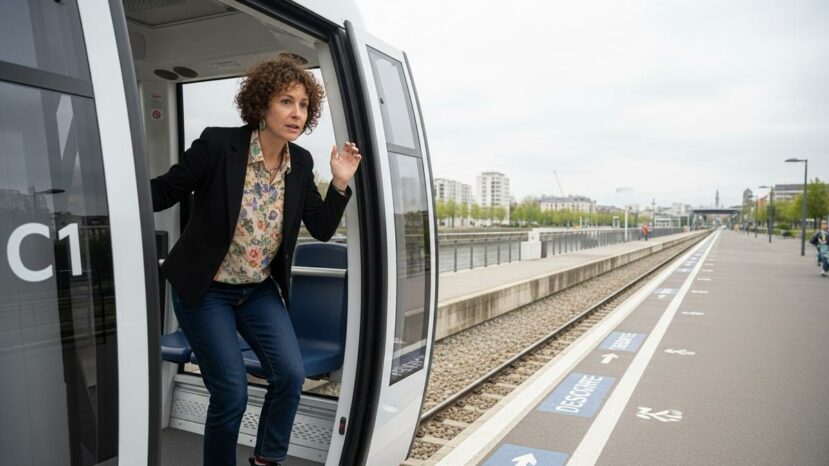
Île-de-France cable car enters key phase. These full-scale tests mark a long-awaited milestone for the
What the Île-de-France aerial tramway will do for your daily commute
Designed to relieve traffic congestion on major routes, the Île-de-France aerial tramway promises continuous connections. What’s more, cabins follow one another at short intervals, with no long waits. Connection times are reduced, as boarding is at ground level. For working people and schoolchildren, this means more regular journeys, just like the ambition of major exhibitions in Paris, which make everyday outings easier.
This aerial mode complements rather than replaces bus, RER and metro services. Île-de-France’s aerial tramway links poorly connected neighborhoods to transport hubs. The logic is simple: shorten the last few kilometers, without detours. The Val-de-Marne setting guides this design, with direct crossings, at the service of local residents in the same way as some accessible Alpine stations that focus on the fluidity of travel.
Why and how to test for “traveler hop-on/off”?
Passenger boarding and alighting” tests are used to fine-tune each step. First, the teams measure access times, then the flow of passengers in the cabins. The Île-de-France cable car imposes a continuous, aerial metro-type rhythm. Lastly, the scenarios for PRM, baby carriages and bicycles are scrutinized, with the same care given to the experience as for the big Parisian houses, following the example of new urban trends that punctuate daily life.
“Safety is not tested by halves: it is repeated.”
Volunteers act out realistic scenes, under the watchful eye of Île-de-France Mobilités. Supervisors then adjust the signage, road markings and audible announcements. In addition, stop and resume procedures are rehearsed. Feedback is fed into the training of station staff, as it is in high-end service areas where a warm welcome is key, such as certain emblematic Parisian hotels.
These tests do not herald the opening, but rather a stage in the process of making the system more reliable. On the other hand, they do give local residents a concrete idea of what to expect. The Île-de-France cable car is clarifying its capacity and comfort. Communication can therefore be based on observed measurements.
- Flows measured in real-life situations, with a variety of profiles.
- Verified PRM accessibility, with escort at the station.
- Optimized boarding time thanks to ground guidance.
- Tested incident procedures: shutdown, restart, evacuation.
- Network coordination with bus, metro and RER.
Île-de-France cable car timetable and connections: where the project stands
The announced route will link Créteil – Pointe du Lac (metro 8) with the Villeneuve-Saint-Georges area (RER D). The major connections are thus aligned for simplified journeys. The Île-de-France aerial tramway is designed to offer a reliable alternative to road transport. The network also promises time savings at peak times.
In the field, work is carried out in stages. First come the structures and stations, then the electromechanical equipment. Then the cables and cabins are installed, inspected and adjusted. Each phase is accompanied by site monitoring and local dialogue.
Finally come the test sequences: static, dynamic, then dry run. Simulated operation validates all procedures and passenger information. The Île-de-France aerial tramway will not open until these validations have been completed. Consequently, the final decisions will concern the date on which the public will be welcomed.
Safety, accessibility and service conditions
Safety is based on tried-and-tested ropeway standards. What’s more, staff receive dedicated training in operations and reception. The Île-de-France aerial tramway provides horizontal boarding, with no steps. This facilitates access for PRMs, strollers and luggage.
The cabins aim for stable comfort, even in moderate winds. However, a precise meteorological protocol governs operations on sensitive days. In the event of interruption, clear information guides passengers. In addition, the maintenance department schedules slots to maintain reliability.
Local issues: landscape, nuisance and site economics
Residents’ expectations relate to views, noise and neighborhood life. This is why the teams work on alignments, heights and landscape integration. Visual protection can be provided near inhabited areas. In this case, the Île-de-France aerial tramway respects the local environment.
Clamp and roller technology keeps operating noise to a minimum. What’s more, the stations use absorbent materials to reduce echoes. Maintenance cycles limit night-time nuisance. On the other hand, acoustic monitoring ensures regular checks.
From a social standpoint, access to employment centers is easier to understand. Bus and rail connections stimulate commercial activity. The Île-de-France cable car can boost the attractiveness of landlocked areas. As a result, travel habits are evolving towards more predictable journeys.
Then there’s the long-term issue of operation and life-cycle costs. Energy efficiency and maintenance are key to performance. Public indicators will have to track service quality over time. The Île-de-France aerial tramway will gain confidence through consistent results.



No comments
Post a comment
Always participate in accordance with the law and with respect for others.