



Buttocks: 3 exercises that really strengthen them
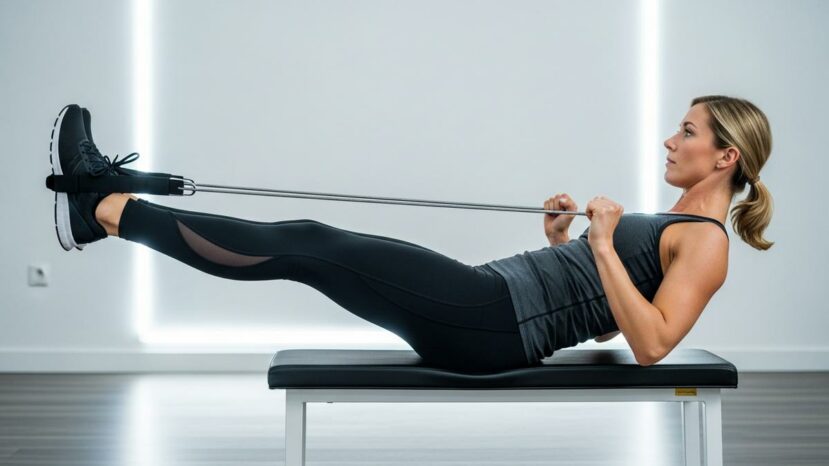
Do you want to move without pain and gain in stability? Then there’s a simple method that can help you strengthen your glutes without spending hours on them. Here’s how to structure your sessions for visible, sure progress.
Why target the posterior chain now
The glutes stabilize the pelvis, protect the knees and support the back. What’s more, they improve your stride and posture on a daily basis. A clear program gives you simple, reassuring guidelines.
According to the reference paper, three basic movements dominate. They target hip extension, unilateral control and core stability. In this way, you cover the essentials without complicating the session.
To strengthen the glutes in the long term, focus on quality. Two or three sessions are enough, if the volume is consistent. In short, the trio of “technique, regularity and recovery” makes all the difference.
“Volume, good technique, and consistency: the winning combination.”
The three pillars of a simple routine
First pillar: controlled-load hip extension. This typical movement strengthens the gluteus maximus, the prime mover. It also reduces the perceived load on the lumbar vertebrae.
Second and third pillars: hip hinge and unilateral work. The former develops the posterior chain, the latter corrects imbalances. As a result, you consolidate your supports and strengthen the glutes without compensation.
- Warm-up 5-8 minutes: hip mobility, elastic activation
- 2-4 sets per exercise, depending on level
- 6-12 repetitions at a controlled tempo
- 60-90 seconds rest between sets
- Keep 1-2 repetitions in reserve for technique
Execution: concrete guidelines and mistakes to avoid
For the hip extension, anchor the feet and lock the trunk. Slightly reverse the pelvis at the top of the movement. Also, stop the ascent when the ribcage remains neutral.
On the hip hinge, keep the load close to the thighs. The back remains neutral and the hips move back first. In this way, you protect the spine and can safely strengthen the glutes.
For unilateral work, align knee, foot and hip. Aim for a slow descent and a clean thrust. On the other hand, avoid pulling on the front of the body with your shoulders.
Progression, loads and frequency
Climb the difficulty in small steps, not leaps. Add +2.5 to +5 kg when all sets are clean. You can also add 1-2 repetitions to strengthen the glutes without pain.
Two or three sessions a week are enough for most people. Leave 48 hours between two sessions that target the same area. Then take a lighter week every 6-8 weeks to breathe.
Real life: adapt your routine and stay on course
No gym? Use a loaded backpack and elastic bands. A simple low bench will do for hip work. So you stay regular, even at home.
If unusual pain persists, reduce the amplitude. Consult a healthcare professional if the signal persists. In this way, you can continue to strengthen the glutes without aggravating a latent disorder.
Plan your sessions in the diary, like an appointment. From now on, set concrete mini-objectives: +1 repetition, or +2.5 kg per week. In short, this gentle progression helps to strengthen the glutes over the long term.
The trio of exercises works, but effort counts just as much. Add daily steps and regular sleep. Also, keep well hydrated to continue strengthening the glutes despite busy days.




Aucun commentaire
Publier un commentaire
Participez toujours dans le respect de la loi et des personnes.