



Pérouges: 30 minutes from Lyon, France’s most beautiful village, boasts a density of historic monuments 80 times greater than Paris!
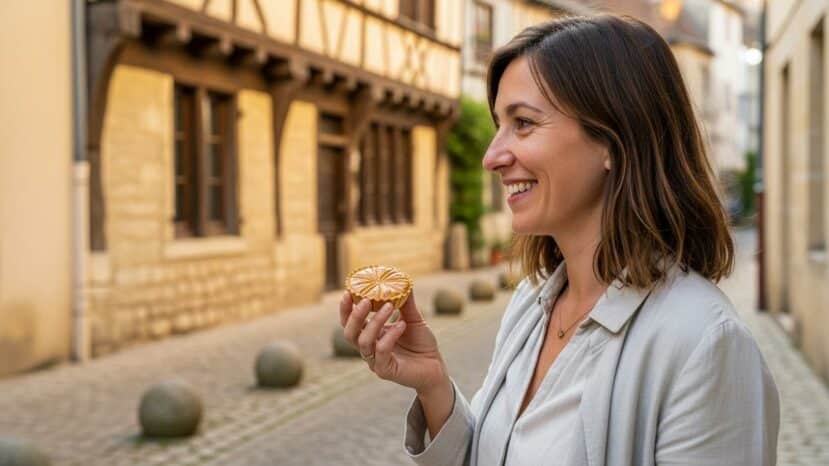
On the outskirts of Lyon, Pérouges captivates with its unspoilt medieval silhouette. As soon as you arrive, the blonde stone and tightly-packed cobblestones fix your gaze on this most beautiful village in France. The label attracts, yet the experience is nourished above all by living gestures and shared memories.
Living heritage and cobbled streets
The first step is to pass through one of the two gates that protect the town. The cobbled streets lead to sober shops and half-timbered facades dating from the 14th and 16th centuries. This harmonious setting justifies its status as one of France’s most beautiful villages for many travellers.
Many buildings are listed as historic monuments. Since the early 20th centuryprotection has avoided over-doing and standardization. What’s more, restoration is based on local sources and proven know-how.
A stop in the Place du Tilleul invites you to look up. The patriarchal tree, planted after the Revolution, watches over the benches and the fortress-church. It’s easy to see why this urban ensemble is so much more than just one of France‘s most beautiful villages.
“Here, the stones seem to converse with those who take the time to stop.
Access, ideal season and practical tips
From Lyon, it’s easy to get to this most beautiful village in France. By train to the Meximieux-Pérouges station, allow 30 to 40 minutes, then 15 to 20 minutes of gentle walking. By car, the distance of around 40 km is easily covered, but be sure to plan ahead for parking.
Spring and autumn offer soft light and quieter streets. In summer, arrive early or aim for the end of the day, as the crowds can be surprising. This way, you can enjoy a relaxed visit, with uncrowded photos.
- Portes d’En Haut and d’En Bas: emblematic passages on the ramparts.
- Place du Tilleul: the social heart of the town and the beneficial shade of the great tree.
- Church-fortress: sober nave, thick walls and military history.
- Local museum: everyday objects and local memories.
- Galette de Pérouges: a sweet speciality cooked over a wood fire.
History, jobs and filming
The village grew up around yarn artisans and regional trade. Over time, activity fluctuated, and then a movement to save the village brought it back to the forefront. Today, this dynamic approach maintains the appeal of a Most Beautiful Village in France, without stagnating local life.
Some workshops open their doors at weekends, sharing precise techniques. Tables also feature simple, local recipes. What’s more, the cultural season livens up the squares in small bursts, according to municipal calendars.
Film crews look for legible, coherent settings. Here, networks, rooflines and ancient volumes create a ready-made scene. As a result, many film crews have set up their cameras in this unspoilt setting.
Monuments and viewpoints
The church-fortress with its buttresses and defensive appearance is surprising. Its protective role is a reminder of the turbulent centuries that have sculpted every stone of one of France’s most beautiful villages. The dense acoustics invite silence rather than speeches.
The ramparts trace a clear path, with views over the Ain plain. In fact, the gentle slope leads to viewpoints where you can take a break. The local museum sheds light on the evolution of the village and the trades of yesteryear.
Preparing a responsible visit
The housing estate is still inhabited, which requires tact and discretion. Respect private thresholds, take out your garbage and keep quiet in the evenings. In this way, everyone benefits from a well-kept environment, and a Plus beau village de France remains welcoming.
Round cobblestones can be hard on ankles and wheels. On the other hand, there are smoother routes along some of the façades. Bring good shoes, water and a gentle pace for your loved ones.
Access to the alleyways costs nothing, yet every purchase supports the restorations. What’s more, our guided tours provide useful pointers for understanding the façades. As a result, your visit contributes to the vitality of our heritage, without sacrificing the peace and quiet of our residents.


No comments
Post a comment
Always participate in accordance with the law and with respect for others.