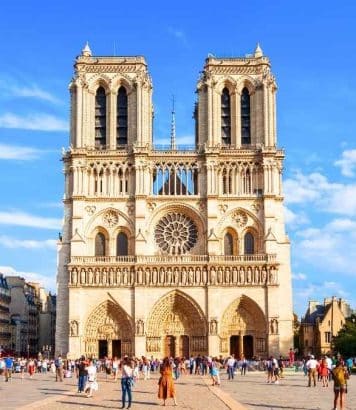
Paris streets where cyclists will soon have to dismount
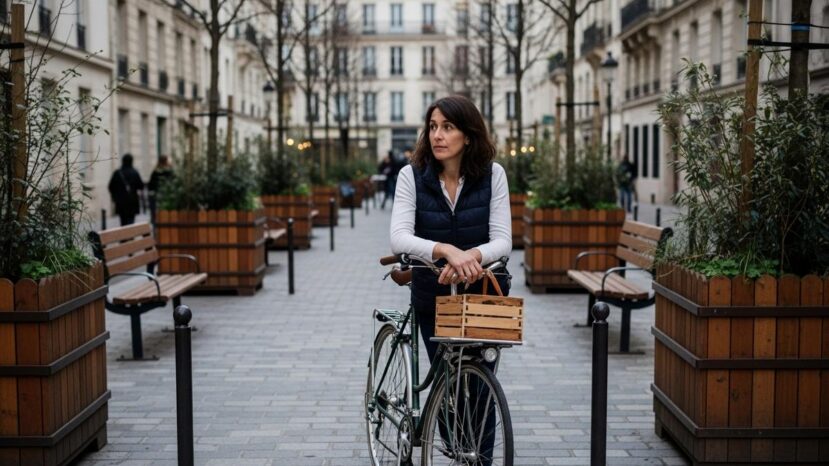


Bicycles may soon be banned from certain streets in Paris. Indeed, the mobility policy pursued by Emmanuel Grégoire, the new mayor, aims to increase the number of pedestrian zones. However, this ambition raises a major question for Parisian cyclists.
A mobility policy that changes habits
Since taking office, Emmanuel Grégoire has continued the efforts of his predecessor Anne Hidalgo. He intends to continue limiting the number of cars in the capital. His stated aim is to achieve 1,000 pedestrian streets by the end of his term.
This is part of a drive to promote soft mobility. As a result, the number of pedestrian-only zones is set to increase over the coming years. The Oberkampf district already serves as a model, with its “pedestrian heart”.
At the same time, the mayor has promised to set up more than 80 “pedestrian centers” during his term of office. These spaces are intended to offer residents greater peace and quiet. But this ambition raises a central question: what room is left for bicycles in Paris in this new urban landscape?
“Local residents are asking for it
The explosion of cycling in the capital
In recent years, the number of bicycles on the streets of Paris has exploded. This massive increase in cycling offers significant advantages for the city. It means less use of cars and public transport.
Public transport, while more environmentally friendly than a car, pollutes more than a bicycle. What’s more, cycling produces no direct CO2 emissions. However, the growing number of cyclists is not without consequences.
- Frequent conflicts between pedestrians and cyclists on sidewalks
- Sometimes dramatic incidents with cars and motorcycles
- Non-compliance with rules by some electric bike users
- Fatbikes and electric-assist vehicles travelling too fast
- Growing tensions in high-traffic areas
Increasingly visible tensions between users
Cohabitation between pedestrians and cyclists is becoming a daily source of friction. Some cyclists behave like kings of the street. Conflicts with people on foot are now a regular occurrence, especially in busy areas.
Incidents involving cars, vans and motorcycles are also on the increase. These accidents are sometimes dramatic and fuel the debate on safety. In this context, the question of bicycles in Paris in future pedestrian zones becomes crucial.
The problem is particularly acute for electrically-assisted vehicles. Fatbikes, in particular, often travel much faster than the speed limit. This situation complicates the search for a balance between all road users.
Mandatory pied-à-terre under debate
To maintain safety in the new pedestrian zones, several solutions are being considered. Other French cities, such as Lille, Amiens, La Rochelle and Nice, have already introduced compulsory pedestrians. This measure forces cyclists to dismount in certain areas.
For Delphine Bürkli, mayor of the 9th arrondissement, there’s no doubt about this solution. Her aim is not to penalize cyclists, but to protect pedestrians. On the other hand, Dan Lert, deputy mayor in charge of transport, is more cautious.
At present, bicycles in Paris are not banned from existing pedestrian zones. They are, however, required to keep to a walking pace. This rule implies not going faster than a person walking.
Towards alternative routes for cyclists
Unfortunately, the obligation to ride at walking pace is not always respected. Owners of electric bikes are particularly singled out. So the question of stricter regulations for bicycles in Paris remains unanswered.
Cyclists’ associations and municipal deputies do, however, seem to agree on one point. If a pied-à-terre were to be imposed, well-designed alternative routes would also have to be created. This is considered essential to avoid penalizing bicycle travel.
The Pont des Arts is a good illustration of this current shortcoming. This structure is normally closed to bicycles. However, there is no satisfactory alternative route for cyclists wishing to cross the Seine at this point.
The situation should therefore be studied on a case-by-case basis, depending on the areas concerned. The challenge is to find the best compromise to satisfy both pedestrians and cyclists. Bicycles in Paris remain an essential mode of transport, and their place in the city of tomorrow deserves careful consideration by elected officials.