The Grand Palais finally devotes a retrospective to Argentine artist Leandro Erlich
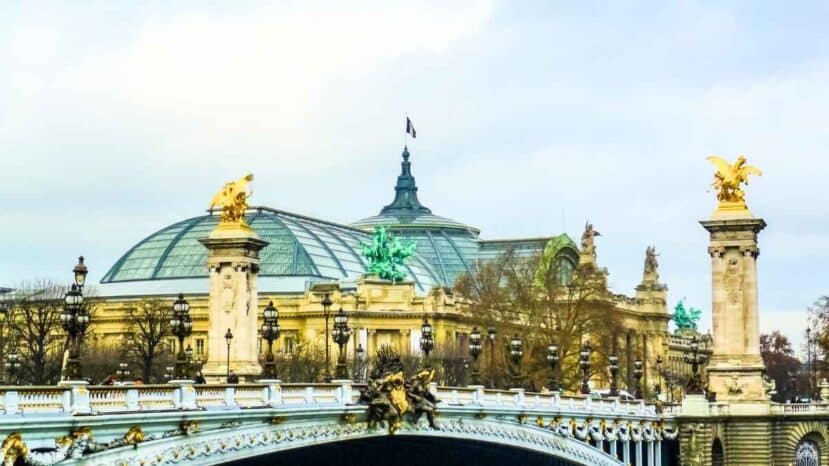


From June 2 to September 6, 2026, the Grand Palais hosts the first major solo exhibition in France by Argentinian artist Leandro Erlich. Fourteen monumental installations transform the eye: boats without water, facades to climb, fitting rooms with trapped mirrors. This summer event invites young and old alike to experience art rather than contemplate it.
A journey between illusion and reality at the Grand Palais
Visitors first enter the darkness. There, Port of Reflections (2014) unveils small fiberglass boats that seem to float on black, silent water. Up close, the mystery fades: not a single drop of water is present. A hidden machine oscillates the hulls, and what looks like a reflection actually belongs to the sculpture itself.
Two other pieces extend this unsettling experience. In The Cloud series, clouds appear frozen inside glass cases, like collector’s items. Here, too, the artist reveals the process: fifteen or so superimposed plates, whose light brings out the volume. In The View (1997), two windows with blinds half-open look out on the building opposite, where strangers are dressing or cooking without knowing they are being spied on.
Curator Fabrice Bousteau, director of Beaux Arts Magazine, has brought these works together in the galleries of the Grand Palais. The exhibition can be followed without any knowledge of art history, making it accessible to all audiences.
“Sometimes the best expression of reality can only come through the imagination.”
The illusionist showing his tricks
Unlike a magician, Leandro Erlich doesn’t hide his processes: everything is deliberately shown. Shattering Door (2009) provides the key. The door appears to be split on all sides, about to burst open. In reality, it’s an airbrushed laminate panel. To draw the cracks, the artist smashed fifteen sheets of glass with stones, filmed in slow motion, before finally tracing them by hand.
Up close, the panel’s realism is due to unexpected details: a real handle, a peephole and a lock are integrated. At just over two meters high, the work traps the eye. Born in the wake of the 2008 financial crisis, it also evokes certainties that are cracking.
- Port of Reflections: fiberglass boats without water
- The Cloud: clouds frozen in glass cases
- The View: windows onto fictitious neighbors
- Shattering Door: painted door imitating broken glass
- Changing Rooms: thirty fitting rooms in a maze of mirrors
La Documentation Room: over thirty years of creation
At the heart of the retrospective, the Documentation Room section – subtitled “from imagination to realization” – follows the artist’s trajectory since 1994. It presents models of his major projects in the public space: the top of an obelisk in Buenos Aires covered over to make it “disappear”, or a Parisian building whose facade appears to melt into the pavement.
These works reveal an Erlich who is as attentive to the city, migration and climate as he is to play. They also reveal a more intimate artist. As a teenager, he devoured hundreds of films, from Hitchcock to Coppola. This led to a series of oil paintings, Coming Soon! in which his own installations become movie posters signed “Charlie Lendor”, an anagram of Leandro Erlich.
This personal dimension enriches his career. It shows how cinema nourished his taste for mise-en-scene and trompe-l’œil.
Changing Rooms: a labyrinth of mirrors
The last gallery in the Grand Palais features the most immersive pieces. Changing Rooms (2008) lines up elegant fitting rooms whose mirrors, instead of reflecting your image, open up the space and link one room to the next. A stranger may appear from the next cubicle.
Thirty booths interlock to form a labyrinth of indefinite contours. The mirror – a recurring tool for the artist – ceases to reflect and becomes a door. This installation is an invitation to get lost, to play with the limits of the visible.
Building: climbing a lying Haussmann building
The tour concludes with Bâtiment (2004), created in Paris for the Nuit Blanche and since repeated in over fifteen countries. In each case, the work is based on the local architecture: in Paris, a Haussmann building in the light-colored stone of the Grands Boulevards. The facade is laid flat on the ground, and a huge mirror inclined at 45 degrees straightens it out vertically.
Lying on windows and balconies, visitors appear in the mirror suspended from the building, like acrobats defying gravity. More than twenty years after its Paris premiere, Bâtiment returns to where it was first performed. Here, everyone can compose their own scene, for the duration of a photo.
This first major monographic exhibition in France is part of the second edition of the Grand Palais d’été. It takes place in a building reopened in 2025 after restoration. The full price is €20.50, with reduced rates from €11.50 and free admission for children under 5. Entrance is via the Clarence Dillon rotunda, avenue Winston Churchill, in Paris’s 8th arrondissement.
Opening hours are Monday to Sunday, from 10am to 8pm, with a late-night opening on Fridays until 10pm. An exceptional closure is planned for July 14. Metro lines 1 and 9 (“Franklin D. Roosevelt” station) or 1 and 13 (“Champs-Élysées – Clemenceau” station) provide direct access. RER line C (“Invalides” station) and numerous bus routes complete the service.