“No more dieting and working out”: Dr Cohen reveals the free weight-loss habit that changes everything


When it comes to losing weight, the usual reflex is always the same: review your diet, count calories, increase physical activity. However, nutritionist Jean-Michel Cohen points to a very different lever, one that is rooted in everyday life and costs absolutely nothing.
What Jean-Michel Cohen observes about our eating habits
In a video posted on Instagram, Jean-Michel Cohen reminds us that weight management doesn’t just depend on what we eat. The environment in which we live plays a central role in the food choices we end up making.
According to him, many behaviors are decided long before the moment of the meal. Shopping and kitchen organization habits have a direct influence on what we eat each day.
The doctor insists on a simple fact: in most cases, snacking is not a response to real hunger. They are often linked to other mechanisms, whether emotional or social.
The two real reasons for snacking
Jean-Michel Cohen is precise on this point. He identifies two main reasons for opening the cupboards or fridge outside mealtimes.
“When you’re in your house, you know that the 2 reasons to eat outside of meals is either to anesthetize your thinking, or to avoid being alone. So you risk ending up in the cupboards, or in the fridge.”
The mechanics are well known: when the urge to snack arises, we automatically go for what’s available at hand. In this way, the contents of the fridge become decisive.
What’s more, the presence of certain products can influence behavior without us even realizing it. Temptation depends largely on what is already in the home.
The key role of closet contents in losing weight
Jean-Michel Cohen is straightforward on this point: if the cupboards and fridge only contain sweets or very appetizing products, they will be consumed. It’s as simple as that.
Consequently, the organization of the home becomes a concrete tool for food regulation. It’s not a question of willpower, but of what’s available when the craving arises.
So, to lose weight without necessarily radically changing your diet, it’s sometimes enough to act on what you bring home.
- Never go shopping on an empty stomach to avoid calorific impulse purchases.
- Structure your shopping list around foods compatible with your goal.
- Reduce the presence of highly appetizing products in your cupboards.
- Be aware that snacking often responds to an emotional need, not hunger.
- Consider race organization as a direct lever for weight loss.
Never shop on an empty stomach: Dr Cohen’s golden rule
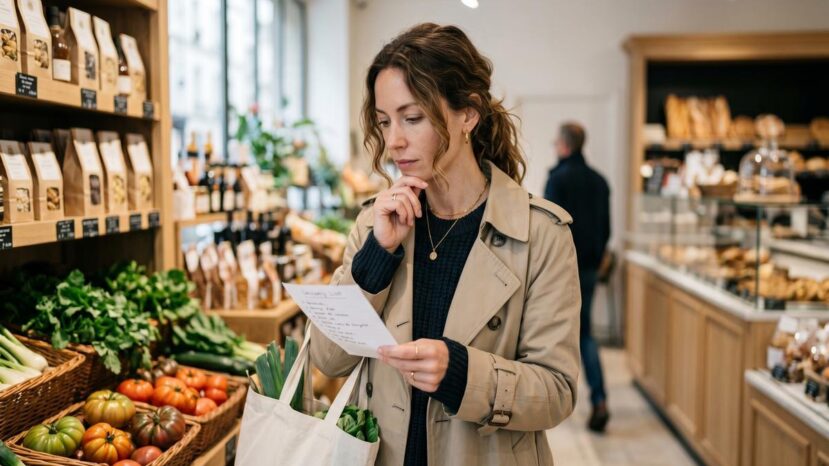
Jean-Michel Cohen reminds us that it’s vital never to shop on an empty stomach. It’s precisely when you’re hungry that you buy the highest-calorie products in the supermarket.
By structuring your purchases around the foods you plan to eat on a diet, you automatically limit the number of deviations. This makes shopping a real tool for weight control.
In this way, we act at the source, long before temptation arrives at home.
A free and accessible habit for better weight control
The idea is not to eliminate all possibility of eating between meals. Rather, it’s about ensuring that the foods available remain compatible with the goal of losing weight.
By controlling the precise moment of food shopping, we can directly influence what we eat the following days. It’s a discreet but powerful lever for overall dietary balance.
And yet, this reflex remains little practiced. Many people seeking to lose weight focus all their efforts on the plate, neglecting what goes on upstream, in the supermarket.
So adopting this simple habit requires no equipment, no subscription and no specific program. It’s based on awareness: what you put in your shopping cart determines what you put on your plate. So every trip to the checkout becomes a concrete opportunity to take action on weight loss.