No more automatic blonde highlights after age 50: Hairstylists are betting on this hair color that makes your complexion look younger
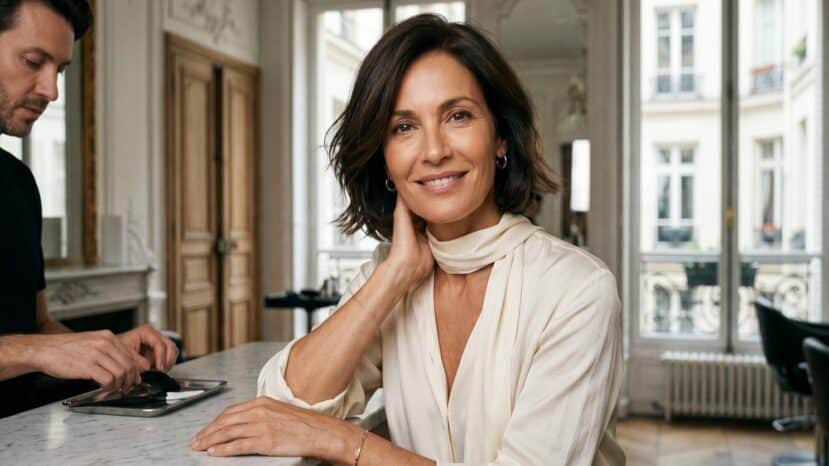


Highlights have long reigned supreme in salons. However, hairstylists are now offering a completely different approach to brightening the complexion, especially for women over 50. This subtle yet incredibly effective method is beginning to gain popularity everywhere in 2026.
“Camouflage” color: the new obsession at trade shows
For years, hairstylists would do a string of blonde highlights before summer, then switch back to darker shades when school started again. Nowadays, their clients aren’t necessarily looking to go blonde again for vacation. The trend is toward so-called “camouflage” colors— hair colors that accurately reflect the depth of one’s skin tone, as reported by Elle magazine.
Matching your hair color to your skin tone—the idea seems simple, yet few dared to try it. Unsurprisingly, this trend first gained popularity on social media, where videos of hair makeovers have racked up millions of views.
However, even before the trend went viral on TikTok and Instagram, some celebrities were already showing off this true beauty asset. This was the case for Keira Knightley during the *Pirates of the Caribbean* saga, Jennifer Lopez, and even supermodel Bella Hadid.
“The goal is to match your hair color to your facial features, but not necessarily to your skin tone, because some people need a stark contrast between their skin and hair to look their best.” — Karen Young, colorist, in Byrdie.
A technique that works on almost all skin tones
Good news for those who are hesitant to make any changes to their hair: reducing the contrast between your skin and hair works for virtually all skin tones, from the lightest to the darkest. This makes your features appear softer, your complexion looks more radiant, and the result is natural.
Furthermore, this method does not require a radical transformation. A well-targeted adjustment to the skin tone is therefore enough to change the entire look of the face.
Why Skin Undertones Make All the Difference
To achieve a flattering result, professionals emphasize one key point: taking skin undertones into account. Unlike the color visible at first glance, undertones are the subtle shades present beneath the surface of the skin. They directly influence how well a shade complements the face.
Colorist Karen Young recommends knowing your underlying shade well. According to her, colors that harmonize with your undertone and natural hair color ensure a luminous, even, and particularly flattering complexion.
There is a simple way to identify your undertone. Just look at the color of the veins on the inside of your wrist. If they appear blue or purplish, your undertone is cool. If they have a greenish tint, your undertone is warm.
- Look at the color of the veins on your wrist to identify your undertone.
- Cool undertone: blue or purplish veins; opt for ash-toned or cool shades.
- Warm undertone: greenish veins—opt for golden or coppery shades.
- This technique works on virtually all skin tones, from the lightest to the darkest.
- Some people need a stark contrast between their skin and hair to look their best.
The Key Role of Color Specialists
Once the undertone has been identified, it’s up to the stylists to tailor the color treatment for a personalized result. Their expertise allows them to refine color choices based on each client’s facial features and natural undertones. It is precisely this professional eye that makes all the difference.
In addition, some people need a stark contrast between their skin and hair to look their best. Colorists are therefore there to assess this need on a case-by-case basis, without applying a one-size-fits-all rule.
After 50, a method that effortlessly refreshes your complexion
After age 50, the complexion may appear duller and facial features less defined. Hairstylists know this well: it’s often the hair color—not the cut—that plays the most decisive role in bringing out the face’s radiance. Choosing a shade that complements your skin tone produces an immediate and natural effect.
As a result, this approach is appealing to more and more women who want to refresh their look without resorting to drastic measures. “Camouflage” hair coloring thus offers a subtle yet visually striking result.
Hair stylists, however, emphasize one point: this method requires a thorough analysis of each client’s profile. A consultation at the salon therefore remains the best starting point before making any color changes.
On the other hand, for those whose faces benefit from added contrast, professionals will recommend other techniques. The “camouflage” approach is not a one-size-fits-all solution, but for many, it is the simplest path to a rejuvenated and harmonious complexion.