Embracing white hair: why grey is the new blonde in 2026
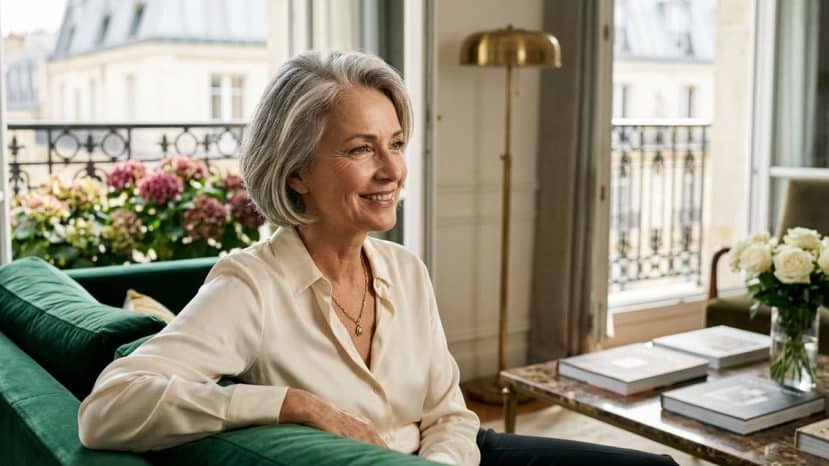


You spotted a few silver strands in your hair and, for the first time, you didn’t feel the urge to hide them. This reaction, increasingly shared by women everywhere, reflects a genuine shift in how we see white hair in 2026. What was once considered a flaw to be corrected is slowly becoming a deliberate signature, even a sought-after one.
From salons to social media, grey is showing up without apology
On TikTok and Instagram, a new generation of women is filming their roots, showing off their silver streaks and explaining why they’ve decided to step away from the colourist’s chair for good. Some discovered their first white hairs as teenagers. Yet rather than treating them as an anomaly, they’ve made them a defining part of their hair identity.
The more white hair is shown and normalised on these platforms, the more its negative connotations fade. It no longer automatically reads as a sign of ageing that needs fixing. Instead, it’s increasingly seen as a natural quirk, and a rather chic one at that. This shift is especially visible among Gen Z, who view hair colour as one option among many, not a non-negotiable step in any beauty routine.
Grey blending: a softer alternative to full coverage
This change in mindset is also playing out in concrete ways at the salon. Rather than covering their white hair entirely, some clients are now opting for grey blending. The technique involves weaving silver strands into the natural base colour through subtle highlights or a soft balayage. The result is a gentle transition that neither erases nor amplifies, it simply harmonises.
Others are going even further, actively requesting silver highlights from their colourist. The irony is striking: the very shades women once rushed to conceal are now being artificially recreated for their modern, polished effect. Grey has gone from problem to trend.
- Filming roots and silver streaks to own them on social media
- Choosing grey blending over full-coverage colour
- Requesting silver highlights to recreate the natural grey effect
- Reaching for products specially formulated to support the transition
A brand built around the transition
This movement has also inspired players in the beauty market. The brand GRIS has built its entire offering around grey and white hair, whether fully revealed or still emerging. It offers treatments specifically designed for these hair types, with a message centred on the freedom to choose.
Its positioning is clear: keep your natural colour, let a few silver streaks show through, carry on colouring, or simply change your mind. No option is presented as superior to any other. In this way, the brand perfectly mirrors the prevailing mood: a less pressured, more personal relationship with your own hair.
White hair has earned the right to be worn with pride
Grey may not have fully replaced blonde just yet, but it has clearly earned a new legitimacy. What has changed is less the colour itself than the way we look at it. White hair is no longer an emergency to be dealt with, it’s a choice to make, or not to make.
For readers, this translates into a very real kind of freedom: no longer being ruled by the root touch-up calendar, exploring techniques like grey blending, or simply watching how silver strands weave themselves naturally into your hair. In 2026, embracing grey hair is also a way of saying that beauty doesn’t have to follow a single template.