
3.6 million pots of Nivea sold in France every year, but it’s not right for every skin type
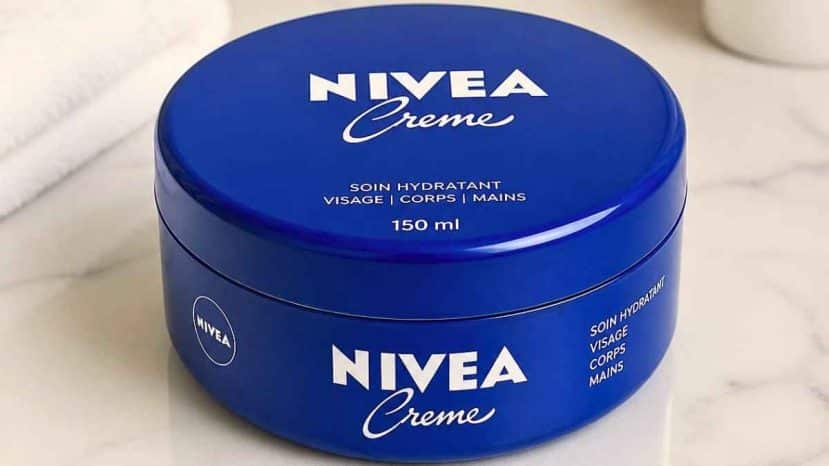


Every hour, 414 of the iconic blue tins find a new home in France. That figure, drawn from 2023 sales data, says a great deal about the place Nivea has held in French bathrooms for more than a century. Yet behind this staggering success lies a reality many people overlook: this cult cream is not suited to every skin type.
Why Nivea has been winning people over since 1911
Launched in 1911, the blue tin has crossed generations without losing its appeal. Its instantly recognisable scent and thick white cream are the kind of sensory landmarks that trigger memories the moment you lift the lid. In France, 3.6 million tins were sold in 2023, confirming that enthusiasm for the product shows no sign of fading.
This lasting success rests largely on a formula that still delivers on its original promise. The cream works by limiting water loss through its occlusive properties. In other words, it forms a protective barrier on the skin to lock in existing moisture. This simple yet effective mechanism explains why the product remains relevant more than a hundred years after it was created.
Dry skin, hands and rough patches benefit the most
Its rich, nourishing texture is one of its greatest strengths. María Segurado, a dermatologist at Nivea, recommends this treatment above all for dry skin or for areas that need an extra boost of hydration. Overworked hands, rough elbows and cracked heels are among the spots where the blue tin delivers its best results.
After summer, for instance, the cream can help restore comfort to skin that feels tight and parched. Repeated exposure to sun, salt water and sand often weakens the skin barrier, and in that context, the product’s occlusive nature makes perfect sense for normal to dry skin types.
- Dry skin: use recommended by the dermatologist
- Overworked hands: rich texture suited to high-use areas
- Rough elbows and heels: targeted occlusive action
- Post-summer: helps relieve tightness and dryness
Oily and acne-prone skin: proceed with caution
What counts as an asset for dry skin can quickly become a drawback on a different skin type. The dermatologist advises against using the blue cream on very oily or acne-prone skin. Its particularly rich, occlusive texture can prove too heavy for these skin types, especially with daily application to the face.
What’s more, the blue tin is no substitute for a treatment formulated specifically to target acne or dark spots, nor does it replace sun protection. Despite its reputation as an all-purpose fix in the collective imagination, it simply does not address every skin concern. Knowing your skin type remains the essential first step to getting any real benefit from it.
What this product can and cannot do for your skin
For normal to dry skin and particularly parched areas, the formula is valued for its simplicity and its occlusive power. These two qualities, so often mentioned together, neatly sum up what the product actually delivers. It makes no promises of transformation, but it consistently fulfils its core function.
Expecting the blue tin to treat acne, fade dark spots or shield skin from the sun, however, is asking it to do something it was never designed to do. The real question is not whether Nivea is a good product, but whether your skin is among those it genuinely suits. More than a hundred years after its launch and 414 tins sold every hour in France, the answer to that question remains as personal as it has always been.